 |
 |
 |
| ENG | FRA | ESP |
 |
 |
 |
| ARA | GER | JPA |
IndustriALL Global Union’s analysis and perspectives for the current political, economic, social and labour situation in the world
- At its 4th Congress, IndustriALL reaffirms its commitment to global solidarity and support to all affiliates and to all the working people by mobilizing, fighting back and organizing against exploitation, inequality and violations of human and labour rights. The 4th Congress reiterates that another world is possible and necessary.
- Since its inception, the mission of IndustriALL has been to secure social justice, equality, and equity, with a decent standard of living for all. This encompasses the implementation of sustainable industrial policies with manufacturing employment that affords time for recreation and cultural life and the enjoyment of adequate public services. Industry must continue to be the engine of the national economies against all the efforts of decades of de-industrialization.
- Fighting for democracy, peace, freedoms while struggling against neo-fascism continues to be our main political priority. IndustriALL defends the fundamental tenets of democracy, particularly freedom of expression, speech, association and peaceful assembly and it stands united with people and workers throughout the world.
- IndustriALL’s commitment to fighting against dictatorial, authoritarian, totalitarian, corrupt and fascist regimes, extreme-right-wing politics, xenophobia and racism, discrimination, gender-based violence, misogyny, sexism and other forms of abuses will always be main axe of its actions in defending democratic rights and freedoms and countering fear, division, exclusion, terror, conflict, and war.
- Fundamental workers’ rights are under attack across the world with the erosion of the right to establish or join a trade union, the right of collective bargaining and the right to strike. Trade union work is criminalized in many countries, workers are sacked, arrested, and detained for exercising their rights. As these fundamental rights must be advanced under any circumstances, they will be at the centre of every activity and campaign that IndustriALL does.
- Gender equality is eroding, and women’s rights are under attack in many countries. This reversal of rights that have been obtained over the last century is a danger to both democracy and trade union rights in general. IndustriALL will continue to keep its leading position in defending and advancing women’s rights.
- The neo-liberal model, coupled with corporate greed, lurches from one crisis to another with profound implications for working people across the globe. The Congress rejects all attempts by governments to pursue austerity measures, forcing workers to foot the bill for a perpetual crisis they did not create. We need a fairer distribution of profits instead of capital continuing to substantially increase its profits without paying proper taxes.
- Global supply chains continue to play an important role in the economies, particularly in trade, production, investment, employment relations and labour itself. Companies and brands keep seeking to evade their responsibilities towards workers employed by suppliers and subcontractors with a model of labour exploitation around the world. This affects millions of workers pushing them into the informal economy without social protection, nor any measures for preventing occupational risks.
- Inequality is exerting a significant impact globally, influencing aspects ranging from economic growth to political stability and social cohesion. Policies that prioritize market-oriented approaches and limit government intervention contribute to income inequality. The cost of living is skyrocketing in most countries, making workers feel increasingly vulnerable. Wars and conflicts are triggering multiple crises. These are primarily due to a substantial increase in energy and food prices, which have fuelled high inflation rates worldwide.
- What is needed is an economic system that is socially and ecologically humane, sustainable, and fair, serving all people in the world and not leaving anyone out.
- The world is undergoing significant transformations through new technologies, digitalization, automation, and artificial intelligence. There is a substantial transition in energy and production to meet the demands of climate change and the decarbonization of economies. New demographic structures are emerging, international trade and investment rules are changing, and the political environment is also changing. Research for scientific and technological innovation must be directed towards improving living and working conditions.
- These transformations pose many challenges in the world of work, particularly to sustainable, secure and decent employment. The rapid changes in the world of work, which we continue to experience are mainly attributed to increasing competitiveness among countries, outsourcing of operations, generational shifts in the workplace, the rate of technological change, and climate change and adaptation.
- The countries of the Global North and Global South need to work closely together for achieving a Just Transition. In today’s globalised world, people and cultures from all countries form a community of destiny when it comes to climate change. The economies in the Global South are rightly striving for more economicdevelopment, more value creation at home, so that their societies can develop. But the countries of the South lack the financial capacity to make their economies more environmentally friendly and workers tendto be less organised. They need the support of industrialised countries to drive the change forward.
- Better cooperation between the Global North and the Global South unions is essential. Solidarity and cooperation among unions from different regions are crucial to address inequalities and strengthen trade union networks. Inclusion policies should involve women, LGBTI+ people, young and older workers, white-collar workers, migrants and refugees, and people with disabilities in union activities.
- Increased unemployment, inequality, and the erosion of working conditions have negatively impacted poverty reduction strategies that are required for the attainment of Sustainable Development Goals (SDGs), although remote work has contributed to social and economic activities being sustainable.
- Globally, the labour market has been experiencing increased informality. Many countries are undergoing rapid shifts in forms of employment. The shift is from a standard employment arrangement to non-standard employment relations.
- These jobs are generally precarious as they often do not provide the workers the fundamental principles and rights at work. Such rights include freedom of association and collective bargaining, right to paid leave, and the right to social protection. They also impair labour relations and erode worker protection and transfer additional responsibilities—such as social and trade union protection, job security, and wage negotiations—to the worker.
- Trade unions are increasingly losing membership and worker power is rapidly being eroded amidst swift changes in the world of work and capital’s attacks on the democratic organization of workers. Therefore, there is a strong need for a new social contract to ensure that labour rights are respected, jobs are decent with living wages, social protection is universal, accountability for business is secured through due diligence, and social dialogue ensures Just Transition measures for climate and technology.
- In order to enforce our demands to corporations and governments, all our activities will be geared towards expanding our trade union power resources. This includes strategic organizing, the organizational development of our trade unions to adapt to the current challenges but also building alliances with like-minded organizations.
- IndustriALL will continue to bolster union solidarity through its campaigns in our struggle to confront multinational companies and advance our agenda before global institutions. In doing so, the enhanced role of the union is critical in addressing imbalances and inequality caused by corporate power.
- Internally, IndustriALL will reinforce democracy, transparency, and inclusion by encouraging active participation of its affiliated unions and ensuring equal gender representation and inclusion of different groups in decision-making.
- Therefore, IndustriALL’s 4th Congress calls on all its affiliates to take action through global union solidarity, campaigning, fighting back and building union power. In pursuit of a better world, IndustriALL and its affiliates continue to work together with other global unions, social movements and other like-minded organisations.
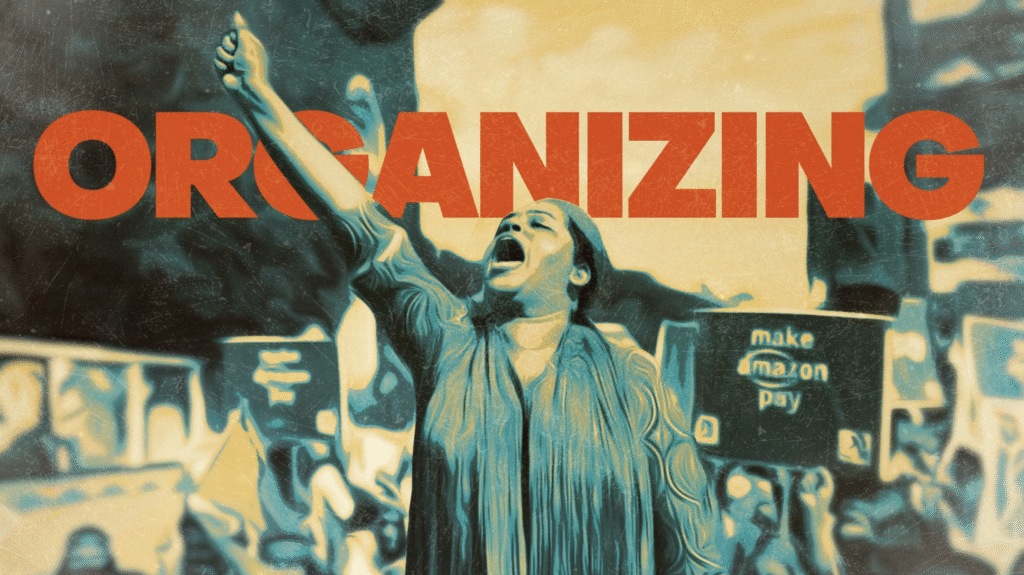
Organizing for a just future!
Strategic objectives and actions:
Fighting for equality and workers’ rights
- The growing inequalities we see today perpetuate poverty everywhere. Inequality is having a significant impact worldwide, affecting everything from economic growth to political stability, and from social cohesion to peace. Policies that prioritize market-oriented approaches and limit government intervention contribute to income and wealth inequality. What we need is an economic system that is socially and ecologically sustainable and fair, serving all people in the world.
- Massive inequality affects negatively societies. It leads to a concentration of economic and political power in the hands of a small wealthy elite. They use that power to shape policies and institutions in ways that benefit their own interests at the expense of the broader population. This results in inadequate representation for marginalized groups and the erosion of democratic institutions. Only stronger trade unions and collective agreements can change this narrative.
- There is a pressing need for a new social contract, a pact among workers, governments, and businesses, which should establish a baseline of universal labour rights guaranteed for all workers. Its implementation would ensure the respect of rights, decent jobs with minimum living wages and collective bargaining, and the universality of social protection. It would also ensure that due diligence and accountability are at the forefront of business operations, and that social dialogue paves the way for just transition measures for climate change and technology. The development and promotion of redistribution policies and social security programs are essential components of this contract.
- Growing inequality is having negative effects on workers who are stuck in low and stagnating wages. Precarity and job insecurity are increasing, the gender pay gap is widening, and bargaining power is decreasing. Informal employment and the precarity of work have been rapidly expanding, which has been associated with a higher degree of exploitation and deficits in decent work; particularly, migrant workers are stigmatised and exposed to severe rights’ violations and injustice. The continued use of short-term contracts and systems that facilitate outsourcing perpetuate the exploitation and disparities for workers in the name of corporate greed.
- Adressing gender inequalities in the world of work is essential. Promoting women’s employment in all jobs, advancing actions to close the gender pay gap, and ending the gender-based discrimination at work are priority action lines for IndustriALL Global Union. We will continue to work in our sectors and networks on strategies to address gender segregation in our industries, remove barriers to gender equality, address the women’s burden of care responsibilities, advocate for equal responsibility, increase investment in the care economy, and make a strong case for ensuring public funding for care. A comprehensive approach is needed for continuous training, skills development and mentorship programmes.
- Today young workers are not always widely represented within the trade union movement. But it is important to include their voice in debates on the future of work. This is particularly concerning as these young workers will have to live with and bear the brunt of unresolved global dilemmas, such as the effects of climate change on workers in the industry and on the world’s population. Young people play a crucial role in finding solutions to the challenge of inequality. IndustriALL will continue to operate as an inclusive organization, where the perspectives of young workers are systematically considered, regardless of their employment relations, during action planning; and young workers can actively participate in all aspects and layers of the organization.
- Organizing, workplace representation, collective bargaining and mobilization are the most important tools at our disposal to fight inequality. Trade unions must therefore increase their international cooperation and coordinate appropriately to achieve this goal. In addition, the trade union movement should fight for fairer, more progressive and re-distributive taxation of wealth, act against tax havens, and ultimately improve the working conditions of all workers, regardless of their country, to reduce overall inequality.
- IndustriALL will continue to give priority to organizing workers in the new-developing sectors, such as renewable energies, as new jobs arise from advancements in technology. In doing so, IndustriALL will develop strategies for a sustainable economy that protects existing jobs and creates new ones demanding governments and companies’ comprehensive re-skilling programs tailored to the needs of transitioning industries.
- Health and safety is a fundamental principle and right at work. Health and safety at work is neither a perk to be bargained for nor a favour to be asked. It is our right. For IndustriALL, developing a strategic and coordinated action plan aimed at leveraging the International Labour Organization’s (ILO) Occupational Safety and Health (OSH) framework to improve health and safety conditions at workplaces and enhance union power will be a critical agenda item.
- Therefore, IndustriALL will:
- Secure basic trade union rights for all workers fighting for the right to organize and bargain collectively, building on the strength of IndustriALL as a global membership-based organization to bring together affiliates in solidarity;
- Strengthen solidarity and cooperation—including the consolidation of networks—between unions from different regions, particularly between Global North and Global South in order to address inequalities through advocacy actions demanding changes in the global governance architecture;
- Enhance its policies of inclusion with active involvement of women, LGBTI+ workers, young and older workers, white collar worker, migrants and refugees and people with disabilities in union activities;
- Reinforce its Occupational Safety and Health (OSH) actions and practices in regional, sectoral and cross-sectoral areas;
- Continue to campaign against precarious work, particularly organizing the contract workers and formalization of informal work;
- Campaign for women workers on the ratification, implementation and respect for international labour standards promoting the protection and advancement of women’s rights and gender equality, including ILO Conventions 100, 111, 183 and 190; and develop a gender responsive approach to health and safety, ensuring that women workers’ needs are taken into account equally as men’s needs;
- Address the challenges of youth with trade union education, and systematic inclusion of their specific needs and concerns in the defence of decent and sustainable employment.
- Ensure actions to defend all categories of workers, including white-collar, and endeavour to help the affiliated unions to better understand their needs and support their specific advocacy.
Building trade union power
- Building union power is a primary objective for IndustriALL affiliates, particularly through strategic organizing. Organisational power stems from the ability of workers to associate and unite to form unions. The primary goal is to increase membership and form a strong and effective union base in workplaces, as members are the most valuable resource of a union. However, merely having a large number of members is not sufficient. Unions need active members. Trade unions also require financial resources and skilled personnel to effectively carry out their work, and they have to adapt to new challenges through organizational development.
- Many problems arise from the increasing use of subcontracting and the continuous expansion of supply chains. Unions value strong cooperation at various levels and between countries, including those in the Global North and South. IndustriALL plays a crucial role in fostering and coordinating this cooperation and solidarity between the Global North and South.
- International tools provide opportunities to empower workers and build solidarity in an environment where global supply chains and human rights due diligence are becoming increasingly important. It is critical to efficiently use these instruments, which requires concrete actions in increasing awareness raising and building capacity throughout the supply chain to ensure their effective implementation. At the same time, such tools must balance the realities of the Global South.
- There is a clear need to look at the future of union organizing approaches and strategies, and at transforming union agendas, structures, actions, methods, and tactics in order to empower workers and build a strong union base at the workplace in an inclusive and participatory way, not leaving the most vulnerable groups behind. Unions need to develop strategies and actions on how to open new or previously non-union industries to unions, and use new technologies for organizing, mobilizing and building union power.
- Weak legislation and weak implementation of legislation are re-occurring obstacles to organizing. The right to organize, right to bargain collectively, and right to strike are fundamental human rights that are violated on a regular basis in many countries.
- Organizing puts the workers at the centre of trade union action. This means that unions need to become more inclusive, participative and democratic, reform and/or activate structures and decision-making processes, build a sustainable financial base through membership dues and enhance knowledge through capacity building to be able to adapt to the current challenges and chance of transformation. IndustriALL will continue to support its affiliates in this endeavour.
- For IndustriALL, it is essential to make strategic organizing a priority in its sectoral, regional, and company work by offering training programs for organizers, by consulting affiliates about organizing approaches, concepts and strategies and by coordinating actions that support strategic organizing campaigns by affiliates, including methods and strategies to engage and organize special target groups like young, women, white collar and precarious workers.
- It will be critical to liaise and cooperate with like-minded organizations in developing organizing campaigns and political lobbying at local, regional, national and international levels.
- Implementing due diligence at various levels can not only be a paradigm shift but also serve as the initial step. There is a significant amount of work required to make due diligence legislation effective. This includes explaining its nature and how unions can utilize it effectively to enhance their power. Human rights due diligence (HRDD) legislations will be utilized not only as a mechanism for holding capital accountable, but also as a strategic tool to support organizing, collective bargaining, and union campaigns. IndustriALL will develop training programmes for the affiliates on how to leverage these legislations to enhance the organizing efforts and protect workers’ rights, particularly freedom of association and the right to collectively bargain in multinational companies (MNCs) and their supply chains. Social dialogue will continue to be an important mechanism in this regard.
- There is a need to advance a gender transformative agenda within IndustriALL. This will necessitate fundamental changes to cultures and modifications to the way unions operate to ensure equal representation, participation, and leadership for women. Rather than expecting women to conform to existing structures, we need a profound change in power relations, structures, and cultures within our unions. This involves redefining our perception of leadership so that women can stand alongside men.
- In many countries, young people face difficulties in finding quality jobs in the formal economy and enter the workforce in precarious conditions, often facing exploitation in the global supply chains. The unemployment rate among young people is alarming and continues to grow year after year, as does the proportion of youth who are not in employment, education, or training. This results in an urgent need for trade unions to adopt new strategies and practices to recruit and organize young workers, regardless of their employment status. Trade unions need to identify the interests and issues affecting youth and launch campaigns aimed at organizing more young workers through innovative unionisation models.
- Therefore, IndustriALL will:
- Make organizing a priority in its sectoral, regional, and company work taking actions and carrying out strategic organizing;
- Develop joint understanding and institutional capacity in the field of strategic organizing, build the skills and capacities of affiliates to conduct such organizing effectively, and support unions in these endeavours;
- Invest in due diligence processes, and other instruments, such as labour safeguards in trade agreements, where workers and their representatives have a say, in advocacy work as well as for awareness raising and capacity building on how to use due diligence for organizing, collective bargaining and the protection of fundamental rights;
- Build strategic partnerships on mutual solidarity between unions in the Global South and the Global North, and work towards union cooperation and unity in different countries in order to avoid union fragmentation and competition;
- Address the obstacles in union cultures, structures, decision-making processes preventing equal inclusion of women; advance concrete measures to increase women’s participation and representation in unions– including organizing, training, collective bargaining and the necessary budget allocation– and promote women’s leadership in trade unions.
Holding capital accountable
- We must acknowledge the strategies that brands and MNCs employ to evade accountability and scrutiny. These strategies include the use of the machinery of the state, relocation, name-changing practices, and subcontracting. To respond effectively to these challenges, it’s crucial to emphasize international solidarity, foster open dialogue, and ensure the inclusion of workers in campaigns.
- IndustriALL requires proactive strategies and structures within multinational companies, emphasizing the importance of strategic focus, collaboration, and targeted action. IndustriALL has the potential to effectively strengthen trade union solidarity, enhance capacity, and advocate for workers’ rights within strategic industries. To ensure robust and functional industrial relations and social dialogue, corporate campaigning with clearly defined goals should be central to IndustriALL’s work.
- Corporate campaigns will be part of IndustriALL’s efforts to confront capital to foster union growth. Each campaign will be designed to hold capital accountable and provide support to for organizing, membership growth, and winning union recognition.
- Transparency and open processes are crucial, especially in the context of internal negotiations and the establishment of global agreements. The role of unions in the home countries of MNCs is vital to ensure equality between the Global North and South. It’s important to acknowledge the need for sensitivity towards cultural diversity and gender aspects, positioning them at the heart of transnational cooperation.
- As parallel to developing a legislative enabling environment at national and international level, IndustriALL will continue to increase union power by negotiating and reaching binding and enforceable global agreements with multinational companies and brands through global industrial relations. Along with this, it is necessary to establish efficient and effective international labour conciliation and arbitration mechanisms in order to settle disputes.
- Building strong and well-functioning trade union networks that are driven by key affiliates in their respective MNCs, exchanging information, developing joint strategies and undertaking collective multinational actions are crucial for effective trade union power. There is a clear need for comprehensive complaints mechanisms that are transparent and open to address trade union rights’ violations, but also the need for a good risk management and preventive measures to avoid labour rights’ violations from occuring in the first place. Additionally, the role and influence of states or governments in union busting must be considered. But we must also not ignore managements that carry out union busting, hire external lawyers or professional union busters instead of remaining neutral when workers want to join or form a union.
- Another significant aspect is the identification of strategic campaigning policies. There is a need for both reactive and proactive approaches and further mapping exercises of potential sectors. It is vitally important to have a balanced global focus on sectors with strong potential and impact.
- Incorporating gender considerations into our strategies and actions towards companies and brands is essential. It’s important to ensure that Global Framework Agreements (GFAs) use gender-responsive language and actively promote gender equality. The same applies to acknowledging the specific role played by women at the bottom of the supply chains and proposing specific actions to address their needs.
- Young workers need access to standard employment contracts that guarantee job security, income, and social protection. Companies should implement specific programs for young people to address any identified skill gaps. Therefore, IndustriALL is committed to ensuring that employers invest in young people through long-term employment commitments, training, lifelong learning, quality apprenticeship programs, and paid internships.
- Therefore, IndustriALL will:
- Allocate resources to campaigns to target corporations and empower workers in MNCs and their supply chains; promote strengthened coordination and cooperation among affiliates by conducting specific research, building more effective trade union networks, global union councils and similar bodies, and mobilizing members;
- Advocate for and demand transparency and accountability from multinational corporations in relation to their supply chain practices.
- Develop corporate campaigns aiming at forcing multinational companies to the bargaining table, supported by sufficient ground-level engagement with clear campaign outlines and plans, accompanied by industry research and collective multinational actions;
- Invest and campaign in strategic sectors.
- Continue to lead the development of global industrial relations through negotiating, signing and implementing binding and enforceable global agreements with a coverage of all workers in the entire supply chain.
Shaping our future through Just Transition
- The transition to a cleaner and more sustainable economy must be economically and socially just and fair for workers and their communities. The primary objective should be the creation of a new, quality job for every job that is lost in the process. However, the realization of a Just Transition is a complex task, particularly in a global landscape marked by uneven economic growth, disparate political power, and inherent conflicts of interest between employers and employees, as well as among different nations.
- Developing a comprehensive strategy for the future of work through a Just Transition is crucial for ensuring the sustainability and fairness of jobs in the industrial and manufacturing sectors. It is essential to defend inclusive and equitable industrial policies at local, national, and global levels. These policies should ensure the creation of high-quality union jobs, through social dialogue and collective bargaining.
- Foster partnerships with governments, employers, and international bodies to guarantee workers’ representation, ensuring that workers are at the centre of decision-making processes regarding transitions. Establish mechanisms to regularly monitor the impact of policies and initiatives using data-driven approaches to evaluate the effectiveness of re-skilling programs and technological integrations.
- Countries in the Global South are essential for achieving a Just Transition. However, their economies are in pursuit of further economic development. These states often lack the financial capacity to transition towards greener economies. Additionally, workers in these regions tend to be less organized, and there is a significant diversity in the most represented economic sectors. These factors collectively make it challenging to achieve a strong, unified push for a just ecological transition.
- The need to respond to climate change is felt differently in different countries, depending on their geographical location and financial capacity to mitigate climate-caused damages. Many MNCs do greenwashing, or some countries try to reach their climate goals by transferring pollution and hazardous production to other countries.
- Trade unions can and indeed must assume a central role in advocating for a Just Transition. However, they face obstacles due to many challenges, particularly around the concept of Just Transition without workers’ rights and the involvement of trade unions. There is also uneven development of trade unions and their varying capacities to influence national and international policymaking. Furthermore, the interests of different workers can diverge significantly, depending on their position within the global economy.
- IndustriALL needs to continue to fight for a Just Transition with the creation of millions of secure union jobs, delivered through social dialogue at the highest levels. IndustriALL and its affiliates demand a seat at the table and the creation of multi-stakeholder Just Transition task forces/commissions/permanent institutions on structural change in employment that are properly constituted and properly funded. IndustriALL further demands that these discussions take place at company, local, national, regional, and global levels.
- IndustriALL is committed to embracing artificial intelligence (AI), robotization, and Industry 4.0. This commitment ensures the implementation of IndustriALL’s policy on AI, which focuses on transparency, algorithm management, OHS, re-skilling workers and organizing them. IndustriALL advocates for the responsible integration of AI and robotics in a manner that complements human labour. This approach ensures that technological advancements do not lead to job displacement without providing adequate support and protection system.
- Therefore, IndustriALL will:
- Advocate for industrial policies at all levels for quality, well-paid union jobs making sure that all the measures linked to the condition of respecting workers’ rights, promoting dialogue and collective bargaining, and defending a Just Transition are taken into account;
- Work together to push for fair policies and support unions in different countries in their transition efforts for a sustainable economy that protects existing jobs and creates new quality employment opportunities with the involvement of workers in decision-making related to industrial transition and sustainable development, particularly around re-skilling and re-qualification matters;
- Advance a just and job-rich transition to the circular economy while protecting workers’ rights, developing union-led initiatives to educate workers, governments and employers about the potential positive impacts of a circular economy and the need for a just and job-rich transition and partnering with the ILO, and developing strategies to promote inclusive and job-rich business models and practices that reduce waste and promote reuse, repair and recycling.
- Demand and develop training programs to re-skill and upskill workers in areas such as sustainable design, repair, re-manufacturing and recycling, with an emphasis on digital literacy, advanced manufacturing technologies, and green skills.
- Advocate for coherent and inclusive policies that support circular economy practices, such as extended producer responsibility, tax incentives, public procurement, and regulations that promote recycling and reuse, while protecting the rights of workers.
- Advocate for labour rights, wage equity, and equal opportunities in transformation processes, as well as in trade and investment policies and practices, should be a priority. This advocacy should place a strong emphasis on prioritizing labour safeguards.
- Recognize the gendered impact of both technological change and transition towards a greener economy, and therefore the negative impact that a gender-neutral strategy towards these transitions will have on gender equality.