
Read this article in:
English
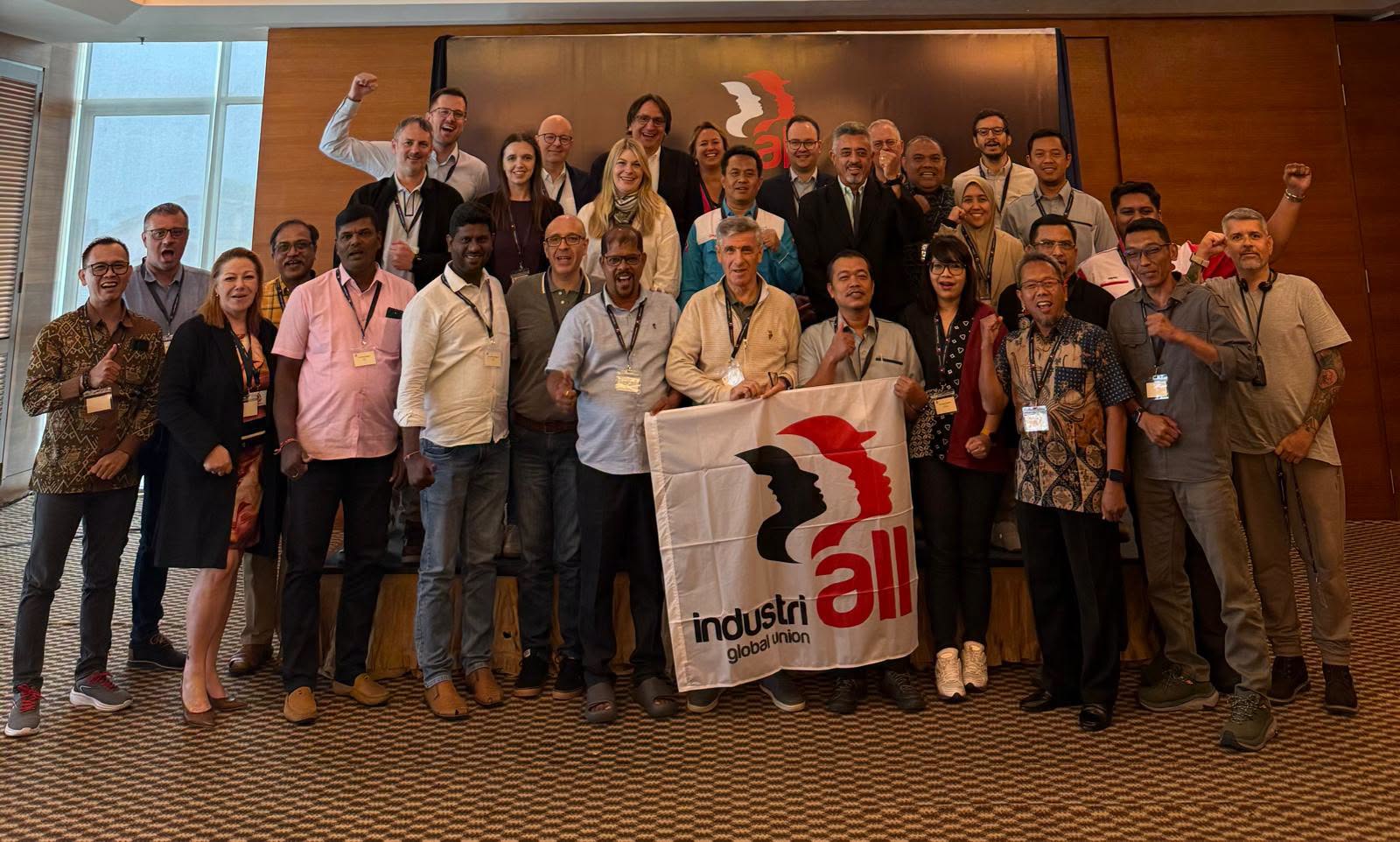
14 October, 2026Unions representing BASF workers in Asia, Europe and Latin America met in Kuantan, Malaysia, on 10 October. Restructuring and job cuts are hitting workers from Germany to Argentina, and the unions recommited to their joint position seeking global recognition and dialogue with the company.
The meeting of the BASF global trade union network brought together unions from Argentina, Belgium, Brazil, Germany, India, Indonesia, Malaysia and Türkiye. The day before, participants visited BASF’s Kuantan site, one of the company’s biggest in Asia.
BASF employs around 94,000 people at 234 production sites in 93 countries. But decisions that affect workers worldwide are taken with insufficient consultation outside Europe.
IndustriALL assistant general secretary Kemal Özkan said:
“Our circumstances differ, but we are united. Our colleagues should leave here knowing they have an international network that supports them.”
Restructuring under way
Sinischa Horvat chairs the BASF group works council and the BASF works council Europe. He explained that the company’s Core Shift programme targets 20 per cent net cost savings by 2029, after a workforce reduction of around 7,000 in two and a half years. He also spoke of a fatal accident at Ludwigshafen earlier that week and was clear: cost savings can never cost lives.
The pressure is felt across the network. BASF Antwerp in Belgium is set to lose 600 jobs by 2028. In Argentina, management has announced job cuts. Negotiations there are due to close by 1 November. In India, BASF has sold off business units. Contract workers are replacing permanent staff and automation is changing work. In Malaysia, unions call for improved industrial relations and union offices in the factory.
There are wins too. In Indonesia, unions organized white-collar workers at the Jakarta head office and won a national minimum wage standard across BASF Indonesia. In India, the union achieved a cut to the working week from 48 to 42 hours.
From network to recognition
Unions want a seat at the table before decisions are made. They are calling for proper information and consultation at global level, so that workers everywhere can engage on plans that affect their jobs before those plans are carried out. Their message will be taken directly to BASF’s central management.
The network’s goal is real global dialogue with BASF, and in the long run a global framework agreement.
IndustriALL sector director Tom Grinter said:
“IndustriALL is BASF’s global dialogue partner and we are ready to engage. Yes, there are challenges, but the trade union network is strong and committed.”
Next steps for the network
Among other things, the network agreed to:
- develop a common position for BASF management on global recognition, dialogue and a future global framework agreement
- hold online training on the German Supply Chain Due Diligence Act
- continue project work in Asia and Latin America under a new three-year funding cycle from FES
- give immediate support to the Argentine union in its negotiations
Alexander Bercht, Member of IGBCE Executive Board resumed the meeting as follows:
“Global trade union networks like the one at BASF are our way to tackle global companies. In particular global restructuring programmes in the chemical industry make it more necessary than ever to safeguard workers rights worldwide. BASF global network meeting made this very clear. Therefore we will have to extend these networks in the future and IGBCE is committed to support this.”