
Other violations include virginity testing in Philippine export processing zones. A woman in Uganda raped by managers, infected with HIV and then dismissed. Such abuses violate women’s right to sexual and reproductive health. Women must be free to make decisions about their bodies without violence, coercion, discrimination or retaliation.
“These are not isolated abuses. They reflect workplace structures and power relations that deny women dignity, autonomy and equality,”
says IndustriALL assistant general secretary Christina Olivier.
Beyond individual cases
According to the International Labour Organization (ILO), women are 1.6 times more likely than men to experience sexual violence and harassment at work. Young women face twice the risk of young men and migrant women almost twice that of non-migrant women. Fear of retaliation, doubt that anything will be done and workplace cultures that normalize abuse keep almost half of those affected silent.
Practical fixes such as better lighting, safer transport and safe toilets are not enough. In line with ILO Convention 190, prevention must tackle root causes: how work is organized, unequal power relations, gender stereotypes and discriminatory norms. Perpetrators must also face real consequences, as this year’s UN Women campaign demands.
This transformation must begin with girls. The norms and power relations that expose them to violence follow them into the workplace, shaping their access to decent work, bodily autonomy and safety. Defending women workers’ rights means challenging these inequalities throughout their lives.
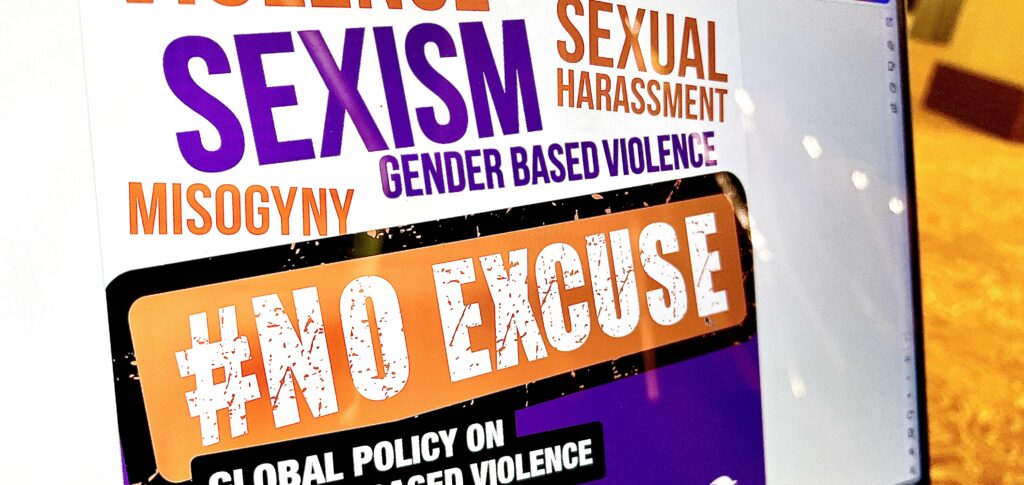
Unions must meet the same standards. IndustriALL’s Global Policy on GBVH, Misogyny and Sexism and its No Excuse campaign tackle abuse in workplaces and unions alike. No position should shield anyone from accountability.
Women must shape the response
Women workers must have real power over decisions on their health and safety. Survivors must be heard, supported and free to decide how their case is handled.
This builds on the feminist resolution adopted at IndustriALL’s 4th Congress in 2025, which led the women’s committee and most regional committees to make GBVH a priority. This year’s International Labour Conference also called for a transformative agenda for gender equality.
Says Olivier:
“We call on affiliates to use organizing and collective bargaining to secure binding measures that prevent GBVH, protect survivors and ensure accountability. Women workers must also be at the heart of decision-making, both in workplaces and within their own unions.”
Affiliates can act all year by:
- campaigning to ratify and implement ILO Convention 190,
- setting up safe reporting channels and protecting survivors from retaliation,
- working with specialist services to support survivors and their children, and
- strengthening women’s leadership and involving men in challenging abuse.
Real progress means women and girls are safer, heard and supported.