
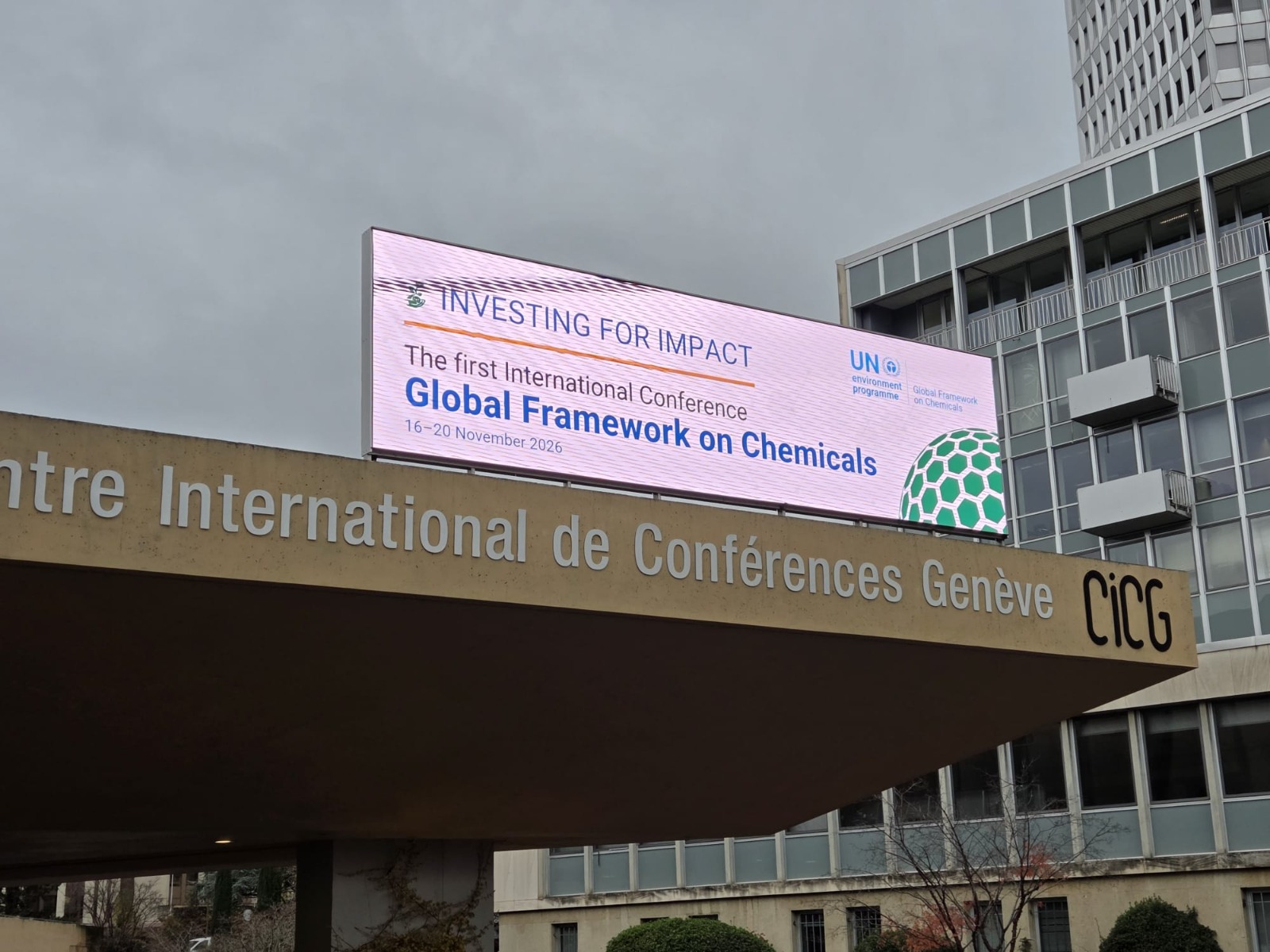
The International Union of Food, Agricultural, Hotel, Restaurant, Catering, Tobacco and Allied Workers’ Associations (IUF) and IndustriALL Global Union welcome the plan developed following a 2023 resolution of the International Conference on Chemicals Management. The aim is to integrate a gender perspective and advance gender equality and women’s empowerment in chemicals and waste management.
The plan received broad support from countries attending the conference, including the African Group and European Union Member States. The plan provides guidance and unions are encouraged to push for its implementation in practice.
Why gender matters in workplace safety?
Occupational safety and health rules have traditionally been designed around a “standard male worker.” As a result, women’s exposure to hazards, including chemicals, is under-assessed, under-regulated and under-protected.
Scientific evidence shows that chemicals affect workers differently. The unions emphasize that incorporating gender considerations into workplace safety is essential to protect all workers.
The plan focuses on prevention. It calls for:
- employers to adopt gender-responsive safety and health policies,
- protection for informal and marginalized workers, who often face the highest exposures,
- safer alternatives that reduce risks for women, such as removing hazardous tasks, using chemicals less harmful to reproductive health and, as a last resort, providing better-fitting protective equipment
The plan calls for more research into how chemicals may affect women and men differently at work. Furthermore, it calls for chemical labels, safety information, regulations and workplace inspections to take these differences into account. This will provide better protection for workers who may be particularly at risk.
It also includes a template of targets and indicators that unions and employers can use.
“Workplaces can only be safe if we take everyone’s safety and health into account. Women workers are at greater risk from exposure to chemicals and their particular needs are still too often ignored. We welcome this action as a step in the right direction to address that imbalance and ensure that women’s safety and health are properly addressed,”
said Kristjan Bragason, IUF’s acting general secretary.
Putting the plan into practice
The IUF and IndustriALL will put the plan into practice. This will be especially true in sectors where women make up much of the workforce.
For the IUF, that includes agriculture and hospitality. For IndustriALL, that covers electronics, including e-waste and textiles, where women represent up 50 to 80 per cent of workers.
The plan aligns with the International Labour Organization’s (ILO) 2026 resolution on a Transformative Agenda for Gender Equality. The resolution states that safety and health policies must consider a gender perspective.
By setting out some concrete steps towards a more gender-responsive approach to chemical health and safety, the plan could provide a useful basis for the ILO Workers’ Group. This will help in negotiations on a new ILO convention on chemicals.
“Every worker deserves protection from hazardous chemicals, whatever their gender. Now the work begins: unions must make sure this plan reaches the factory floor, from electronics to textiles,”
said IndustriALL assistant general secretary, Christina Olivier.