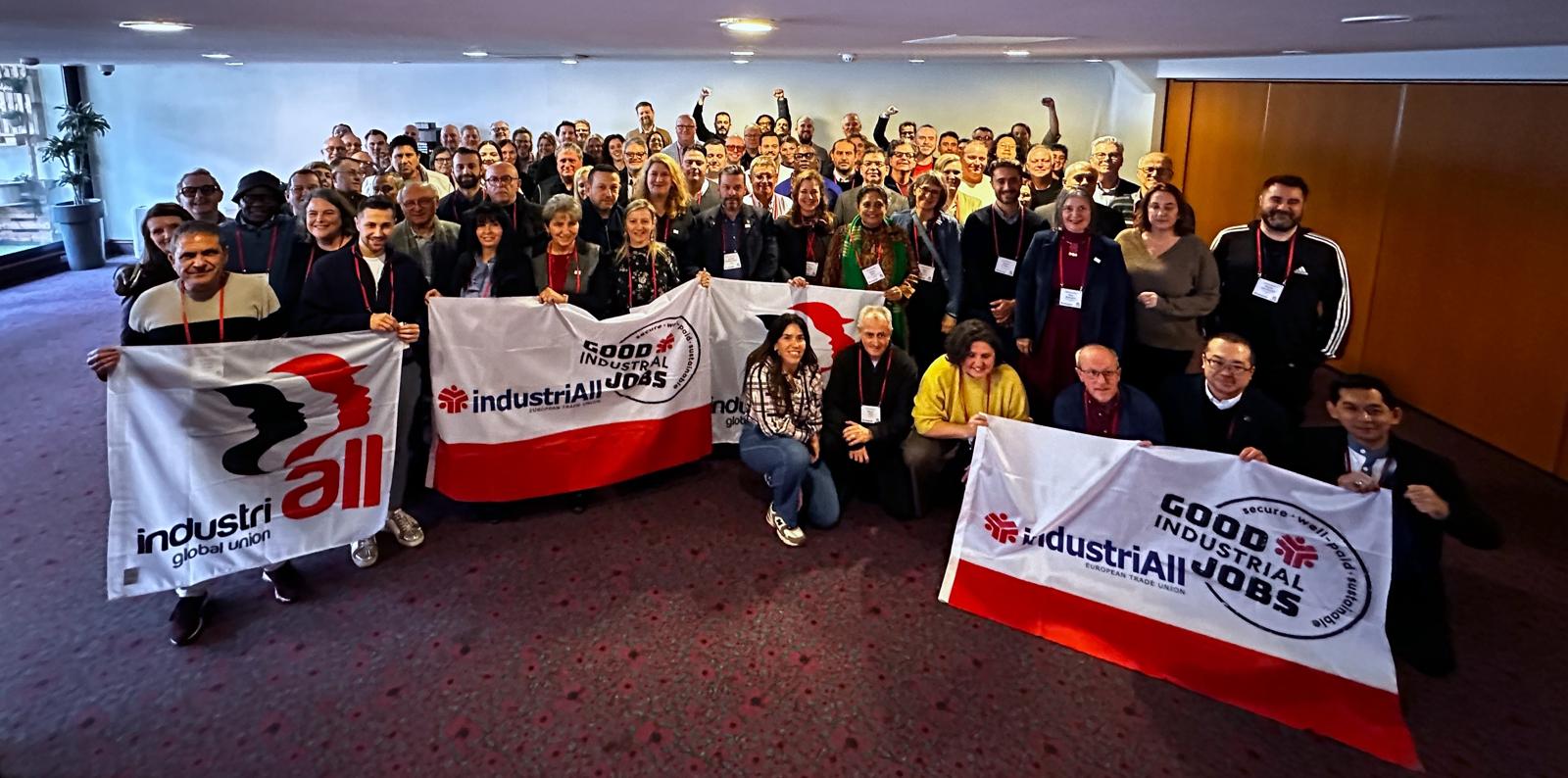
24 February, 2026More than 100 trade unionists from across the world met in Paris on 19–20 February for the final conference of the first joint industriAll Europe and IndustriALL globgal union project: ABC of RBC (Responsible Business Conduct). The conference delivered a clear message: human rights due diligence (HRDD) along global supply chains must deliver real change for workers.
Opening the meeting, IndustriALL Global Union general secretary Atle Høie warned that while global framework agreements have pushed the agenda forward, not being legally binding they still lack the reach needed to fully protect workers. Recent laws in for example France, Germany, Norway and at EU level mark major progress compared with five years ago, he said, but implementation is now the decisive battleground.
Judith Kirton-Darling, general secretary of industriAll Europe warned, in her opening remarks that legal frameworks mean little unless unions act together to put union power at the centre and turn HRDD into a living tool. She stressed that as business models change, we must change too, ensuring that we are constantly representing workers rights and trade union freedom in this rapidly changing economy.
The task for unions is to build real momentum around HRDD by connecting organizing efforts across the Global North and South and making due diligence work across entire supply chains. Strong unions and sustainable structures are essential, Høie stressed, because without trade unions there is no real democracy.
Unions must drive the change
Across the two days, speakers highlighted both opportunity and risk. Veronica Nilsson of TUAC pointed to the continued importance of OECD national contact points, while IndustriALL assistant general secretary Kan Matsuzaki stressed the need to build union density and support workers directly on the ground.
Participants voiced strong concern about companies whitewashing their records through weak industry initiatives and voluntary audits. The priority, many said, is changing the reality in workplaces through stronger monitoring, communication and cross-border union networks.
Sector discussions underscored the urgency. Justice Chinhema of ZDAMWU in Zimbabwe reported daily violations of fundamental trade union rights in mining and questioned how HRDD frameworks apply when investors in Sub-Saharan Africa come from outside Europe. Claudia Rahman of IG Metall stressed that effective HRDD depends on robust structures and honest reporting of risks, including retaliation against workers. Headquarters unions have important leverage, she noted, but cannot succeed without far closer cooperation with unions in production countries. Ildikó Krén of industriAll Europe highlighted the need to train workers and develop concrete organising strategies that translate HRDD from an abstract system into real improvements in working conditions.
Day two focused on coordination along global value chains. Karin Ström of Unionen presented a transparency analysis tool for mapping supply chains, while Nazma Akter of Bangladeshi union SGSF pointed to the International Accord as proof that legally binding, worker-driven mechanisms can deliver when backed by unity.
The message from Paris was clear: unions are match ready with tools in hand. The challenge now is to use them strategically, so HRDD becomes not just compliance, but leverage.
From compliance to real leverage
Building on the discussions held in Paris, industriAll Europe and IndustriALL Global Union will continue advancing the dialogue on how to translate these insights into a more structured and coordinated approach. Potential next steps include further mapping of regulatory and leverage tools, strengthening global union networks, exploring ways to better integrate HRDD into Global Framework Agreements, and enhancing affiliate capacity at all levels.