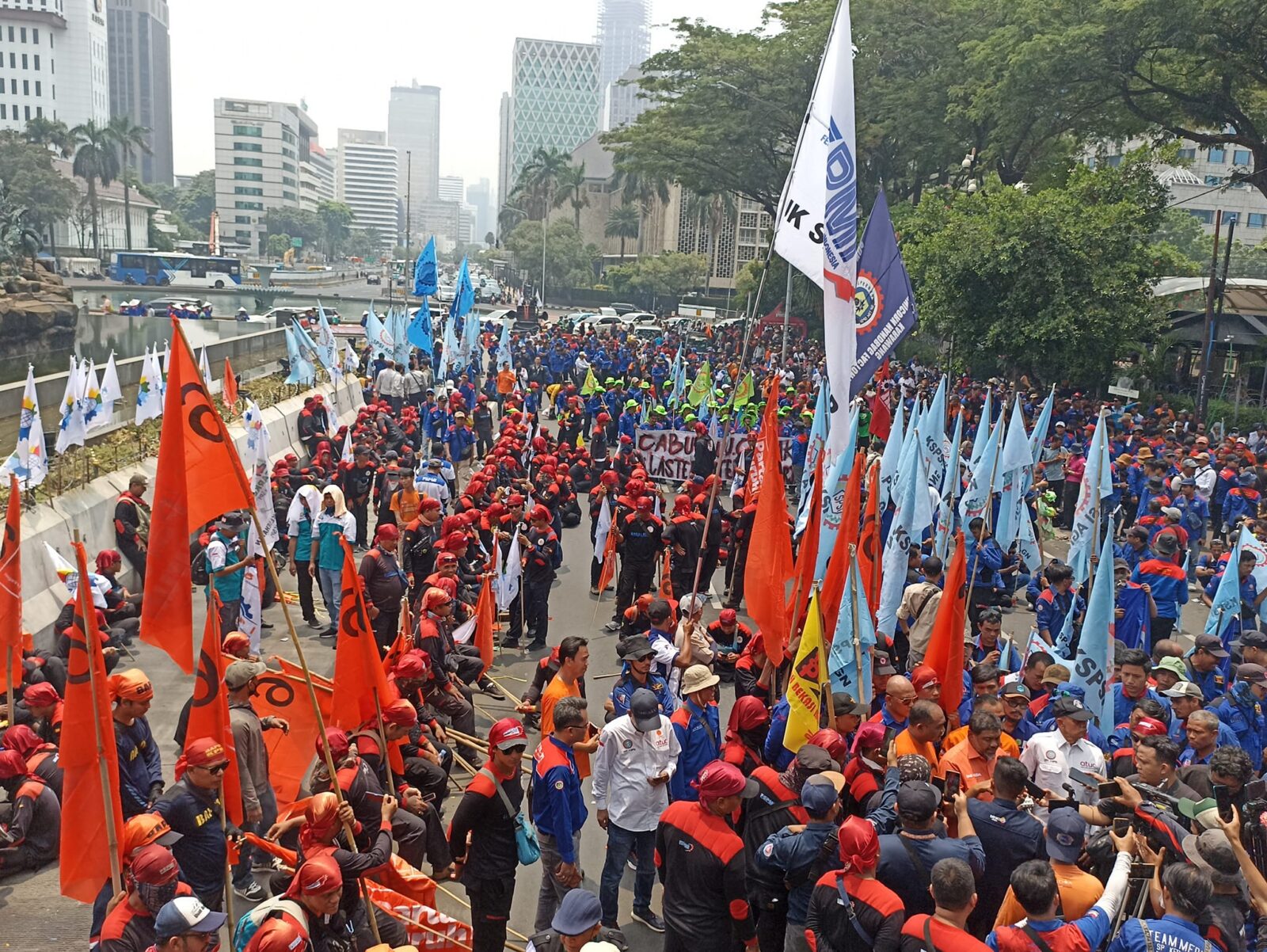
The Trade Union–Labour Party Coalition of 72 organizations, including FSPMI and KSPI, submitted detailed proposals to parliament and mobilized around 50,000 workers in Jakarta while the new bill was debated.
Signed into law at the end of October, the law limits outsourcing to support work like cleaning, catering, security and transport. Outsourced workers used in production automatically become employees of the company using them.
Workers who lose their jobs when a company closes after continuous losses or goes bankrupt will receive full severance instead of half. Employers, except micro and small enterprises, must also pay into a government-managed severance reserve fund, so money is set aside before a company fails.
The minimum wage must be set at whichever is higher: the wage formula or decent living needs agreed by regional wage councils. Apprenticeships are capped at six months, and any apprenticeship without a written agreement becomes employment.
FSPMI says:
“The new law is not a gift from the government. It is part of the result of the labour movement’s long struggle.”
Unions stress that the struggle is not over; much depends on implementation. Outsourcing has not been abolished, and the wage formula and reserve fund depend on implementing regulations not yet issued. KSPI has also flagged weak provisions on wage deferral and apprenticeships.
IndustriALL has opposed the Omnibus law since 2020, calling for its cancellation and adopting a solidarity resolution at the 2021 Congress.
IndustriALL general secretary Atle Høie says:
“We congratulate the Indonesian unions who have fought hard against the Omnibus law. This is a great union win which will benefit millions of workers in the country.”
News
Indonesia: new labour law replaces Omnibus
Indonesia’s new Employment Protection Law bans outsourcing of core production work and doubles severance for workers who lose their jobs when companies fail. The law replaces the labour provisions of the 2020 Omnibus law, which unions have fought for six years.