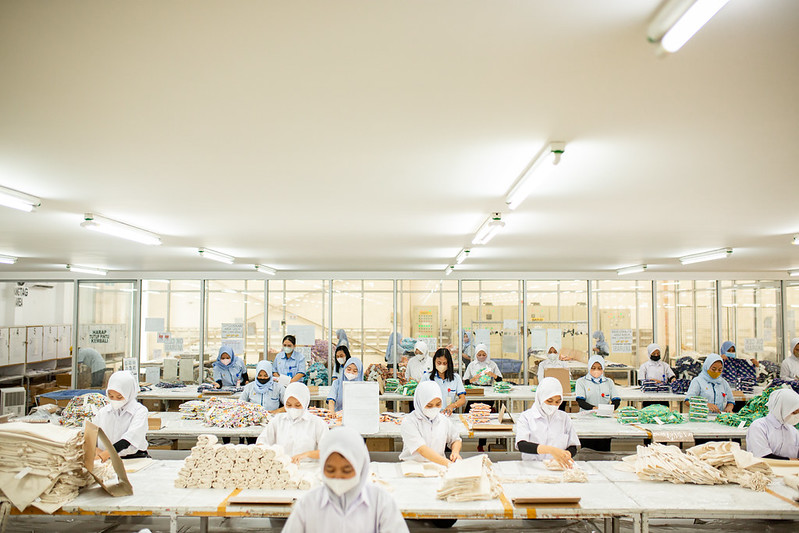
30 April, 2026The textile and garment sector employs tens of millions of women around the world, yet gender-based discrimination, unequal pay and violence and harassment remain widespread realities for too many. Deeply entrenched social norms and power structures continue to block women's equal access to rights, resources and opportunities, in the workplace and within their unions. To counter this, IndustriALL Global Union's textile, garment, sportswear and leather sector has adopted a new policy directly confronting these structural barriers.
“Women are at the heart of the garment industry. This policy ensures they are at the heart of our movement too. It gives our affiliates a concrete framework to advance gender equality, from the factory floor to union leadership”
says Christina Hajagos-Clausen, IndustriALL textile and garment director.
A vision of equal rights and decent work
The policy sets out a vision of a sector where all workers enjoy equal rights, earn equal pay for work of equal value and are free from violence and harassment.
The policy organizes its commitments around four priority areas.
- Workplace safety and ending gender-based violence and harassment (GBVH). This means securing safe, healthy and gender-responsive workplaces, eliminating GBVH and promoting gender-responsive occupational health and safety frameworks.
- Representation, inclusion and leadership. The policy commits to increasing women’s representation in IndustriALL leadership and affiliate structures and strengthening mentorship and leadership development for young women trade unionists. It also calls for gender-balanced participation across all TGSL structures.
- Decent work, social protection and equality. The policy calls for closing the gender pay gap, securing decent work and social protection for informal and migrant women workers and addressing the unequal burden of care. It also commits to integrating gender equality into just transition and future of work agendas.
- Solidarity and movement building. This includes advancing collective action in support of TGSL women workers globally and mobilizing thematic experts across regions and sub-sectors to lead gender-transformative work.
From policy to practice
The policy will be implemented through both mainstreaming gender across all sectoral activities and targeted actions to address inequalities directly. This will include campaigns on 8 March, 25 November and 10 December, training for men on gender equalit, and seminars on gender-related issues in the sector.
The TGSL gender expert committee, established in 2021, will advise the TGSL steering committee on annual action plans and review progress on implementation. The secretariat will be responsible for implementing adopted priorities.
Progress will be tracked annually, with each objective linked to short-, medium- or long-term timeframes and clear indicators.
The policy was developed with the support of Mondiaal FNV.