
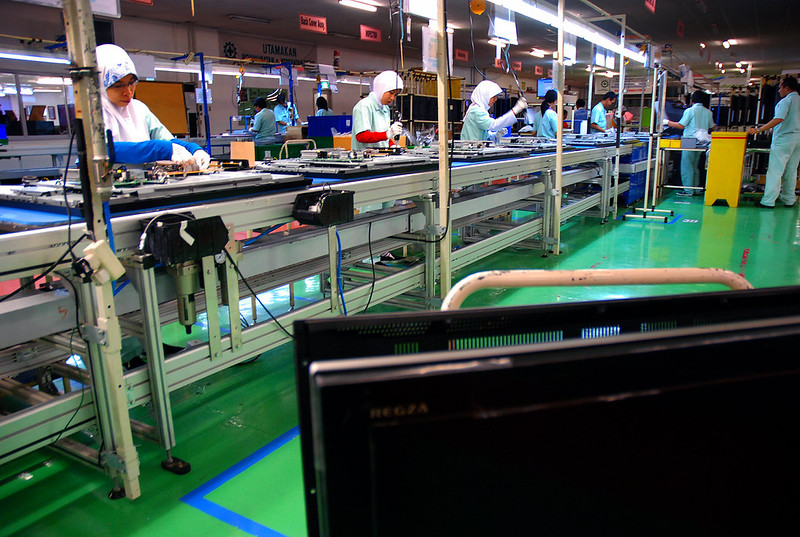
11 August, 2026Migrant workers are among those most exposed to forced labour risks in the electronics sector. That was the finding of IndustriALL Global Union affiliates in Indonesia, Malaysia and Thailand. They met with employers, government authorities and the ILO in July and August. Recurring issues across the industry included retention of identity documents, excessive recruitment fees and gaps in social security registration. Participants agreed on the need for stronger labour inspection. They also called for joint training on forced labour indicators across the electronics supply chain.
Under the ElectroPower project, around one hundred participants took part in three multi-stakeholder round tables. They included trade unionists, migrant worker representatives, employer representatives, government officers and ILO representatives, meeting in Jakarta, Kuala Lumpur and Bangkok in July and August.
Unionists and migrant workers gave testimony on forced labour in the industry. They described retention of identity documents, excessive overtime, and withholding and unlawful deduction of wages. They also pointed to excessive recruitment fees and abusive working and living conditions.
Indonesian unionists pointed to risks further upstream. Long-running labour disputes have hit the nickel operations in Morowali, a key source of material for batteries and components. They have exposed frequent workplace accidents and excessive working hours. Gender-based violence and harassment have also come to light.
Malaysian union leaders from the electronics industry called on employers and government authorities to address employer interference in the right to freedom of association. They stressed that a union presence is what makes rights enforceable and forced labour preventable at the workplace.
In Thailand, migrant workers in electronics face heightened risks: short-term contracts, gaps in social security registration, exposure to chemical leaks and unfair dismissal.
Participants agreed that stronger labour inspection is needed. They also called for joint training on forced labour indicators to improve monitoring across the industry and its supply chain. They welcomed further social dialogue with stakeholders across the sector.
Alexander Ivanou, IndustriALL director for ICT, electrical and electronics said:
“Workers are usually the first to see a problem, but the last to be heard, which is why IndustriALL is calling for a worker-driven approach to remediation — their voices have to be part of the solution, not something added at the end. That means workers must be able to raise concerns without fear of retaliation. Every worker in this sector, local or migrant, woman or man, should be able to work in conditions of dignity, safety and freedom.”
The ElectroPower project is co-funded by the European Union. It aims to prevent and remedy forced labour in the electronics supply chain through responsible employment practices and stronger institutional responses.