
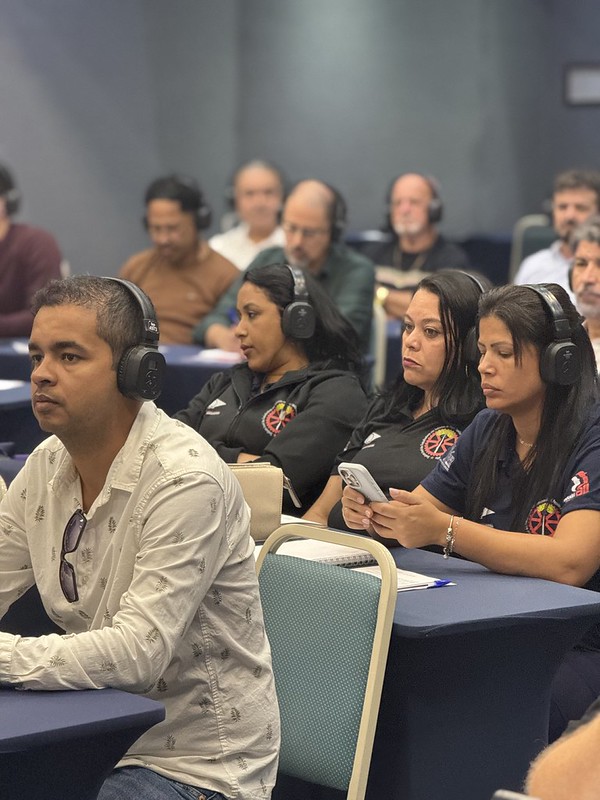

The meeting opened with a visit to Suzano’s Mogi das Cruzes unit. Participants met workers, management and local union representatives.
Back in São Paulo, IndustriALL vice president Maicon Vasconcelos spoke about the struggles unions in Brazil have faced and the international support and pressure that helped them. That mobilizing paid off with President Lula’s re-election last month.
“It is important to have you here with us,”
he told delegates.
The meeting brought together IndustriALL’s regional trade union network for the sector, with unions from six Latin American countries. They were joined by the global sector work group, which brought unions from seven key countries around the world.
The two global IndustriALL pulp and paper sector chairs, from Swedish Pappers and US USW set the tone for the discussions. What happens in one country affects workers in others, so participants were asked to share concrete examples of what has worked and where they need support. IndustriALL pulp and paper director Tom Grinter welcomed the global paperworker power in the room.
The industry is global. Brazil is the world’s biggest pulp exporter, shipping 20.7 million tonnes in 2025. That pulp feeds paper and tissue mills on several continents. Meanwhile, production is shifting fast towards China, which now makes about a third of the world’s paper and board.
That power was clear as delegates compared notes. Asked why the same multinationals offer different conditions in different countries, the answer came from the floor: they do what they can get away with. That means lower pay and longer hours wherever unions are weaker.
Dignity and safety
Women described working in Brazil’s forests without toilets and facing harassment. When told that women in the field are a recent development, one replied:
“I have been there for seven years! Another colleague has been there for 26 years! How long should we wait for our rightful place and treatment?”
Participants called for as many women as possible to be involved in the union movement, at the bargaining table and in leadership.
Delegates spoke of lives taken in accidents.
“The company gets sad but seems to forget about it,”
said one, who proposed drawing up a document on the increasing number of accidents.
Across the region
Delegates from across Latin America brought struggles that many in the room recognized. Argentinian unions described a conflict at a mill, paper workers losing their jobs, wages that no longer keep up with prices and trade unionists facing prosecution. Colombian unions spoke of 80 years of struggle.
The response from the room was immediate. Tom Murphy from Unite in the UK spoke directly to his Latin American colleagues:
“You are so brave. You are attacked for being trade unionists. You have support from us here in the room.”
Harnessing the power
So how do unions turn these shared experiences into joint action? Participants pointed to international solidarity and strong company networks. For one, the answer lies in the multinationals themselves:
“We must organize in multinationals so that we can compare issues, problems and solutions and how we can work together.”
To make that happen, the network adopted a joint plan with several action points, including different meetings both online and physical in 2027, improved communications channels, and work on women and youth.
You can find all the photos from the meeting and the factory visit on Flickr.