
Read this article in:
English
1 April, 2026As Ukraine looks toward post-war reconstruction, its trade unions are fighting on two fronts: defending workers’ rights against sweeping labour law changes being pushed through without consultation and preparing to ensure that workers, not international investors, shape the country's socio-economic recovery.
Draft legislation currently before the Ukrainian parliament has alarmed trade unions across the country. The proposed laws, affiliates say, reproduce and entrench the worst restrictions imposed under martial law: weakened union representation thresholds, removed protections for pregnant women and workers in hazardous conditions and the effective exclusion of trade unions from collective bargaining processes.
Most troubling to union leaders is the way the drafts have been developed.
“We were never given the text of this law,”
said Mykhailo Volynets, chairman of the Confederation of Free Trade Unions of Ukraine. Social dialogue, already fragile in Ukraine, with the national tripartite council having not met since 2018, has been bypassed entirely. For affiliates already struggling to hold together union structures amid industrial devastation, the exclusion is not just a procedural failure. It is an existential threat.
IndustriALL assistant general secretary, Kemal Özkan, was direct about what is at stake:
“We call for an immediate end to Russian aggression, the right to social dialogue and the right for workers.”
IndustriALL general secretary, Atle Høie, echoed the concern, warning that the window to get this right is narrow:
“International companies will want to buy what is left of Ukraine. Ukraine has ambition to join the European Union (EU) and it must comply with standards, including labour legislation”.
We have to make sure that the EU is clear to Ukraine on what is necessary.”
The European Commission and the ILO have both been unequivocal: the draft legislation must be brought into full alignment with EU and ILO standards. For Ukraine, this is not just a matter of workers’ rights, it is a condition of EU accession.
“We expect Ukraine to abide by these standards,”
said Laura Corrado from the European Commission’s directorate-general for employment.
Magnus Berge of the ILO was equally direct:
“The war does not absolve the government of its international commitments.”
Devastation on the ground
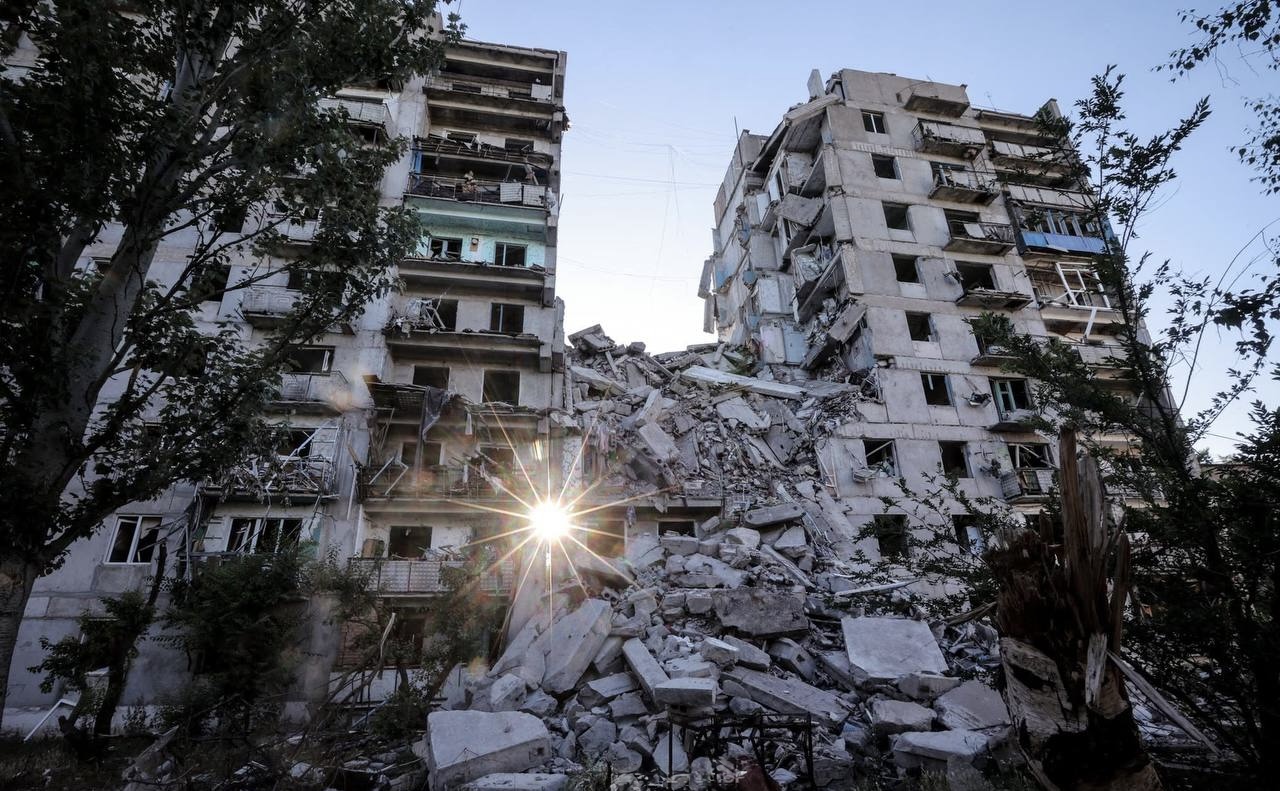
Behind the legislative battle lies a picture of profound industrial destruction. Across coal, metal, chemical, energy, oil and gas, machine-building and aerospace sectors, affiliates describe the same pattern: enterprises destroyed or suspended, membership in freefall and unions struggling to maintain basic structures. The metal and mining sectors have lost six of its fourteen enterprises.
The machine-building sector reports a decline in membership not because workers are leaving, but because the workplaces themselves no longer exist. The chemical sector has seen entire facilities go silent due to shelling. In the hardest-hit regions, affiliates say rebuilding destroyed enterprises is not economically viable and they are not convinced anyone will invest in doing so.
In this environment, collective bargaining has largely stalled. Affiliates across sectors report that negotiating new or improved collective agreements is simply not possible in current conditions. Instead, unions are focused on a single, more modest objective: holding on to what was agreed before the war.
“We are fighting not to lose what we already have,”
said another representative from the aerospace sector.
Industrial agreements that should be updated and strengthened are being left unchanged, not out of choice but necessity. Where salary increases have been achieved, it is collective bargaining, however constrained that has made the difference, with wage growth in some sectors outpacing inflation.
Social dialogue at the national level has effectively collapsed. At the enterprise and industry level, affiliates describe a pattern of employers and government structures failing to fulfil existing agreements, with unions having little leverage to enforce compliance.
“If these draft laws pass, trade unions will be excluded from reconstruction,”
another affiliate warned. The concern is widely shared: that international investors, attracted by weakened labour protections, will dictate the terms of Ukraine’s economic recovery while Ukrainian workers bear the costs.
Reconstruction must work for workers
If reconstruction is to be built on democratic and sustainable foundations, trade unions insist they must have a seat at the table and that seat must be secured now, before the terms of recovery are set. That means not only defending existing collective agreements, but ensuring that new industrial and energy models, including the transition away from coal and toward renewables, are shaped with worker participation from the outset.
“As trade unions we have to prepare for workers to have their fair share of resources and what comes after the war,”
said Atle Høie.
“We have to be prepared for the day the war ends.”
Kemal Özkan reinforced the point: “Our mission is to have strong unions present in the reconstruction.”
“If you want to invite six million displaced people back, you have to look at working conditions,”
said Magnus Berge.
“If working conditions are not good, you will not have the workers and you need them to rebuild.”
IndustriALL Global Union, together with its Swedish solidarity partners Union to Union (UtoU) and IF Metall and IndustriALL Europe, has committed to a sustained three-year programme supporting Ukrainian affiliates to rebuild their capacity, strengthen social dialogue and ensure workers’ voices are central to Ukraine’s recovery. The message from union leaders is clear: reconstruction is not just about bricks and concrete. It is a question of power and Ukrainian workers intend to be part of it.