
Read this article in:
English
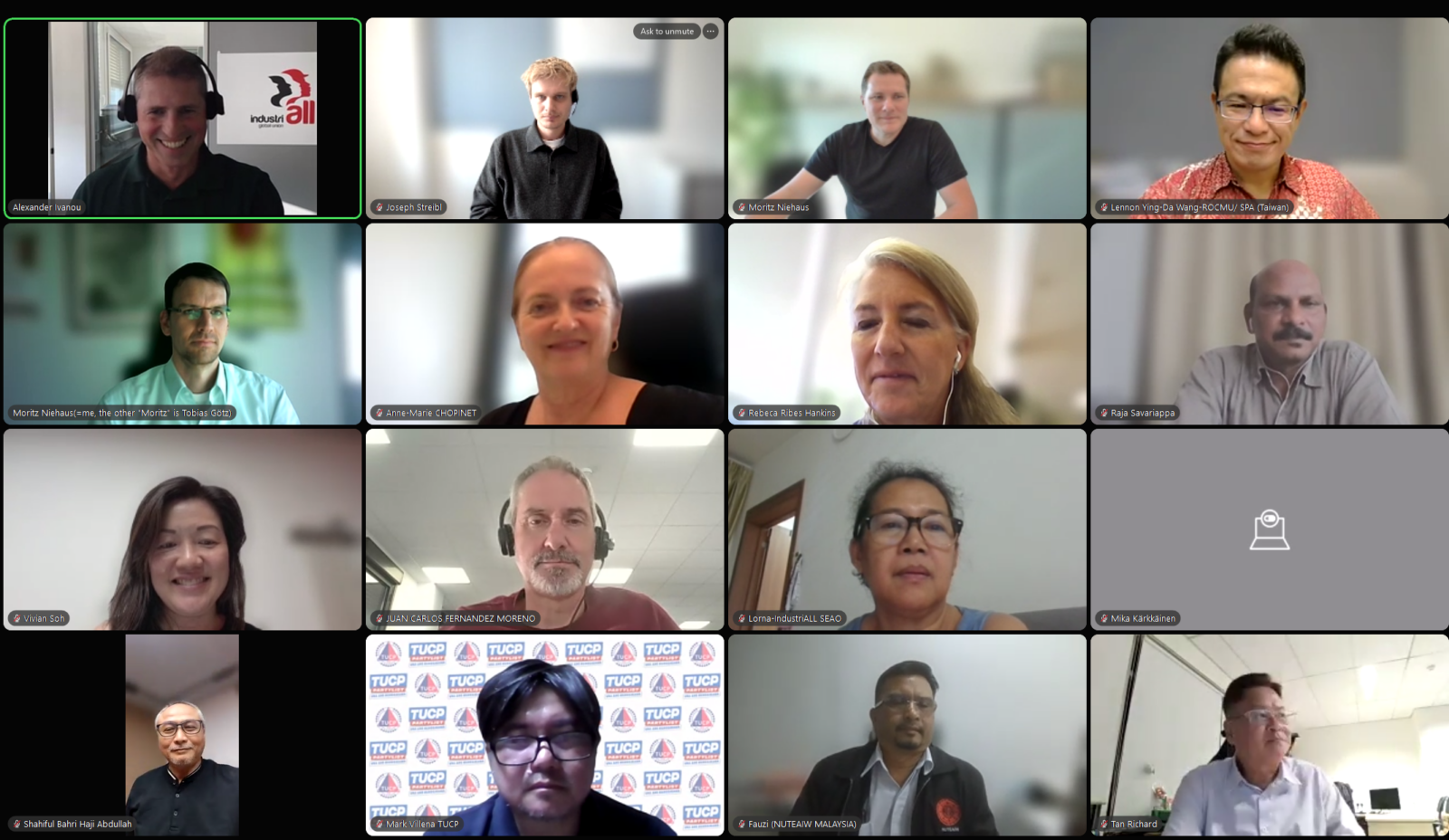
23 September, 2026Trade unions representing workers in the semiconductor industry met online on 22 September to share a picture of a sector reshaped by AI demand, geopolitics and massive public subsidies, and agreed on steps to strengthen the IndustriALL semiconductor network.
Almost 30 participants from Europe and Asia and Americas registered for the meeting, which opened with a greeting from IG Metall colleagues accidentally holding a parallel conference in Frankfurt with German works council members for a similar theme.
Alexander Ivanou, IndustriALL director for ICT, electrical and electronics, said:
“Semiconductors have moved from a specialist supply chain topic to the centre of industrial policy. AI demand, export controls and hundreds of billions in public subsidies are reshaping the industry in the global North and South alike, and this is happening almost entirely without unions at the table. We need to change that.”
Record profits, low wage share
Emmanuel Reich of Syndex presented an overview of the industry. The global semiconductor market is expected to reach around US$1 trillion in 2026, a level previously forecast for 2030. AI chips account for 30–40 per cent of market value but less than 1 per cent of units sold. Nvidia’s annual revenue has grown from around US$11 billion to over US$215 billion in five years, with operating margins near 75 per cent. SK Hynix and TSMC also report margins of 50–70 per cent.
Semiconductors are now among the most subsidized sectors in the world, while China accounts for 35–40 per cent of global investment in new capacity. Reich warned that circular financing between chipmakers and their customers points to a bubble, and that its eventual burst could hit workers worse than the dotcom crash did in the beginning of 2000-s.
Participants noted that the gains have gone overwhelmingly to profits and shareholders rather than wages, and that public support in the EU and Asia has come with no labour conditions attached. Interestingly the US CHIPs Act was an exception with some labour conditionalities incorporated.
The workers behind the boom
Ivanou highlighted the role of migrant, agency and outsourced workers, particularly in the back-end production i.e. assembly, testing and packaging, mainly located in Asia. In the US, large share of 43.9 per cent of semiconductor manufacturing workers are foreign-born. In Malaysia, a hub for chip assembly and test, an estimated 100,000 to 140,000 migrant workers are employed in electronics. These workers to large extent face the trouble of high recruitment fees, resulting heavy debts and misleading contracts that can amount to forced labour, as well as chemical and ergonomic risks and barriers to joining unions.
Affiliates reported on the situation on the ground. In Taiwan, migrant workers face 12-hour shifts, lower night shift allowances than local workers, and in some cases have to pay rent for company dormitories they live in. Union organizing continues to meet strong resistance. In Germany, IG Metall and IG BCE described coverage ranging from strong collective agreements to fabs with almost no members, and a campaign linking public funding under the EU Chips Act 2.0 to collective bargaining and works councils. In Malaysia, NUTEAIW reported that since the 2024 legal amendment allowing unions to extend their organizing scope, it has grown from around 30 to 96 companies and is preparing secret ballots at major semiconductor sites.
Next steps
The network agreed to:
- Meet twice a year, with the next meetings planned for spring and autumn 2027
- Build a core group of engaged affiliates
- Maintain a living map of union presence, bargaining coverage and disputes in the sector
- Select pilot companies and set up a rapid response mechanism for dismissals and recognition refusals
- Draft a model set of conditions for public subsidies covering freedom of association, direct employment, responsible recruitment, safety and health, transparency and union monitoring