
Read this article in:
English
27 February, 2026In February, trade unions in Sri Lanka gathered in Colombo for a series of IndustriALL Global Union-organized meetings focused on defending civic space, strengthening organizing and advancing women’s and youth leadership in the trade union movement.
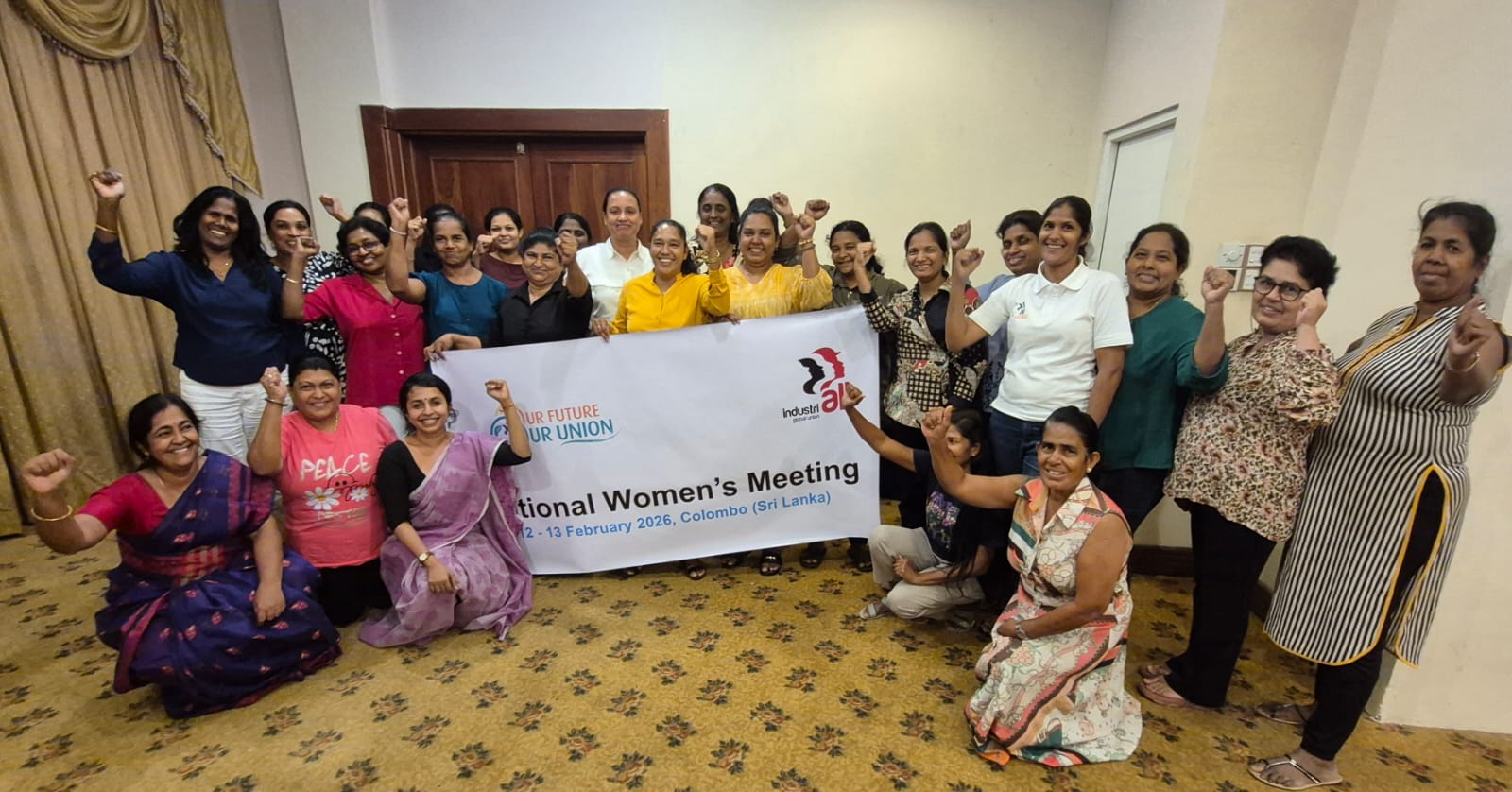
The programme began with a youth workshop on 9–10 February, continued with a national council meeting on 11 February and concluded with a women’s workshop on 12–13 February, with discussions centred on the challenges posed by economic restructuring, privatization pressures and increasing restrictions on trade union activity, as well as the need to build stronger, more inclusive unions capable of responding to these mounting threats.
Trade unions in Sri Lanka gathered in Colombo in February for a series of meetings organized by IndustriALL, beginning with a youth workshop on 9–10 February, followed by a national council meeting on 11 February and concluding with a women’s workshop on 12-13 February. The discussions took place amid economic restructuring, privatization pressures and increasing restrictions on trade union activity.
The national council meeting examined how shrinking civic space, through restrictive laws, misuse of security legislation and broad definitions of essential services, is undermining freedom of association, protest and collective bargaining. Participants raised concerns over government interference in social dialogue, including the exclusion of legitimate unions and the use of proxy organizations, alongside weak enforcement of occupational safety and health standards.
Low unionization and limited active participation, particularly in the private sector, were identified as persistent organizing challenges. Youth and women face additional barriers due to issues like job insecurity and increasing informalization. Unsafe working conditions and recent fatal workplace accidents were cited as evidence of the human cost of precarious work and regulatory failure.
The youth workshop highlighted growing frustration among young workers facing short-term contracts, employer intimidation, forced overtime, and weak protections against harassment. Participants developed concrete organizing plans across key sectors.
During the women’s workshop priority areas that need to be addressed were identified, including mobilizing women workers, promoting leadership, addressing the gender pay gap, tackling gender-based violence and harassment (GBVH) and implementation of ILO C190. An action plan was developed, outlining priorities and actions.
Across the three meetings, affiliates agreed on the need to defend civic space through coordinated advocacy, strengthen organizing through inclusive structures and link labour struggles with climate justice and Just Transition debates.
As a key outcome, affiliates agreed to establish national youth and women’s committees, each nominating two activists under 32(with at least one woman) to support inclusive unions, gender equality and leadership development within the Sri Lanka Council.
IndustriALL South Asia regional secretary, Ashutosh Bhattacharya, says:
“Defending civic space is not only about legal rights, it is about whether workers can organize, resist exploitation, and shape their collective future.”