
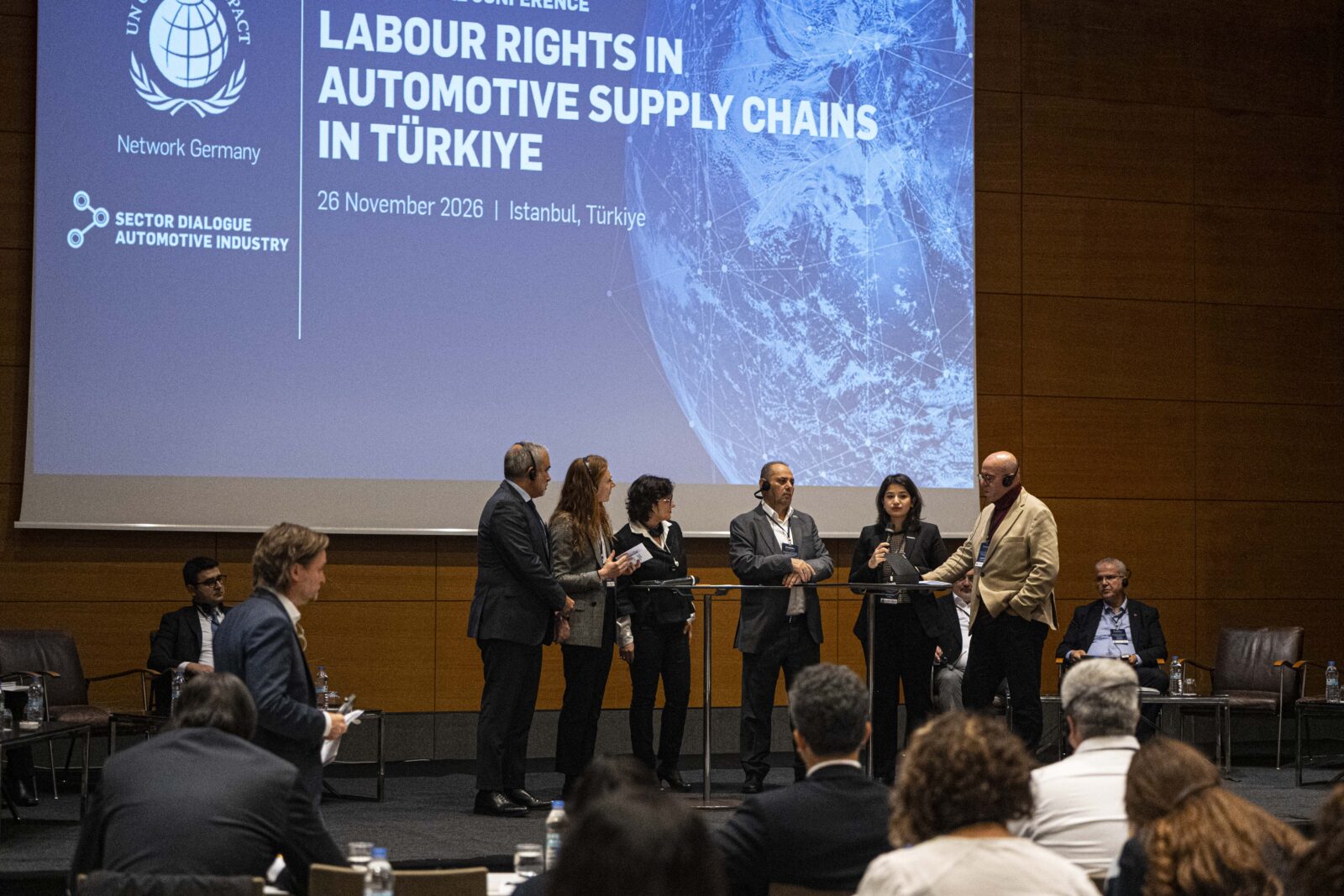



The conference, “Labour Rights in Automotive Supply Chains in Türkiye”, was organized by the Sector Dialogue Automotive Industry under UN Global Compact Network Germany. It brought together a network of around 50 stakeholders: IndustriALL Global Union and its Turkish affiliates, IG Metall, German and Turkish car makers and suppliers, the Turkish Ministry of Labour and Social Security, the German government, the Friedrich-Ebert-Stiftung (FES) and the International Labour Organization (ILO).
The German Federal Ministry for Economic Cooperation and Development (BMZ) and GIZ supported the project’s work in 2026.
IndustriALL has been part of the process since 2022, when it trained Turkish automotive unions on Germany’s new supply chain law with German unions IG Metall and IG BCE. It joined the Sector Dialogue in 2023.
The discussions were constructive and honest. The process has been slow because the issues are complex. But the range of actors in the room showed a shared will to move forward, in the interest of everyone in the supply chain.
Five tools to prevent conflict and protect rights
At the heart of the conference was the session “From Dialogue to Action”. Its facilitators, including IndustriALL director for automotive and aerospace industries Georg Leutert, Collective Measure project manager Zeynep Ekin Aklar and ZF Group head of sustainability supply chain Olga Schick-Scheider, presented the five instruments the network has developed.
The instruments adapt human rights due diligence to the Turkish context and put social dialogue at the centre:
5 instruments
- Tailored training a labour rights module on human rights due diligence, particularly for Turkish suppliers, built on three steps: train, implement and track.
- Risk analysis an annual multi-stakeholder dialogue that takes a collaborative approach to identifying corporate human rights risks.
- Conflict prevention an early warning mechanism on union recognition, an online library and counselling.
- Facilitated dialogue a trusted, voluntary format to help settle collective labour disputes
- Grievance mechanisms a common case report form and better awareness of existing grievance channels.
“No single actor can do it alone”
The line-up for the opening session showed how far the initiative now reaches. Trade unions, industry, the Turkish and German governments and the ILO took the stage one after another, all backing the same process.
Their message was consistent: no single actor can solve labour rights problems in global supply chains alone.
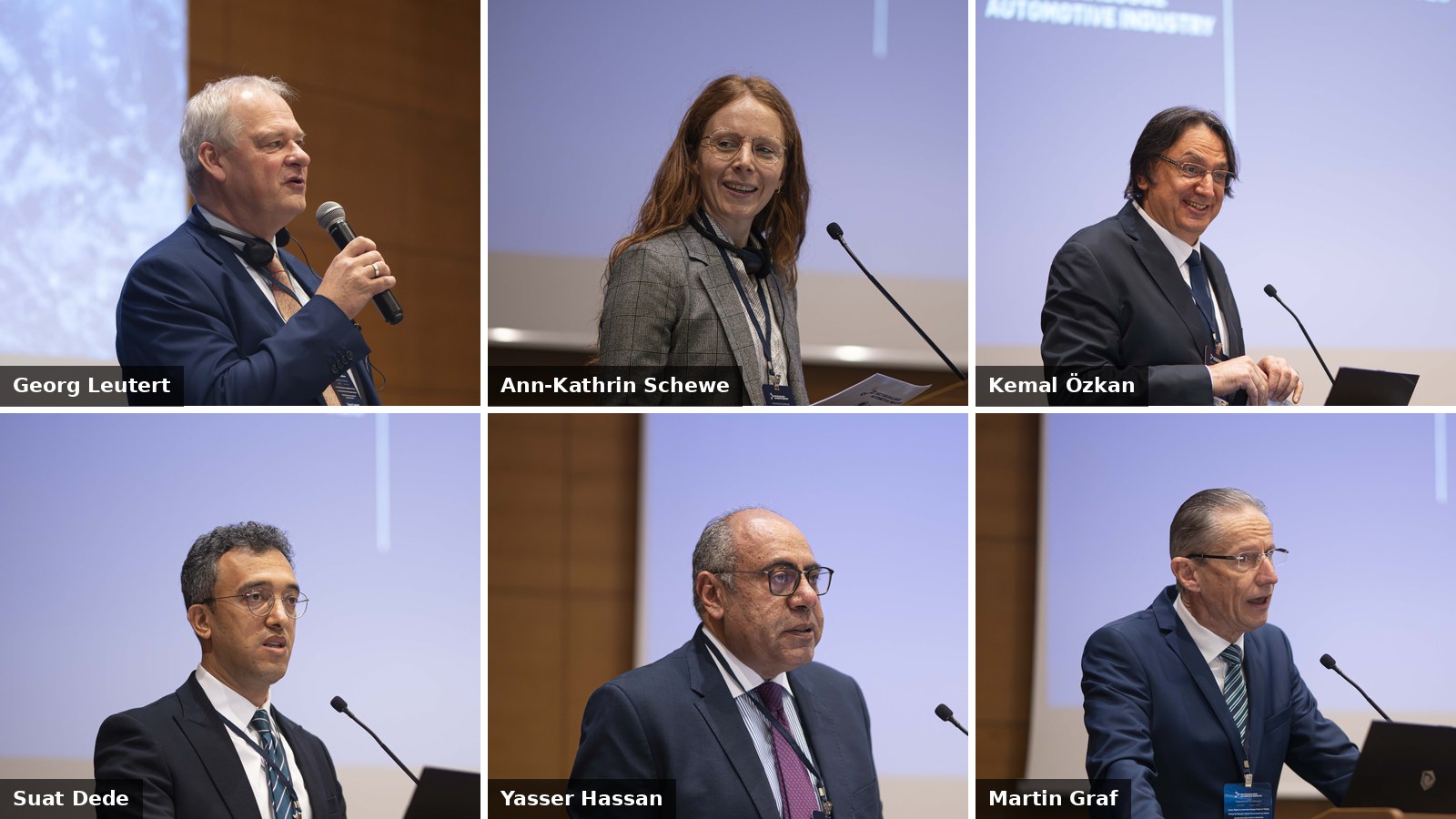
Opening the conference, Leutert said:
“From the trade union perspective, we have been working for more than four years on how human rights due diligence legislation can help us dig deeper into labour rights in Türkiye and how we can work together across borders to improve them.”
Ann-Kathrin Schewe, senior manager of the Sector Dialogue Automotive Industry, described the value of a space where stakeholders talk with one another rather than about one another:
“Collective action is slow. It’s more demanding than acting alone. It requires trust and patience and sometimes seemingly endless conversations.”
IndustriALL assistant general secretary Kemal Özkan said:
“Can one of the participants or stakeholders do it alone? The answer is no. We have principles and objectives, that is what brings us together to work together, to collaborate together.”
Suat Dede, deputy director general of the General Directorate of Labour at the Turkish Ministry of Labour and Social Security, called the changes in the world of work a shared responsibility of government, employers, workers’ representatives and civil society:
“Having legislation in place is not enough on its own. It has to be implemented and followed up.”
Yasser Hassan, director of the ILO Office for Türkiye, said the real test is whether commitments turn into tangible improvements in workers’ everyday lives:
“Human rights due diligence should be understood not simply as a compliance exercise, but as an ongoing process.”
Closing the opening session, Martin Graf, deputy consul general of Germany in Istanbul, said the two countries are closely linked by history, culture, human relations and trade. He recalled the first workshop in Kocaeli in November 2024 and called on both countries to advocate jointly for fair supply chains.
Supply chains are only as strong as their relationships
In the keynote session, a voice from the workers’ side and a voice from industry shared the stage.
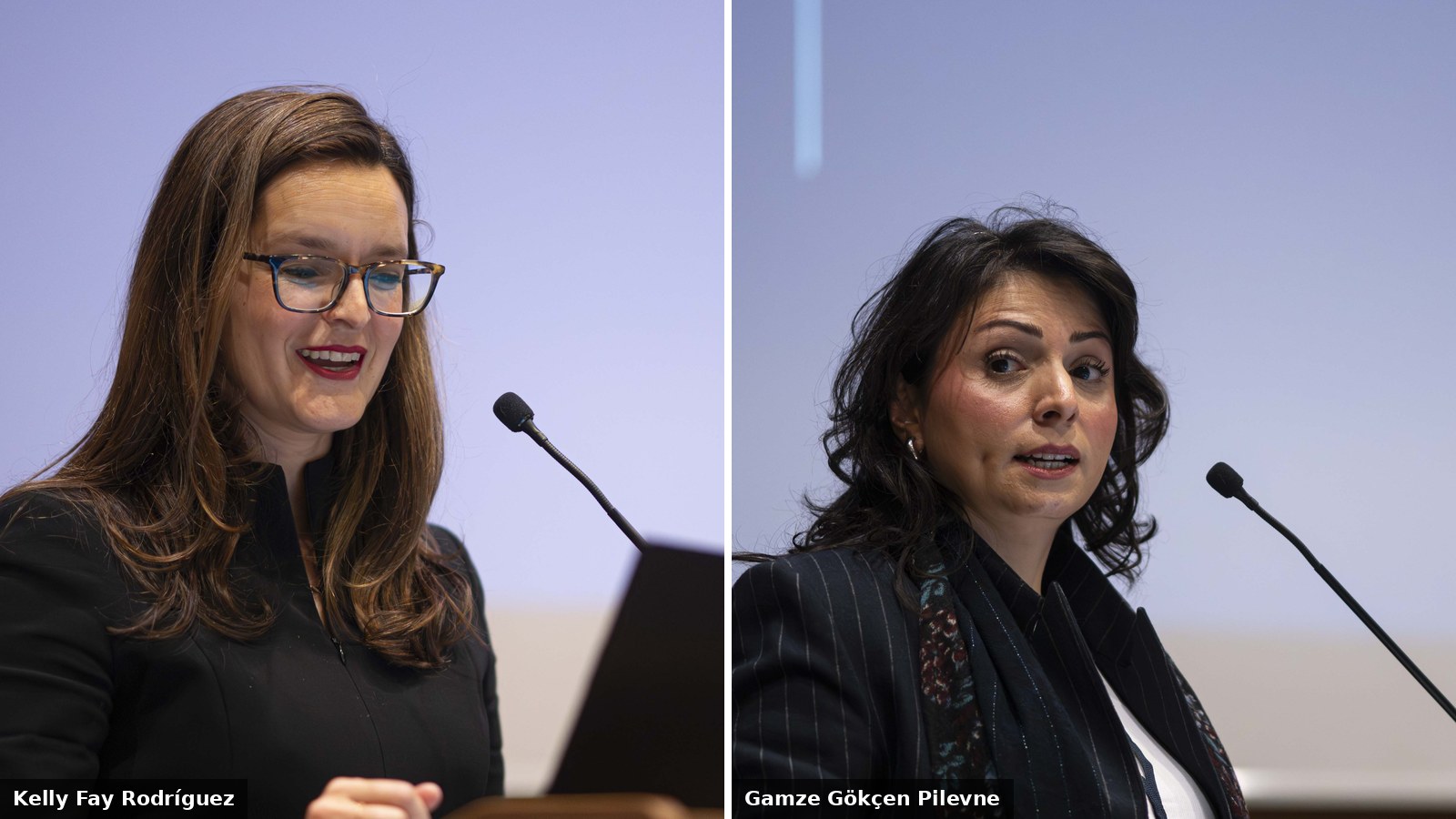
Kelly Fay Rodríguez, executive director of the Competence Centre for Human Rights Due Diligence, said due diligence carried out together with unions is how companies make their supply chains resilient:
“The rules may change. The headlines will change. But one thing will not: supply chains are only as strong as the relationships inside them. Build those relationships with your workers, through their unions and you will be ready for whatever comes next.”
Gamze Gökçen Pilevne, executive board member at Mercedes-Benz Türk (Daimler Trucks), said the company’s success depends on its suppliers as much as on its own employees:
“Our responsibility does not end at our factory gate.”
Suppliers test a new labour rights module
The conference followed a pilot training for Turkish automotive suppliers on 25 November 2026. It tested a new labour rights module developed by the network with Shift, the business and human rights organization, and run with Drive Sustainability and the Responsible Supply Chain Initiative (RSCI).
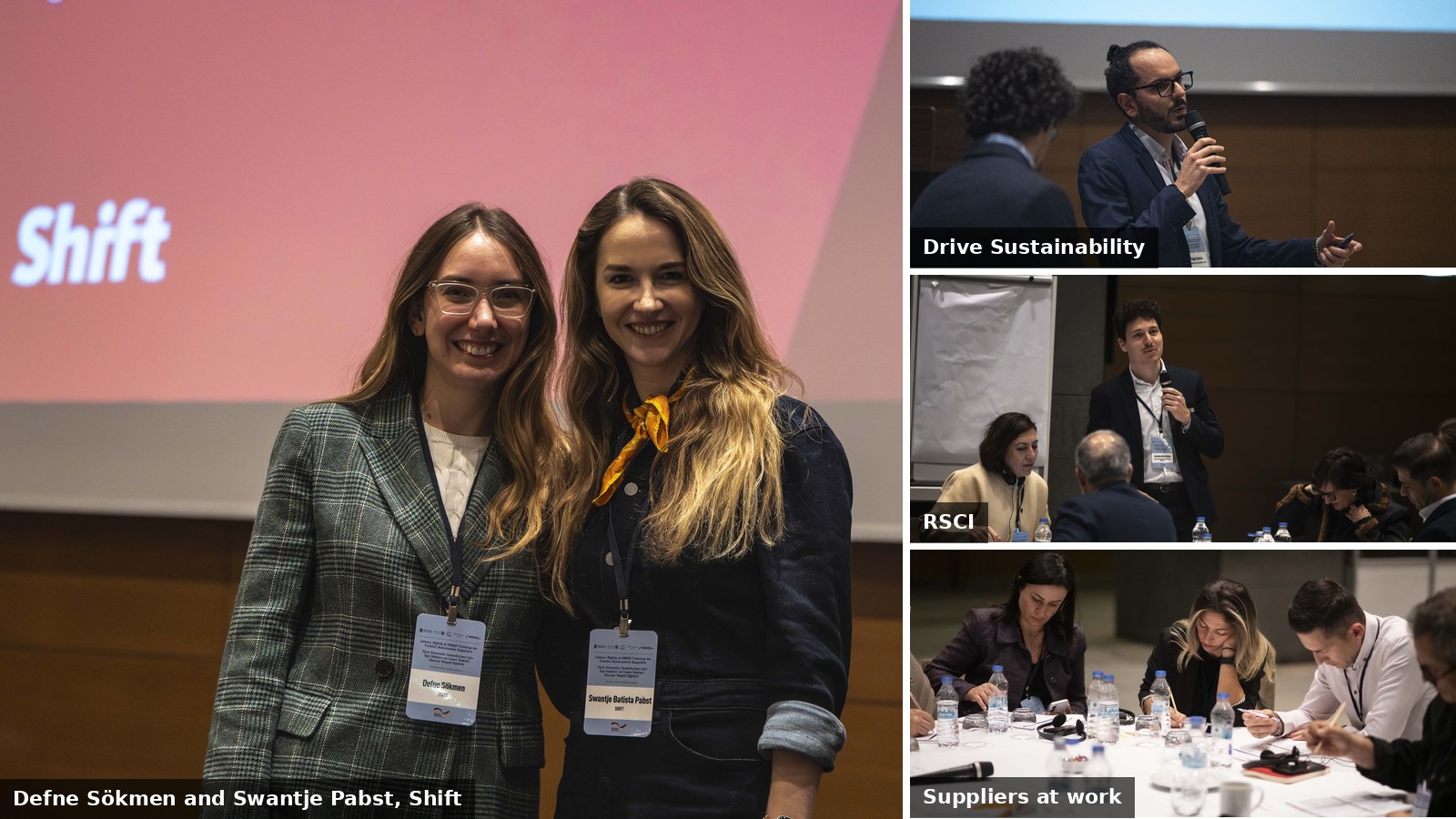
Led by Defne Sökmen and Swantje Pabst of Shift, suppliers looked at the most common labour rights risks in the sector: union rights and collective bargaining, health and safety, excessive working hours, the rights of migrant and women workers and dismissals. They worked through cases together and drew up two or three concrete actions for the next 90 days.
Shift reminded participants that Türkiye has ratified all ten of the ILO’s conventions on fundamental principles and rights at work.
“Under the UN Guiding Principles, being compliant with local laws is never enough,” said Sökmen.
“You can’t meet these expectations simply by implementing processes and policies and not speaking to each other,” said Pabst.
RSCI explained that where national law and its own requirements overlap, companies must apply whichever gives workers greater protection.
Drive Sustainability showed suppliers how car makers use its self-assessment questionnaire and why engaging pays off: according to its Intelligence Report 2026, 88 per cent of suppliers who completed it again improved their score.
Turkish unions at the table
In the afternoon, two panels discussed how to put the instruments into practice. Speakers included the presidents of five Turkish unions: the United Metalworkers’ Union (Birleşik Metal-İş), the Iron, Steel, Metal and Metallic Products Workers’ Union (Özçelik-İş), the Petroleum, Chemical and Rubber Industry Workers’ Union of Turkey (Lastik-İş), the Petroleum, Chemical and Rubber Workers’ Union of Turkey (Petrol-İş) and the Cement, Glass and Soil Industries Workers’ Union of Türkiye (Kristal-İş).
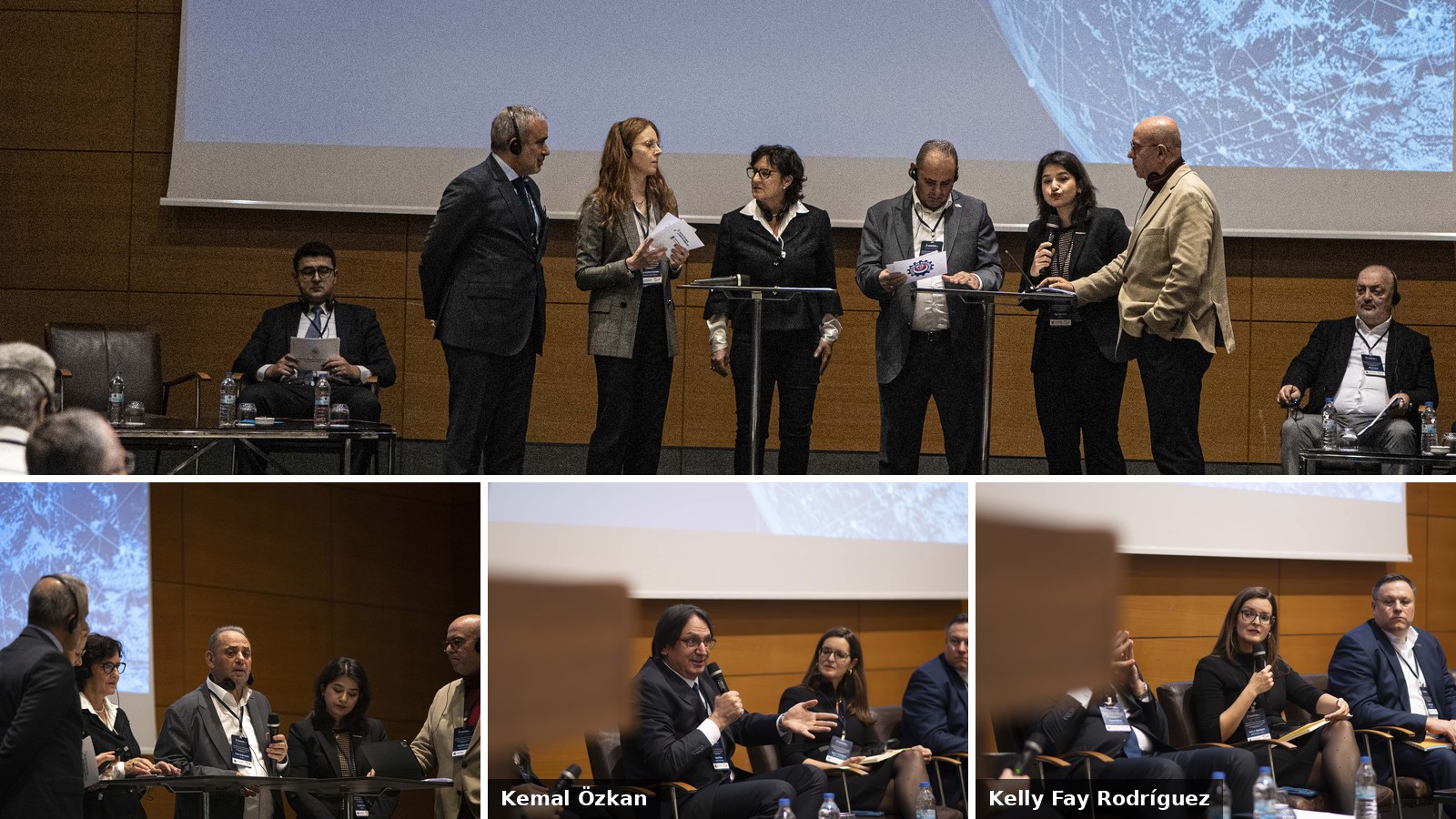
They were joined by Daimler Truck, Ford Germany, ZF Group, Volkswagen, Gestamp, Standard Profil, Çukurova İnşaat Makinaları, Türkonfed, Drive Sustainability, UN Global Compact Türkiye and the Ministry of Labour and Social Security.
Several speakers stressed that joining an initiative is only the start. Fay Rodríguez said workers, unions and companies need to develop plans to address risks together.
Swantje Pabst urged every actor to set aside the time and resources to stay in the process for the long term, as this is what builds credibility:
“Allow the process and the outcomes of the process to change your decisions and to change the way you think about risks.”
Car makers’ risk analysis reviewed with social partners
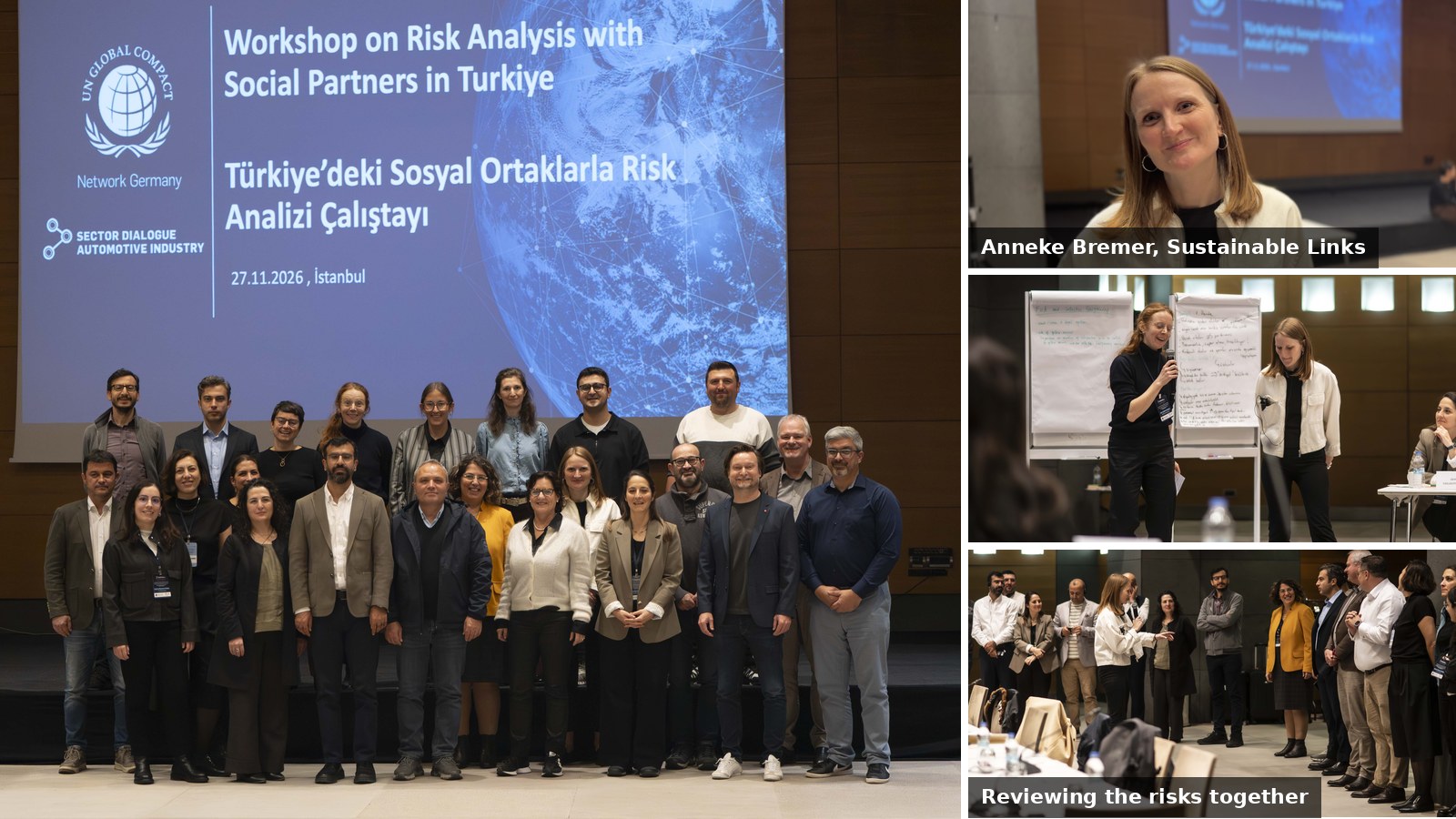
On 27 November 2026, the Sector Dialogue held a workshop on risk analysis with social partners in Türkiye. German car and commercial vehicle makers presented the results of their risk analysis. Unions, companies and other stakeholders then reviewed them together, theme by theme:
- occupational health and safety,
- wages, working hours and employment conditions,
- discrimination,
- freedom of association and collective bargaining.
Anneke Bremer, managing partner of Sustainable Links, a Berlin-based consultancy on human rights due diligence and responsible sourcing, facilitated the session. She said the exercise showed who needs to be at the table:
“In order to understand risk properly from the worker perspective, you need to have the different stakeholders in the room, especially the trade unions.”
For each theme, participants looked at the most severe and likely risks not yet reflected in the results and at how far the findings matched their own experience.
The analysis draws on suppliers’ self-assessment questionnaires, social audits and grievances. First indications include cases of workers working 20 to 28 days in a row. On freedom of association, courts often rule in favour of unions, but long legal processes can delay workers’ right to be represented.
The session built understanding between the different stakeholders of the challenges each of them faces. It also offered a safe space to work towards a common goal.
What comes next
The network’s next steps are:
The network's next steps are:
- Letter of intent: stakeholders commit to join the network, work towards its joint goals and use its instruments,
- Framework agreement: the network will draw up an agreement setting out its governance structures and processes,
- Shared resources: stakeholders will strive to contribute staff, commitment and, where needed, funding to keep the network going from 2027 to 2029.
The road ahead will not be easy. But with unions, companies and government at the same table, the network is ready to move forward, in the interest not only of workers but of all.
External resources
Sector Dialogue Automotive Industry
The multi-stakeholder initiative that organized the conference, run by UN Global Compact Network Germany.
UN Global Compact Network Germany
Non-profit centre of expertise on the UN Guiding Principles on Business and Human Rights. It helped the network develop its labour rights training module.
Shift
Berlin-based consultancy on human rights due diligence and responsible sourcing. It facilitated the network's risk analysis workshop.
Sustainable Links
An automotive industry initiative, launched by the German Association of the Automotive Industry (VDA) in 2021, that runs standardized sustainability assessments of production sites.
Drive Sustainability
The International Labour Organization's office in Ankara, which works with the government, employers' and workers' organizations in Türkiye.
ILO
Earlier articles on labour rights in Türkiye’s automotive sector and on making due diligence laws work for workers.
Tackling automotive supply chain challenges in Türkiye
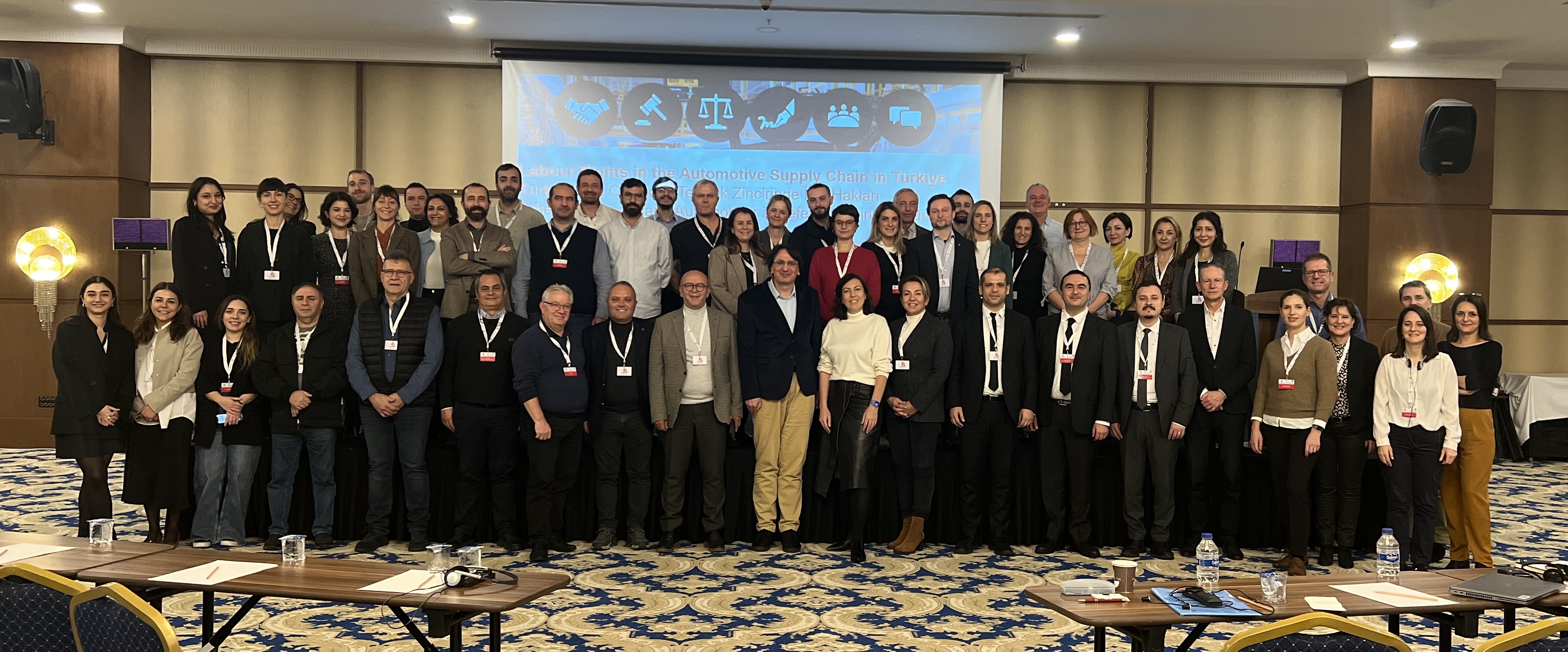
Labour rights in the automotive supply chain took center stage at a workshop held on 25-26 November in Türkiye. Bringing together key stakeholders from Türkiye and Germany, the event included participants from trade unions, works councils, vehicle manufacturers, suppliers, government representatives, employers’ associations, and civil society organizations.
Implementing human rights due diligence in Türkiye's auto supply chains
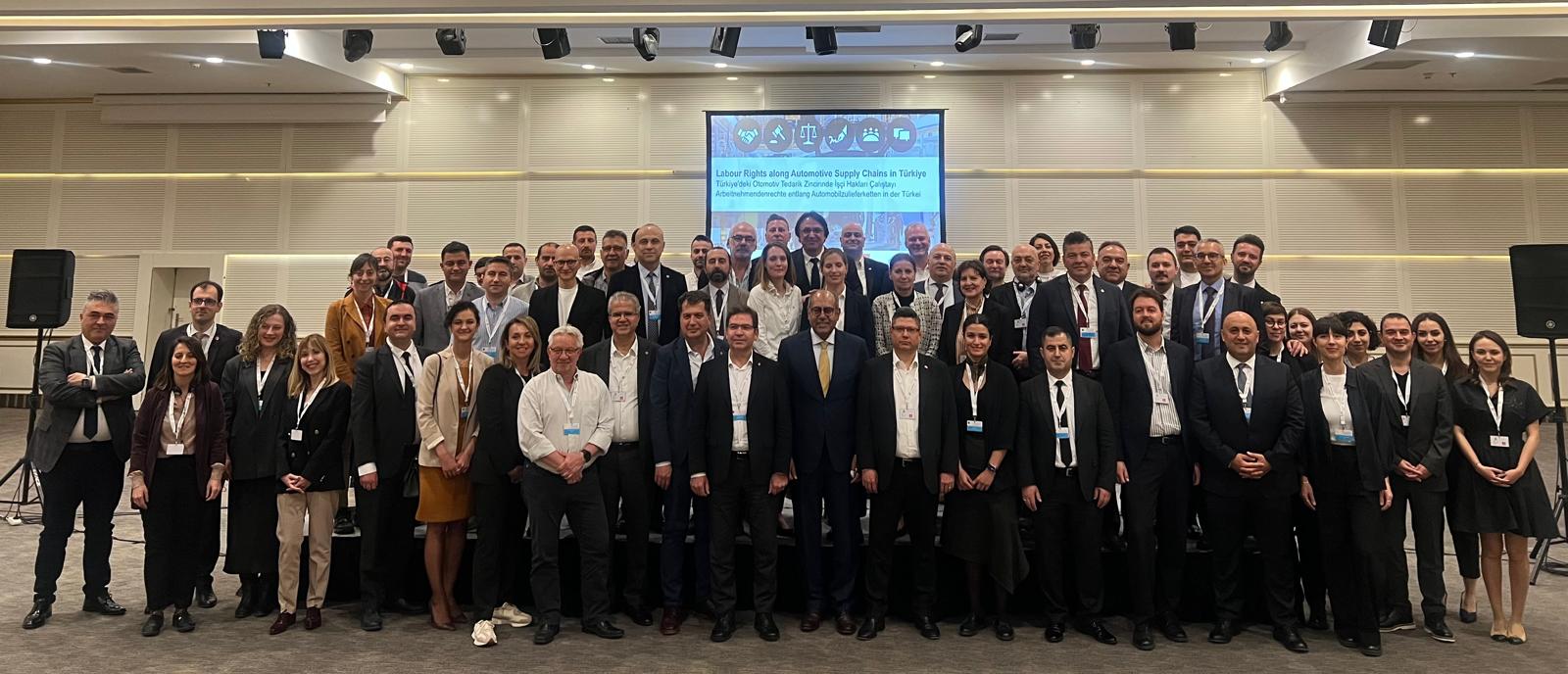
<p>Building on the momentum of the workshop held in November last year, key stakeholders in the auto sector from Türkiye and Germany met in Ankara on 28–29 April for the second meeting of the multi-stakeholder dialogue platform. The aim is to promote and implement the principles and instruments of HRDD, particularly in the world of work and regarding trade union rights.</p>
Turning due diligence laws into real results for workers
A new centre dedicated to making human rights due diligence laws deliver real results for workers was launched in Berlin on 26 March, bringing together trade unions, companies, policymakers and practitioners for a day of debate on how binding regulation can shift power to workers in global supply chains.