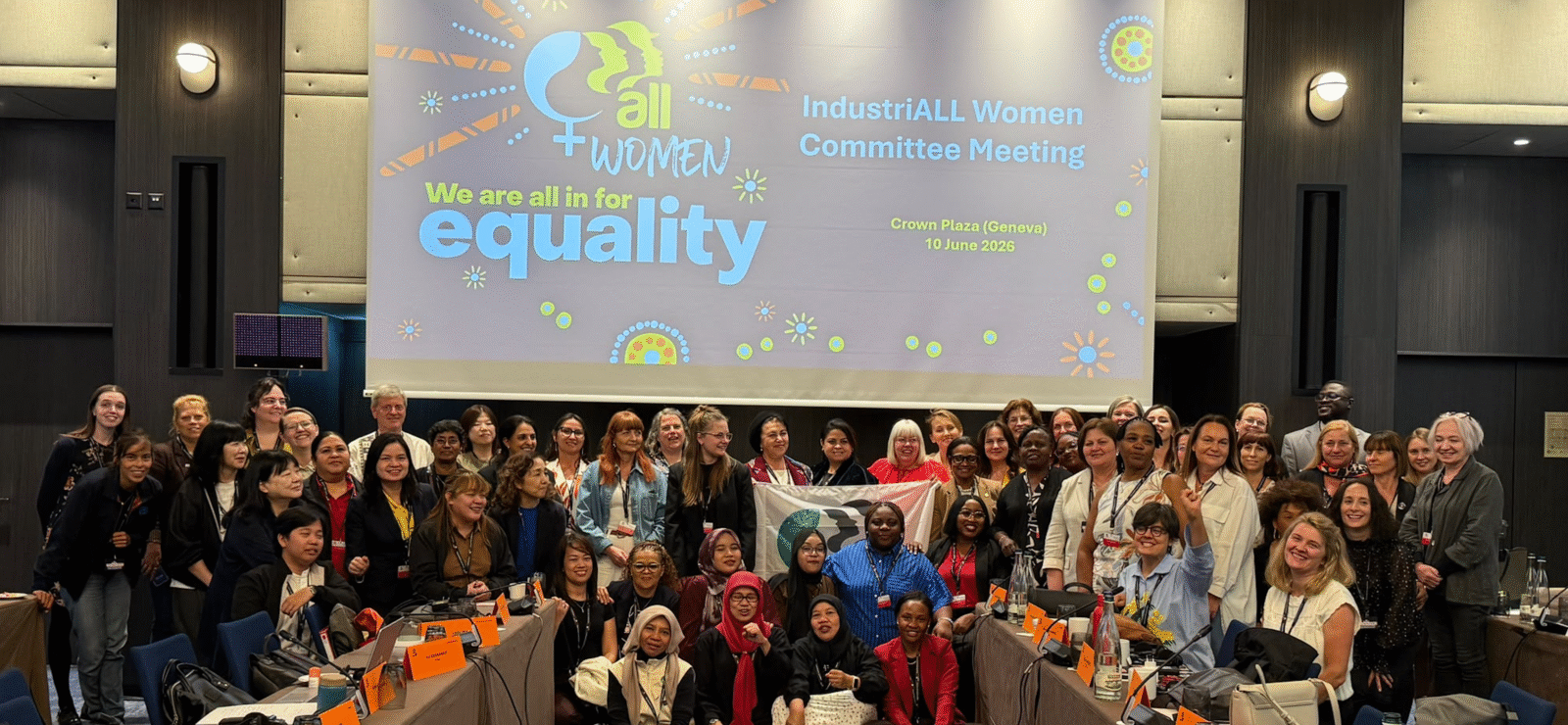
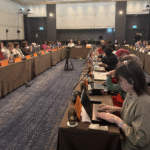
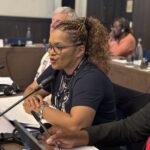


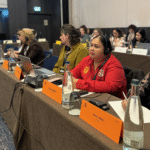
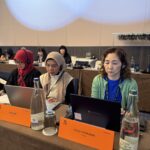
15 June, 2026IndustriALL Global Union's women's committee held its first meeting of the new committee in Geneva on 10 June. It elected two new co-chairs and adopted a global road map for 2026–2029 to implement the feminist resolution endorsed at the Sydney Congress.
There is a particular kind of energy that fills a room when people know they are part of something historic. That energy was alive in Geneva. The new committee gathered for the first time since Sydney, ready to build, not just talk.
Six months ago, IndustriALL said the word out loud: feminism. Not as a footnote. Not as a secondary objective. As the central political framework of the entire organization. Geneva was where the promise of Sydney met the road map for delivery.
“What we have adopted in Sydney does not remain on paper,”
said Christine Olivier, IndustriALL assistant general secretary.
“It must be seen and felt in our unions, in our workplaces and in the lives of our women. We have a mandate, a strong resolution, a clear road map and now we must deliver.”
The committee elected two new co-chairs.
Regina Nambahu, from the Mine Workers Union of Namibia, has been a union member since 21 years old with 17 years in the mining industry.
“When women lead, unions grow stronger. As co-chair, I will unite women’s leadership behind a feminist agenda, so every woman worker is heard, respected and empowered. Together, we make change.”
Nicole Fears, human rights director from the International Association of Machinists and Aerospace Workers in North America and a 32-year union member, added:
“I start with people. To build stronger workplaces and unions, we must understand what pulls us apart and what brings us together. My work builds relationships across differences and creates cultures of belonging where everyone has dignity, voice and value.”
Their election was more than procedural. It was a declaration.
A gender-transformative agenda that belongs to everyone
Women will not carry this transformation alone. The feminist resolution is not optional, it belongs to every affiliate, every structure and every leader, in every region of the world.
To ensure women’s structures do not carry implementation alone, the committee proposed regional road maps endorsed by regional Executive Committees. Both the secretariat and affiliates must take clear action.
The road map places pay equity at its core, recognizing the gender pay gap not as a statistic but as a reflection of deep-rooted structural inequality.
It puts care work firmly on the trade union agenda, demanding its recognition as a universal human right.
It also addresses occupational health and safety, human rights due diligence and just transition. Without tackling discriminatory norms and unequal power relations, the transformations reshaping work will exclude women. Underlying all of this is the urgent fight against a rising tide of masculinism.
What a gender-transformative approach means
The movement faces one of its most urgent battles: leaving no women behind. Joint research by IndustriALL Global and industriAll European Trade Union paints a stark picture. Across green and digital transitions, the figures project women will gain 23 million fewer jobs than men.
In Bangladesh’s garment sector, women’s share of the workforce has dropped from 80 to 56 per cent in three decades, partly driven by new technology. Across Asia, discriminatory stereotypes push women out of automation-created roles.
Lack of confidence and cultural norms that label technical work as male hold many women workers back from upskilling.
Gender-transformative human rights due diligence is key to closing gender gaps in supply chains. Mine operators in Botswana do not design protective clothing for pregnant bodies. Women’s voices remain absent from bargaining tables. IndustriALL is developing guidelines to embed gender equality into its work with multinational corporations.
While the women’s committee advances its agenda, ILO negotiations in Geneva have been long and tough with the US and Argentina rejecting even the terms gender and every gender related issue. The case for trade union leadership has never been clearer.
Young women teach the room
If there was a single moment that captured the soul of the day, it came when young women took the floor. Mentees from IndustriALL’s mentoring projects in Sub-Saharan Africa and Asia stood up and did something quietly groundbreaking. They taught and led. These mentees issued demands to a room of experienced trade union leaders and the room listened.
They named it without hesitation: being invited into spaces for the photograph but excluded from decisions; being held back by imposter syndrome; watching unions carry gender commitments in policy documents and nowhere else.
“Decisions are made by those who sit at the table,” one mentee said. “When women are not present in leadership structures, our priorities are overlooked. This is not a women’s issue. It is a collective bargaining issue. If we want stronger unions, we need stronger women’s participation.”
Bringing men in
The day closed with one of its most important conversations. IndustriALL general secretary, Atle Høie, spoke with an honesty the room will not forget.
“Ten years ago, I had no clue what a gender-transformative agenda was,”
he said.
“Eventually it gets quite logical. If you don’t attack the root causes, you will never solve the problem.”
Change needs more than passion. It needs direction, accountability and the courage to demand that everyone, not just women, carries the weight of change. The road map exists. The mandate is clear. Now every affiliate, every structure and every leader must decide whether they will carry it.