
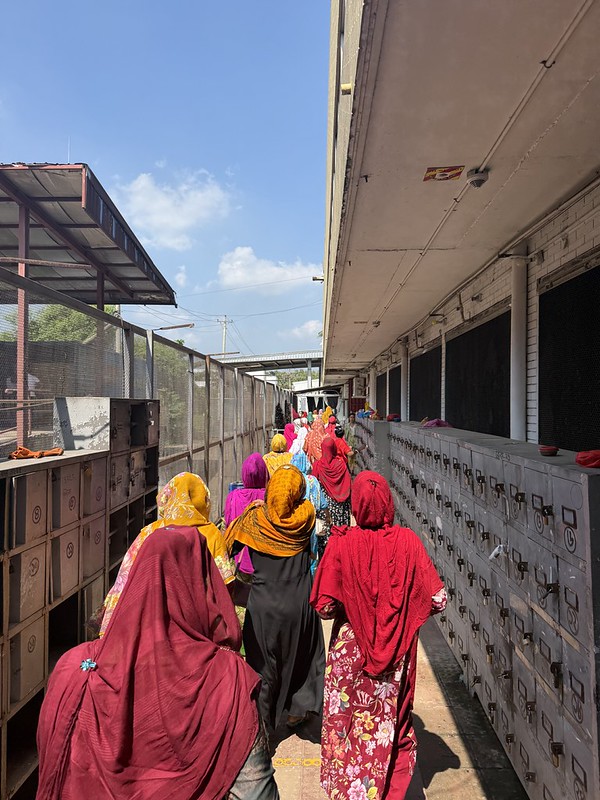
Garment workers in Bangladesh have been campaigning for a higher minimum wage since August, with protests intensifying in October as living costs rise. The current minimum wage of BDT12,500 (about US$100) a month, set in November 2023, is not even close to cover workers’ basic needs. Thousands of workers have taken to the streets around Dhaka, and around 30 factories on the outskirts of the city have temporarily closed. A worker has died from injuries sustained during the protests.
Following sustained union pressure, the Minimum Wage Board met for the first time on 4 November. The government has committed to announcing the new wage before December, with workers receiving it from January 2027. The board meets again on 9 November.
Union leaders arrested
During the protests, at least ten regional leaders from IndustriALL Bangladesh Council (IBC) affiliates were arrested, among them Ali Asgar, acting general secretary of the Garments Tailors Workers League. Leaders from other union alliances have also been detained. According to the IBC, those arrested were not involved in the unrest. Police have also raided union offices and the homes of union leaders.
The IBC is demanding:
- the immediate release of the arrested union leaders
- an end to the police presence at union offices
- an end to police harassment and raids on union leaders’ homes
“The indiscriminate arrest of trade union leaders is contrary to the spirit of cooperation and joint efforts to resolve the current situation,”
said the IBC in a statement.
Unions united, brands must pay
Garment unions are now working together to support the worker representatives on the Wage Board. At a meeting organized by the Bangladesh Institute of Labour Studies (BILS) on 3 November, union forums agreed to set up a joint committee and develop a common wage proposal.
Unions are also calling on international brands to take responsibility. Through ACT, the IBC is demanding transparency on the prices brands pay their suppliers and a common minimum purchasing price, so that factories can afford the new minimum wage.
Atle Høie, IndustriALL general secretary, said:
“Union leaders who took no part in the unrest must be released immediately. And brands sourcing from Bangladesh must make sure the prices they pay cover the new minimum wage.”