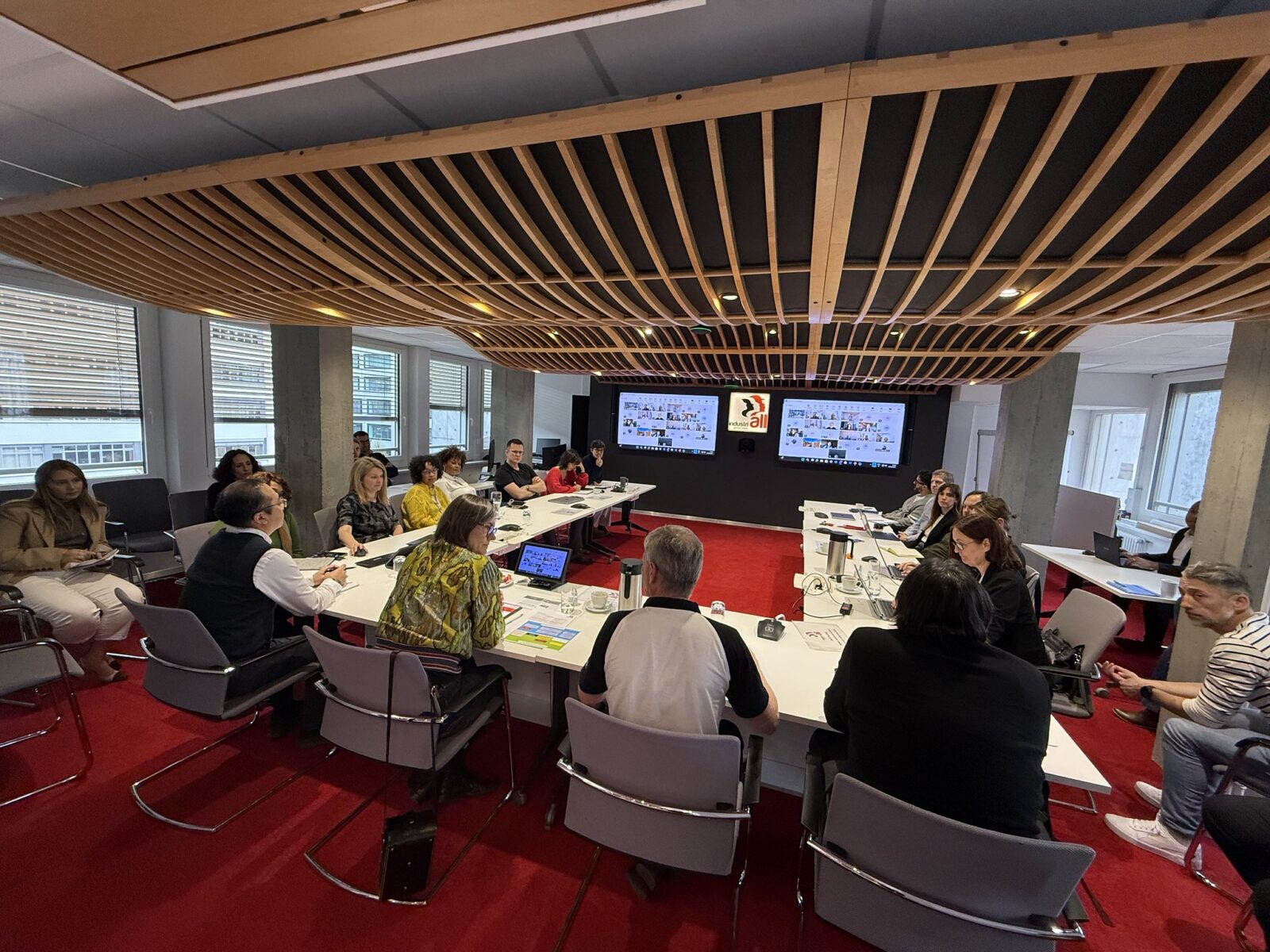
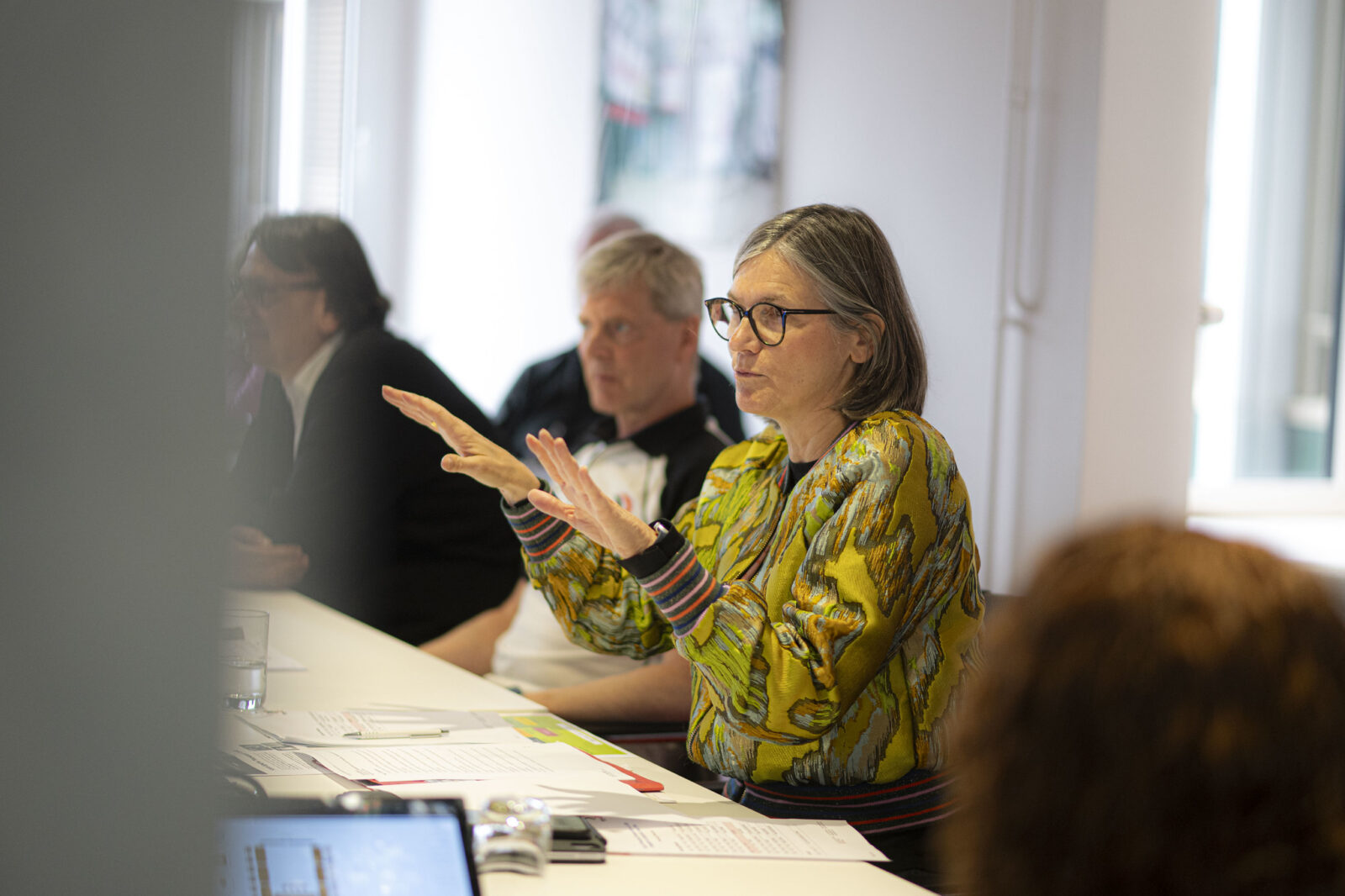
22 April, 2026When IndustriALL president Christiane Benner visited the Geneva headquarters on 25 March 2026, she spoke to staff openly about the state of the movement and what it will take to win. We put the big questions to her afterwards.
Christiane Benner arrived at IndustriALL’s Geneva headquarters on 25 March 2026 in the middle of a fight. Works council elections were underway across Germany and IG Metall, the union she leads as its first ever woman president, was facing direct competition from the far right on the shop floor.
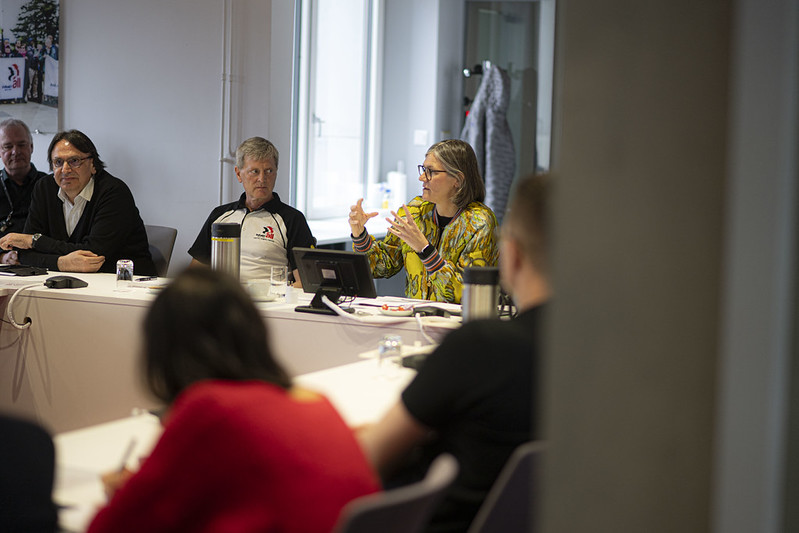
Speaking to staff that day, she was direct about the weight of the moment. Workers, she said, were turning to unions precisely because they had nowhere else to turn.
“For some people, we are the last hope.”
That phrase and the responsibility it carries shaped everything that followed.
We followed up with Christiane Benner after her visit to ask what that responsibility demands of IndustriALL, and of union leaders everywhere.
On vision and leadership
You described unions as “the last hope” for many workers. That is a heavy responsibility. How do you carry that, and what does it demand of union leaders globally right now?
When unions are the last hope for many workers, we become de facto defenders of fair treatment, dignity at work and basic economic and social security. We find ourselves taking on larger roles, advocating for sustainable industrial policy, defending workers’ rights across sectors. This means staying close to employees while also playing a political role in society at the same time.
This situation also creates real opportunities. We can rebuild public trust, expand membership in promising industries and among target groups like white-collar workers, women and young employees. We must be more strategic, not just reactive and our decision-making must be worker-centred.
Even though high unemployment and demographic change are causing membership to decline in many countries, including Germany, we are at the same time gaining many new members. That is why we will be successful in the long run. I am firmly convinced of that.
Four years from now, what does success look like for IndustriALL and for the workers we represent?
We are successful when we have breathed new life into solidarity and, as trade unions, form a united front that cannot be divided. We focus not on what divides us, but on what unites us: the fight for workers’ rights, good and safe jobs, social security and democracy in the workplace.
This leads to workers having tangible improvements in their daily lives, everywhere in the world:
- prospects for the future with a secure job and social security
- higher wages and stronger purchasing power across major industrial sectors
- safer workplaces, with measurable reductions in accidents and exposure to hazardous materials
- meaningful worker participation in how new technologies such as AI, automation and robotics are implemented
Workers need to feel the difference, real improvements, not only policy wins on paper.
You spoke about the need for leaders who are authentic and able to show how unions make a difference. What does that kind of leadership look like in practice?
Visionary leaders actively shape transformation, from digitalization and automation to ecological change. They maintain close ties with employees, are present on the shop floor and in offices and stay in touch with those working from home. They address concerns early and develop solutions together, such as training for new technologies or the transition to climate-friendly production.
They communicate clearly, explain complex issues in an understandable way and present themselves confidently in public, in politics and in the media. Young workers and women are actively involved. In this way, they build trust, promote renewal and ensure that their union remains, or becomes, a strong voice for decent work.
In short: visionary union leaders are courageous, empathetic, strategic and principled change-makers who mobilize people, actively shape change and make unions fit for the future.
On the far right
You described seeing a diagram mapping the global connections between right-wing movements. What struck you, and what can a global union do to confront this that national unions cannot?
What struck me most was seeing how well-connected and far-reaching Orbán’s network is as a representative of the far right. Fortunately, he has now been voted out of office. But I fear that the right-wing networks will remain.
All trade unions must take a stand against the far right in their respective countries, not just for the sake of opposing them, but because they actively stand against workers’ rights in every aspect of their policies. But we will be stronger if we fight together, pursue a common strategy and build strong networks across borders. A global federation like IndustriALL can provide a platform for this, help coordinate our activities and sharpen our strategies. We can learn from one another and expose their anti-worker record.
Unions also strengthen democracy by making sure it does not end outside the factory gates. In Germany, works council elections are the second biggest democratic elections in the country. This year, right-wing slates largely failed to make inroads, because we stayed close to the people. Making participatory democracy a tangible reality is one of the most effective counters to far-right forces we have.
On organizing
The Sydney Congress action plan puts organizing at the centre. What does organizing look like when it is done right?
When organizing is understood correctly, it puts workers at the centre: we listen to what they care about, what problems they face daily, what motivates them and what they fear. It must be clear that the workers are the union. When organizing is done right, workers themselves make decisions and union staff coach but do not control. A committee of trusted employees leads the organizing effort, talks to colleagues and takes responsibility for moving the campaign forward.
Like this, we build a strong union base in the workplace with many active and engaged members. Employees feel the difference and understand that they can achieve more together if they organize and speak with one voice. This makes solidarity and democracy in the workplace tangible and indispensable. It builds a culture of “we have each other’s backs.”
On women and the backlash
You are the first woman president of IG Metall. You mentioned the backlash against women as part of the broader right-wing agenda. What does this moment mean to you personally, and what does IndustriALL need to do to protect the gains made on gender?
More than two decades of building feminist structures inside IG Metall have taught me one thing above all: it was never easy nor a sure thing. Feminist unions do not arise on their own. They need structures that actually empower women: transparent pay systems, work-life balance, genuine participation and spaces where women can express themselves. And they need the courage to actively change patriarchal patterns. Feminism in unions is a practical, daily shift in power.
This matters especially now. Across the world, the gains women workers have made are under attack. This backlash is directed at us because our movement has grown stronger. We should not be intimidated. We should continue to organize, network internationally and stay vocal. Our global trade union movement stands behind every woman who fights for dignity, safety and equality. It is more important than ever.
The question she left behind
Christiane Benner left Geneva the same day she arrived, heading back to Germany and the front lines of the works council elections. But the question she posed to staff, “what does it mean to be the last hope?” is one that resonates well beyond IG Metall. It sits at the heart of what IndustriALL exists to do: connect the struggles of workers across the world into something larger than any one union can achieve alone. Her visit was a reminder of why that matters and of how much depends on getting it right.