12 February, 2026Human rights due diligence (HRDD) is fast emerging as a key organizing instrument for trade unions across Africa, particularly those operating in global value chains that stretch from Global North consumers to Global South extractive frontiers. A roundtable held on 9 February on the margins of the Mining Indaba in Cape Town brought unions together with the Competence Centre for Human Rights Due Diligence (CCHRDD) to explore how organized labour might capitalise on this framework.
In Sub-Saharan Africa, the imperative for HRDD is especially acute given the region’s outsized role in supplying minerals critical to the energy transition, electronics and renewable energy industries. The continent holds major reserves of cobalt, copper, lithium, manganese and nickel whose demand has surged amid decarbonisation efforts worldwide. Yet extraction remains beset by entrenched human-rights risks: forced community displacements, violations of workers and human rights, environmental degradation, adverse health effects on local populations and in some instances, ties to conflict financing or organized crime.
HRDD draws its foundation from the United Nations Guiding Principles on Business and Human Rights (UNGPs), endorsed in 2011, which impose on companies a responsibility to respect human rights via ongoing processes of identification, prevention, mitigation and remediation of adverse impacts. Sector-specific guidance, notably the OECD’s Due Diligence Guidance for Responsible Supply Chains of Minerals from Conflict-Affected and High-Risk Areas, has proved influential for tin, tantalum, tungsten and gold in conflict zones such as Eastern Democratic Republic of Congo (DRC).
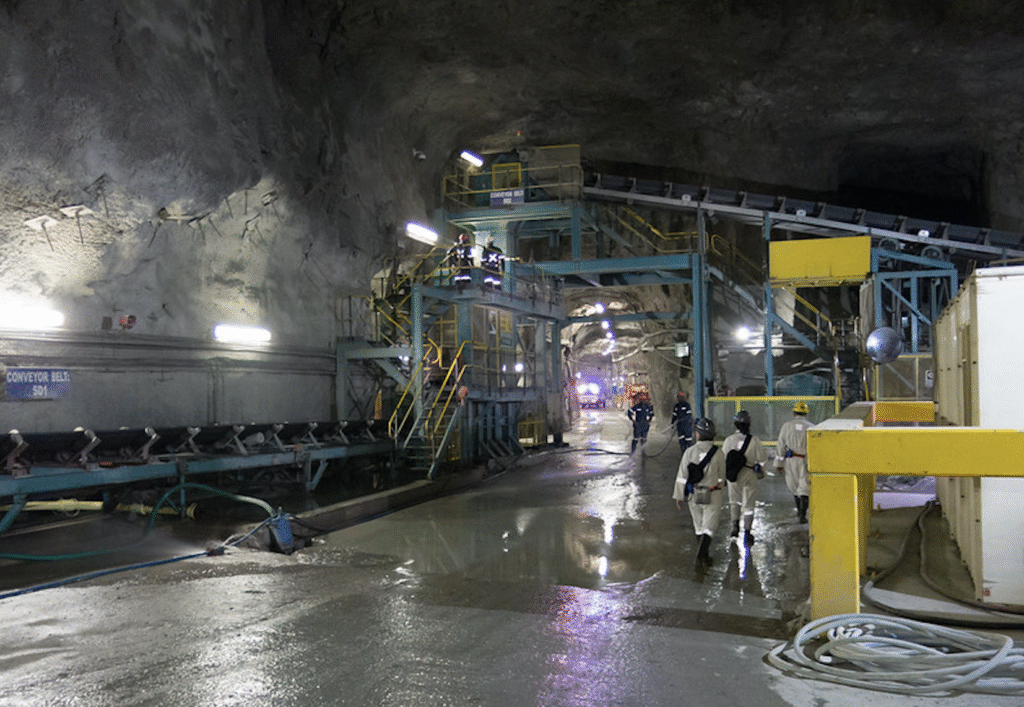
The mining landscape in Sub-Saharan Africa presents a mixed picture. Large-scale operations often controlled by multinationals from China, Europe, Canada and elsewhere face persistent criticism over inadequate community consultation, water and soil pollution, hazardous working conditions, poverty-level wages, gender-based violence and harassment, and suppression of union activity, including breaches of freedom of association and collective bargaining. Artisanal and small-scale mining (ASM), prevalent in countries such as the DRC, Ghana, Tanzania and Zimbabwe, worsens these vulnerabilities with child labour, toxic mercury exposure and exploitation by criminal networks.
Data from the Business and Human Rights Resource Centre’s Transition Minerals Tracker underscore the scale of the problem. For example, between 2010 and 2024, it recorded 178 human-rights and environmental abuses linked to transition minerals in Africa which is more than 20 per cent of the global total of 835 cases. The DRC alone accounted for over half of Africa’s allegations, mostly at cobalt and copper sites.
Unions, including IndustriALL Global Union affiliates in the DRC, Zambia and Zimbabwe, are pressing hard for rigorous HRDD implementation. Their advocacy emphasises scrutiny of corporate disclosures, risk mapping and the adoption of national action plans on business and human rights still absent in most African countries. They call for binding rules to secure fair-trade terms, greater local beneficiation, living wages and environmental stewardship.
Recent regulatory shifts are reshaping HRDD. The European Union’s Corporate Sustainability Due Diligence Directive (CSDDD), now in force, mandates HRDD for large companies operating in or exporting to the EU, including human-rights and environmental impacts throughout value chains. This compels mining firms and their Sub-Saharan suppliers to strengthen processes, undertake audits and offer remediation or face exclusion from the European market. Complementary EU measures on batteries, deforestation and conflict minerals add further layers of scrutiny to African-sourced minerals.
However, challenges remain formidable: weak governance, corruption, limited enforcement capacity and opaque supply chains all impede effective due diligence. In high-risk settings such as conflict zones or informal gold sectors in Zimbabwe, HRDD frequently falls short of eradicating harms.
At the roundtable, Kelly Fay Rodriguez of the CCHRDD announced the launch of a dedicated project in the DRC, Zambia and Zimbabwe to support mine workers in critical minerals value chains. The initiative aims to ensure that emerging international due-diligence laws and trade policies deliver gains for labour rights, with particular focus on freedom of association and collective bargaining.
Established in 2025 by UNI Global Union, IndustriALL Global Union, the Friedrich Ebert Foundation and Germany’s DGB trade-union confederation, the CCHRDD exists to harness HRDD frameworks in ways that reinforce workers’ rights especially the enabling rights of union organization and bargaining across global value chains.
The meeting closed on a note of cautious optimism: HRDD offers mining companies a tool for risk mitigation while presenting unions and host societies with leverage for more inclusive development.
As Glen Mpufane, IndustriALL’s mining director, put it:
“Effective implementation of HRDD supported by stronger national frameworks, active union engagement, and international accountability is essential if mineral wealth is to translate into genuine economic progress rather than perpetuating patterns of extraction without equitable returns.”