

Read this article in:
English
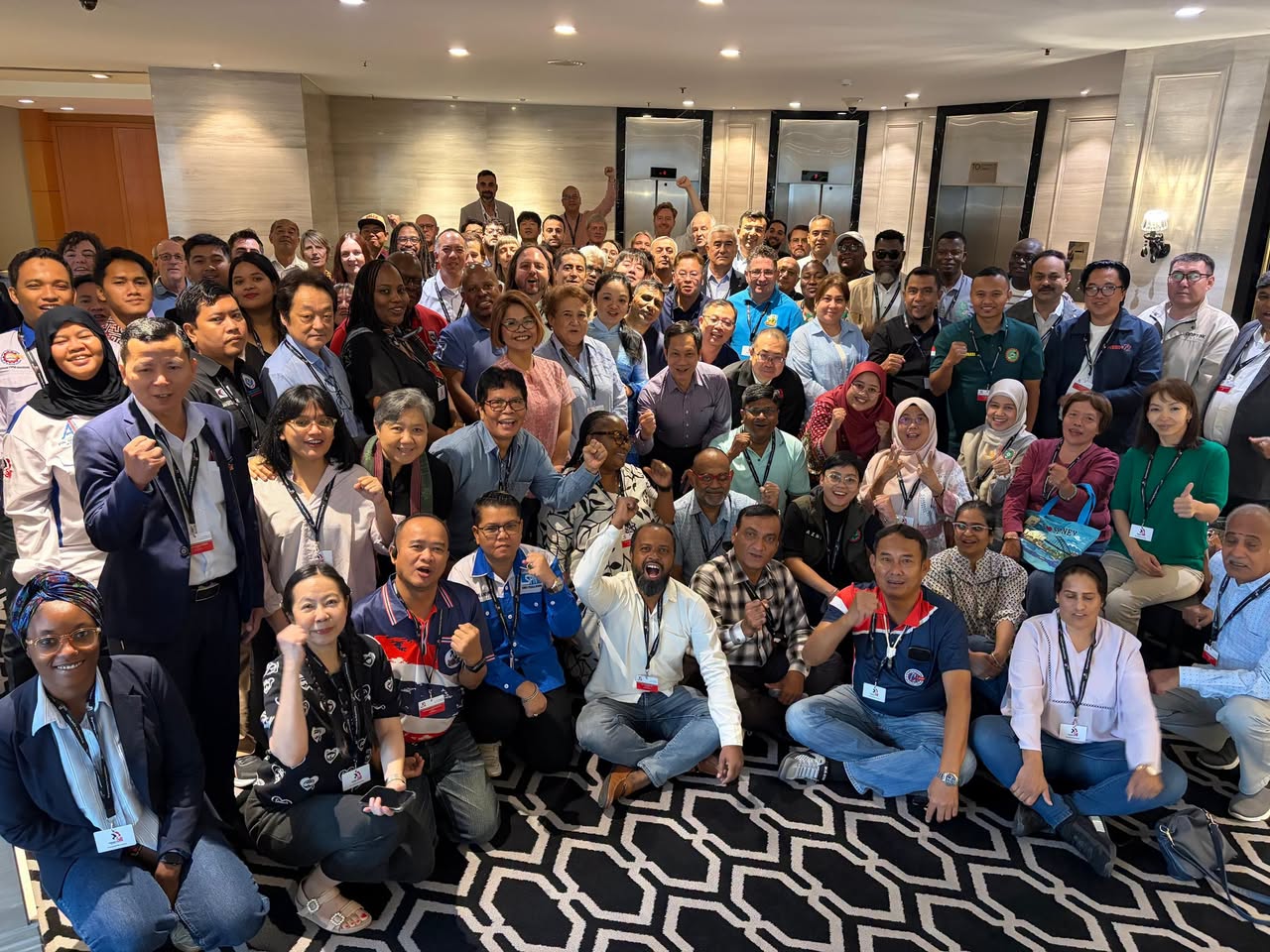
10 October, 2026Put 120 trade unionists from around the world in a room for two days and you get a clear picture of what workers are up against and how they are fighting back. At the global organizing conference in Kuala Lumpur on 8-9 October, the stories came from garment factories in India, cobalt mines in DR Congo, battery plants in Hungary and car plants in Alabama. The countries were different. The challenges were strikingly similar.
The challenges
Work is moving, and unions have to follow it. For 20 years, garment unions in Bangalore, India, organized first-generation factory workers. Now the industry is relocating to rural areas.
“Many workers don’t even know what a union is,” said Dithhi Battarcharya of Unions United. “So we have to start from the beginning: what is a collective? What is a union?”
The new economy is being built around batteries, critical minerals and semiconductors, often on precarious terms. In Hungary, five battery plants have been built in six years. Tamás Székely of VDSZ described 25 per cent staff turnover and employers hostile to unions. In Thailand’s electric vehicle industry, Kittisak Priangkratok of CILT said one-year contracts keep workers too insecure to join a union. In DR Congo, Placide Adrupiako Minota of TUMEC said cobalt miners often go without protective equipment, and the legal minimum wage of around US$9 a day is not applied.
And the anti-union playbook travels. Kristyne Peter of the UAW described the campaign against workers at Mercedes-Benz in Alabama as “one of the most aggressive anti-union campaigns I’ve ever seen”. Claudia Rahman of IG Metall described how Tesla undermines the works council at its plant near Berlin. In Türkiye, Aykut Güneş of Selüloz-İş said more than 2,500 workers are fired every year for union activity.
The responses
Yet the room was full of answers. In Indonesia’s battery supply chain, SPN has organized workers in remote areas by working with local communities. In Zimbabwe, ZDAMWU used human rights due diligence to target employers and now has 15,000 members.
“Everything we do focuses on organizing,” said general secretary Justice Chinhema. Workers join, he said, because the union is on the ground and they can take part.
In Sweden, Tesla brought in strikebreakers during IF Metall’s 1,000-day strike. But the Swedish model held: unions have since signed agreements with Klarna, Ryanair and King. Public support for collective agreements has grown.
Organizers returned again and again to the basics: a conversation that moves a worker from anger to hope to action, a strong organizing committee built quietly before a campaign goes public and a strategy that starts from workers’ own concerns.
For Gopal Krishnan, general secretary of NUTEAIW, Malaysia, the lesson was simple:
“If employers are going to use migrants to undermine trade union strength, our response must be to organize migrants.”
On day two, the focus moved to what was called the air campaign: tools that put pressure on companies from outside, including:
- ILO Conventions
- OECD complaints
- global framework agreements
- investor pressure
- human rights due diligence
- communications
Building power that lasts
The urgency is clear. Across OECD countries, union density has halved since 1985, from 30 to 15 per cent. The scale of the task is daunting. Thousands of workplaces are still waiting for a union, and rapidly growing sectors are creating millions of new jobs. No union has the resources to reach them all at once.
So unions have to pick their fights together: the supply chains and multinationals that shape whole sectors, organized across borders until workers have the numbers to change the rules.
That takes money. Organizers were clear that collecting dues is not a formality: members who pay hold their union to account, and their dues fund the next organizing drive.
IndustriALL’s campaigns and organizing fund is backing projects from Indonesia’s battery industry to Cambodia’s garment industry and to critical minerals mining in southern Africa. All with one goal: union capacity that lasts after the funding ends.
At a Chinese-owned lithium mine in Zimbabwe, ZDAMWU used human rights due diligence tools to organize 600 subcontracted workers, despite short contracts and restricted access to the site. After a strike that workers’ spouses joined, they won a collective agreement raising wages from US$200 to US$350. In Zambia, a ten-member MUZ team has won recognition at three Chinese-owned mining companies and recruited more than 300 workers.
“Around a year ago we were in Sydney for Congress. More than 1,000,trade unionists came together under the call to organize for a just future, and that call stands as strong today. When we come together, we win. Lithium workers in Zimbabwe have just shown it. Now we have to do it at scale, in every supply chain where workers’ futures are being decided,”
said IndustriALL general secretary Atle Høie.