


Read this article in:
English
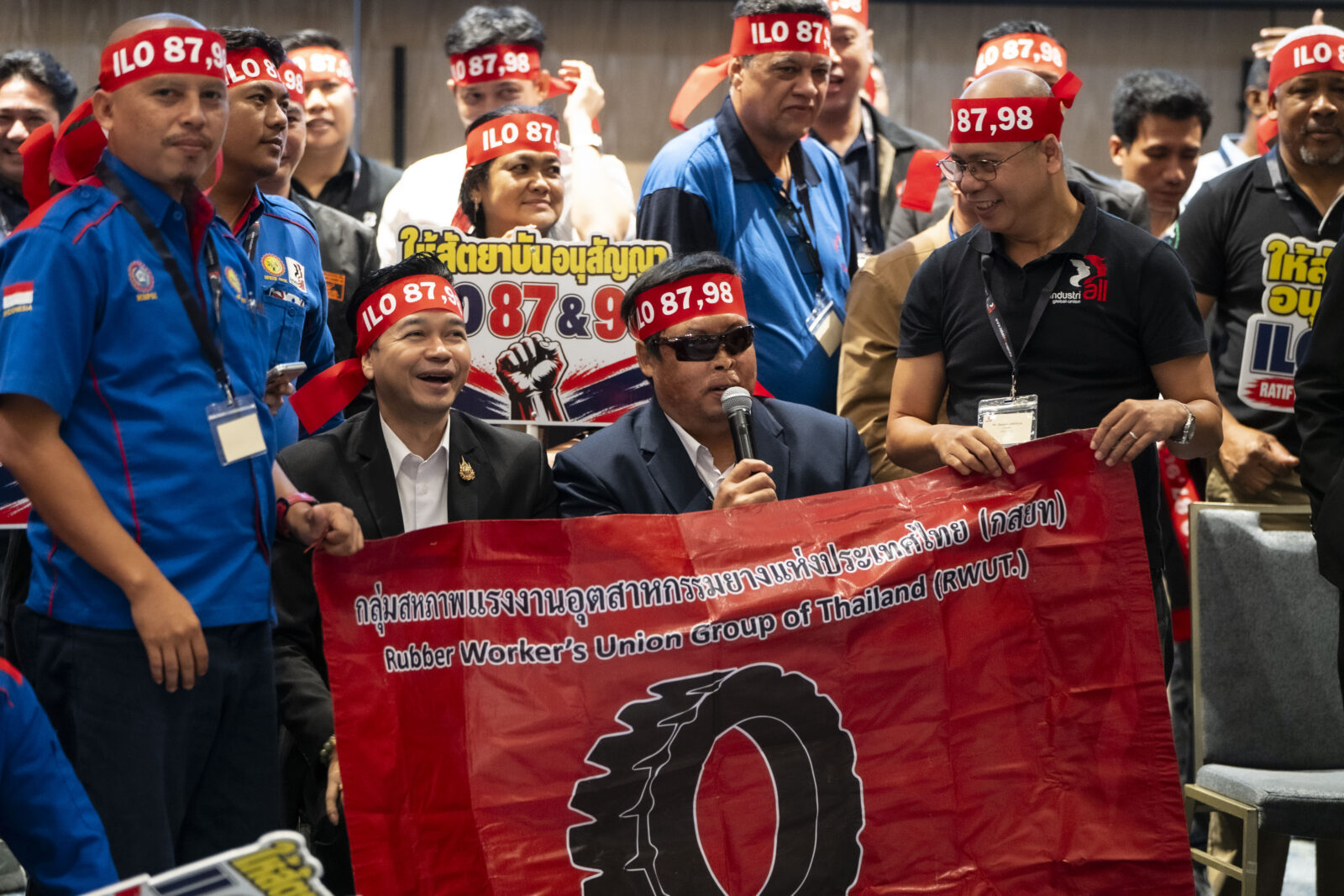
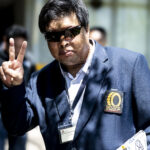
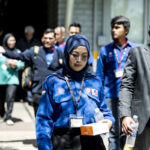
21 October, 2026Rubber and tire unions from eight countries met in Bangkok, Thailand, on 19 and 20 October 2026 to take on the struggles they share. They sang, called out their union slogans and pledged to stand by colleagues fighting for their rights in Indonesia.
From rubber plantations in Liberia to tire and rubber factories in Thailand, Indonesia, Malaysia, Sri Lanka, Brazil and South Africa, an auto parts plant in the Philippines and a Durex condom plant in Thailand, delegates described the same pressures: cheap imports, plant closures, automation and labour laws that leave workers exposed.
They left with common goals: organize more workers, bargain for safer and fairer jobs, bring more women into leadership and keep their network strong.
A meeting that started on its feet
The first day, 19 October, belonged to Thailand. The Rubber Workers Union Group of Thailand (RWUT) and its member unions set out the country’s economic outlook, their history and the challenges they face, while international delegates listened and learned.
The second day opened with a solidarity song and dance to wake everyone up for a full day of discussion. Then, one by one, delegates from Thailand, Indonesia, Malaysia, the Philippines, Sri Lanka, Brazil, South Africa and Liberia stood and called out their union slogans. Different languages, one message.
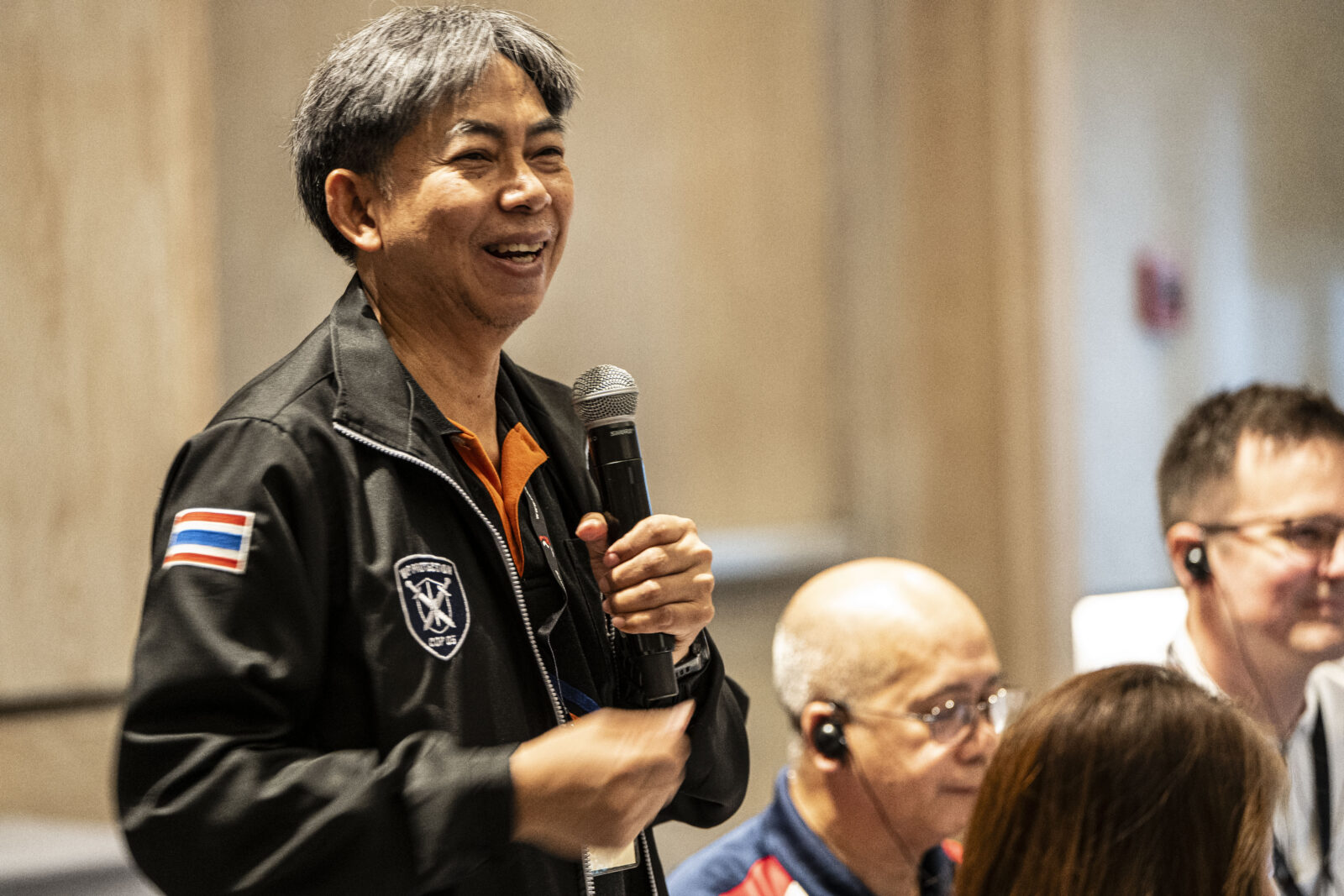
“Our strength has always come from standing together,”
said Laray Youpensuk, president of the host Confederation of Industrial Labour of Thailand (CILT).
“By meeting regularly, learning from each other’s struggles and building a common path forward, rubber workers in Thailand and around the world can win real results for our sector.”
Tom Grinter, IndustriALL Global Union director for the rubber sector, told delegates:
“What unions in this region have built together, through joint action and by standing with each other, is a source of strength for rubber workers everywhere. We want to learn from you and carry that power to the rest of the world.”
Different countries, the same fight
Country by country, the reports told a shared story:
- Brazil: imported tires now hold 73 per cent of the truck tire market and 67 per cent of the car tire market, putting 50,000 direct jobs at risk, said the National Federation of Workers in the Rubber, Tire and Latex Industries (FENABOR).
- South Africa: four tire plants have closed since 2014, and remaining workers face heavier workloads, reported the National Union of Metalworkers of South Africa (NUMSA).
- Malaysia: the National Union of Employees in Companies Manufacturing Rubber Products (NUECMRP) has lost more than 3,000 members in three years as plants shut.
- Indonesia: unions forced Michelin’s subsidiary Multistrada to withdraw 280 layoffs after protests, though the company has taken the dispute to court.
- Sri Lanka: the Free Trade Zones and General Services Employees’ Union (FTZ&GSEU) is fighting to turn 200 casual workers into permanent staff.
- Liberia: a government ban on exporting raw rubber is driving new processing plants and jobs for young workers, and the Agricultural, Agro-Processing and Industrial Workers Union of Liberia (AAIWUL) is working to organize them.
The industry is also changing shape. As plants close and union membership shrinks in Western Europe and North America, Asia-Pacific is growing.
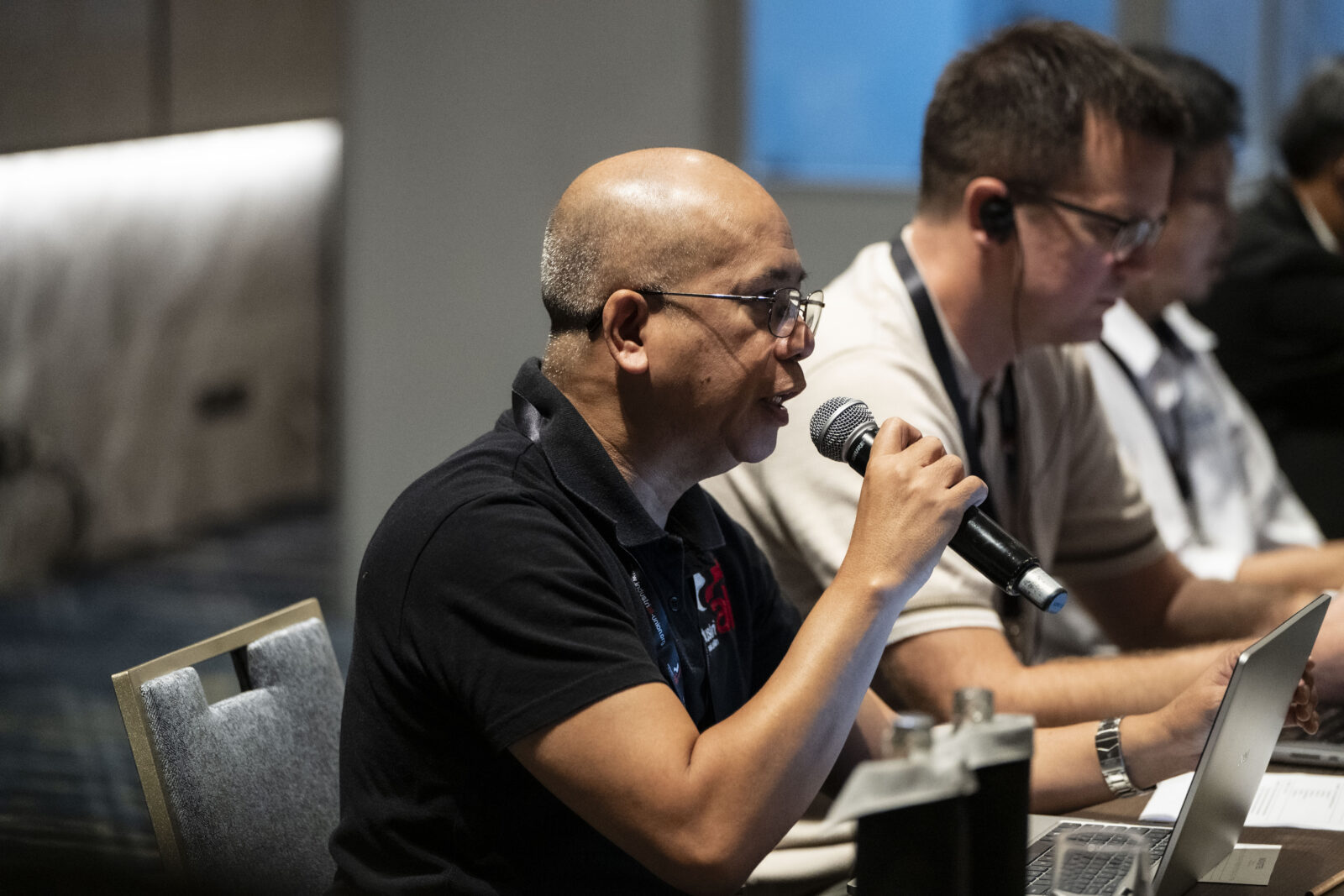
IndustriALL regional secretary Ramon Certeza warned that automation, digitalization and electric vehicles must not become an excuse to cut jobs or rights:
“The transformation of the rubber and tire industry must never come at the expense of workers’ rights, decent jobs and dignity.”
Organizing without the law on their side
Thailand has still not ratified ILO Conventions 87 and 98 on freedom of association and collective bargaining. Fewer than 1 in 100 Thai workers belongs to a union.
Yet union density in Thailand’s rubber sector is well above the national average, and its unions keep winning gains. An Indonesian delegate asked what their secret was. Saman Pornprachatham, president of the Rubber Workers Union Group of Thailand (RWUT) explained that it’s strength in numbers, activism and working together, with partners at home and abroad. There is no hidden power, they said. They simply keep fighting, and many of their goals are still ahead.
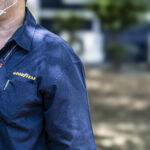
At the organized plant visit, delegates saw that strength up close at Goodyear Thailand in Pathum Thani. Management and the Tire and Rubber Worker Union of Thailand, which turns 50 this year, presented together on how social dialogue delivers good conditions for workers.
It was reported that in Malaysia, a 2024 change to the Trade Union Act opened a door, and the National Union of Transport Equipment and Allied Industry Workers (NUTEAIW) walked through it. It won six recognition ballots at rubber companies in nine months, organizing 5,500 workers.
Women’s voices, and a gap still to close
Women and young workers had their own session on the second day. Their reports showed real progress, and how far unions still have to go.
Thai unions, with the wider labour movement, helped secure 120 days’ maternity leave and 15 days’ paternity leave in national law from December 2025. Some company agreements in Thailand, at Bridgestone, Michelin and Yokohama, now include prenatal allowances, lactation rooms and cancer screening. At Yokohama, free sanitary pads are still a demand on the table in 2026.
In Indonesia, 27 companies and unions have signed a joint commitment to zero tolerance of violence and sexual harassment, reported the Chemical, Energy and Mine Workers’ Union (FSP KEP SPSI). Its union at Pirelli’s Indonesian plant has opened a protection house for women workers.
But women remain under-represented in membership and leadership. They make up about one in ten of FSP KEP SPSI’s rubber and tire members, and only a handful sit on the committees of Thai rubber unions.
Delegates agreed this is not a task for women alone. Men in union leadership must also make room, so that women and young workers shape every part of union work, not only women’s issues.
The path ahead
As the meeting drew to a close, delegates made it clear the network matters to them.
“You are the wind beneath my wings and you play a role in my success as a trade union leader,” one delegate said. “We need solidarity, we need to keep this network alive,”
said Saman Pornprachatham.
The network agreed to share collective agreements, safety provisions and minimum wage data directly, to explore online training on gender, health and safety and Just Transition, and to meet again in Asia-Pacific in 2027.
Their fight is our fight
The meeting ended the way unions know best: together, on their feet and loud.
The Yokohama workers’ union, part of the Federation of Indonesian Metalworkers’ Unions (FSPMI), reported that the company dismissed its secretary, Muhammad Dimas Ekananda, in the middle of collective bargaining. Workers are now preparing to strike on 28 October 2026
The message from Bangkok was simple: you are part of this family, and your fight is our fight.