1 July, 2026Gold prices are booming, but the workers who mine it say the boom has not reached them. That was the message from more than 50 trade unionists who joined IndustriALL Global Union's first Gold Sub-Sector Network meeting on 30 June 2026, a half-day virtual gathering bringing together affiliates from Africa, the Americas, Asia and the Pacific to compare notes on subcontracting, safety and organizing rights.
Co-chair Cathy Drummond, of the United Steelworkers (USW), set the tone early. Miners around the world, she said, are facing many of the same pressures: changing business models, growing subcontracting, persistent health and safety risks, barriers to organizing and the creeping impact of new technology.
That sense of shared struggle ran through the whole meeting.
A boom that bypasses the workforce
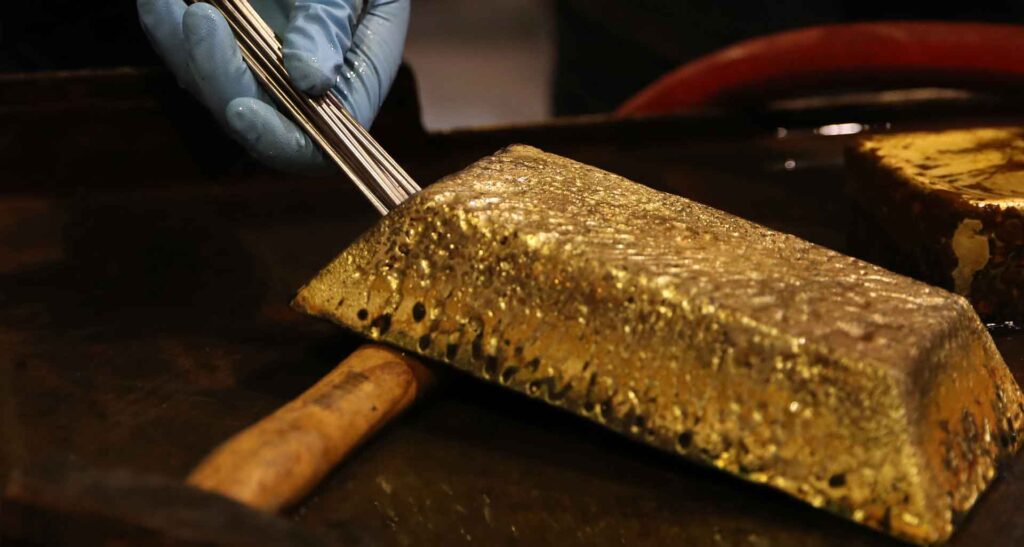
Emmanuel Adjei-Danso, IndustriALL’s Director of Mining and Energy, opened with a stark picture of a sector enjoying record gold prices and rising production, with central banks worldwide leaning on gold reserves to shore up their currencies. Yet that surge in value, he said, is not translating into stronger collective bargaining, safer workplaces or better pay for the people who dig the gold out of the ground.
He pointed to a troubling toll of mining fatalities recorded across the sector so far this year and warned that illicit mining is making the problem worse by undermining safety standards and the sustainability of the industry as a whole.
Kemal Ozkan, IndustriALL’s assistant general secretary, framed the stakes in even starker terms.
“The mine workers are already at the crossroads of the energy transition for a low-carbon economy, decarbonization, but at the end it really puts the mine workers at the front line of the whole debate,”
he told delegates.
Subcontracting: the thread running through every country
If one issue united every speaker, it was subcontracting.
In Ghana, delegate Abdul-Moomin Abdul-Moomin described an industry where the vast majority of the workforce is now on temporary or fixed-term contracts, a shift he linked directly to weak labour law enforcement. The Ghana Mine Workers’ Union has fought back through the courts and the bargaining table, winning protections that make it harder for employers to simply let contracts lapse.
In Quebec, Canada, Sebastien Rail from the USW described subcontractors operating almost like staffing agencies, supplying labour to mines on terms that make it extremely difficult for workers to unionize and linked the practice to a recent rise in workplace accidents among inexperienced, recently hired staff.
In Tanzania, RWECHUNGURA Paternus from Tanzania Mines, Energy, Construction and Allied Workers’ Union (TAMICO) explained how artisanal and small-scale miners, often working without contracts or fixed pay, can wait years to be paid once their gold is finally sold, making them almost impossible to organize effectively.
And in Zimbabwe, Thulani Moyo catalogued a grim list of site-level failures: a change of mine ownership that stripped away accrued worker benefits, inadequate dust control exposing miners to silicosis, compromized ventilation, shared sanitation facilities for men and women and a workplace death linked to poor safety protocols.
Solidarity that crosses borders
Not every story was one of setback. Delegates heard how international solidarity is already delivering results.
USW’s Ben Davis described a global network of Newmont union representatives, spanning Australia, Mexico, Argentina, Canada and Peru, working together to push the company to raise standards. He also detailed two cases brought under the United States-Mexico-Canada Agreement’s rapid response labour mechanism, including one in which an investigation uncovered links between organized crime and efforts to crush union organizing at a Mexican mine, complete with threats of violence against workers. The union won that case, although enforcement, Davis said, remains an uphill battle.
In Mexico, Los Mineros’ Luis Alberto described how the union has shifted from reacting to labour law changes to getting ahead of them, using legally mandated training committees to make outsourcing harder to justify and pushing health and safety committees to be led by the workers who know the conditions best.
A new tool in the toolbox: IRMA
The meeting also heard from Davidzo Muchawaya of the Initiative for Responsible Mining Assurance (IRMA), a multi-stakeholder body where IndustriALL sits on the governing board alongside mining companies, investors, civil society and purchasers.
IRMA’s independent audits, Muchawaya explained, give unions something rare: verified, third-party evidence of conditions on the ground, evidence that companies themselves have already seen and accepted before it is published. She said the audits have surfaced a consistent pattern across many sites: a heavy and growing reliance on contract labour, weaker protection from harassment for contract workers and patchy management of safety hazards, especially for workers outside the direct workforce.
IndustriALL has already put those reports to work, combining IRMA audit findings with affiliate testimony to build a case for action at AngloGold Ashanti sites, holding the company to account for outstanding corrective measures.
Asked whether a Chinese-owned mine recently joining the IRMA system in the Democratic Republic of Congo was a sign of progress, Muchawaya agreed it was a notable step, noting that the vast majority of sites only join IRMA because of external pressure in the first place.
What happens next
Closing the meeting, co-chair Stephen Smyth called it the start of something bigger: a standing network, meeting regularly, with a shared contact list to keep the dialogue going between sessions. Emmanuel Adjei-Danso confirmed IndustriALL will now build dedicated company networks for Barrick Gold and AngloGold Ashanti, adding to existing work with Newmont and Anglo American and invited every affiliate to flag issues, campaigns and opportunities for cross-border collaboration.
The message from the network’s first meeting was clear: gold may be booming, but it is solidarity, not the gold price, that will deliver decent work for the people who mine it.
