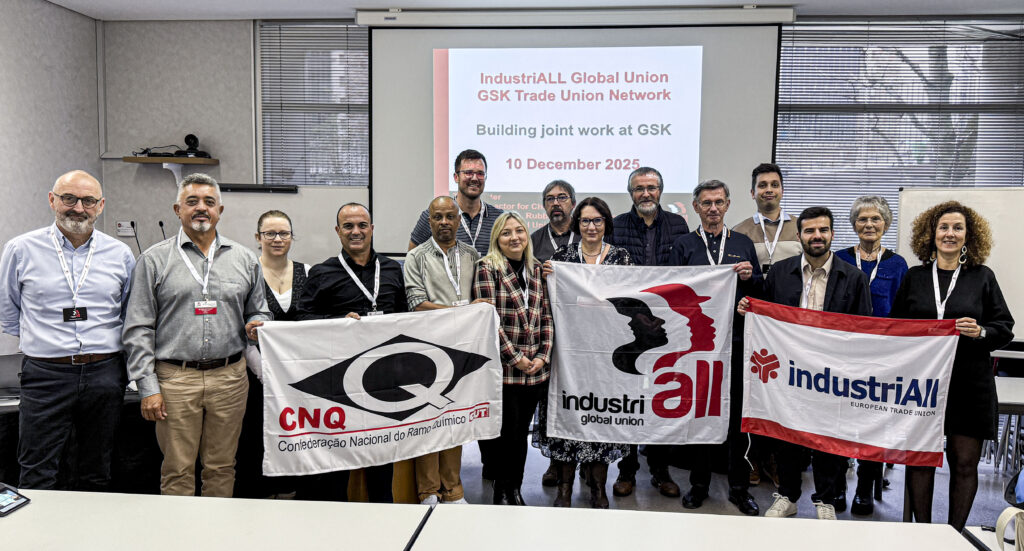
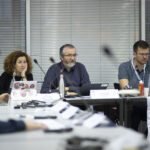
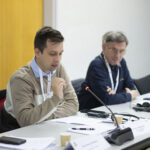
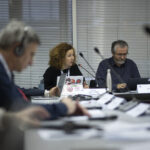
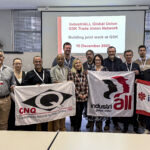
10 December, 2025For the first time in the history of GSK, a major British phamarceutical company, trade unions from across the company’s global operations came together in Paris on 9-10 December for a meeting that set the foundation for a united global workers’ network. Hosted at the FCE-CFDT headquarters in France, it marked a turning point, born out of rising restructuring across continents, growing pressure on workers and the clear need for a stronger coordinated global industrial relations framework at GSK.
“This meeting shows what is possible when workers refuse to stay isolated,”
said Tom Grinter, IndustriALL sector director, opening the session.
“Management is acting globally, so workers must be organized globally too. Today, we begin building the structure that will allow every GSK worker, no matter their country, to be heard.”
European Works Council (EWC) chair Denis Suire echoed this message, stressing that unions have long struggled to connect beyond Europe:
“For years we knew there were issues in Pakistan, in Asia, in Latin America, but we had no official space to address them. Today is the beginning of something new, a global family of GSK unions who will stand together.”
Why now? A company reshaped by transformations
Participants began the meeting by examining the global picture: GSK’s workforce has been shrinking across regions and functions even while profits rise. Major restructuring has hit the UK, Belgium, Italy and the United States with shifts in production, digital transformation, outsourcing and the spread of new operating models placing workers under intense pressure. With only 32 per cent of the workforce covered by collective bargaining and union representation uneven globally the need for stronger international coordination has become urgent.
Against this backdrop, the unions agreed: a global structure is no longer optional, it is necessary.
A global map of workers’ realities
The heart of the meeting was the exchange of updates from unions across the world, revealing both common threads and unique local challenges.
Europe: strength, restructuring and the need for coherence
In the UK, unions described an industrial landscape shaped by austerity, political volatility and post-Brexit pressures. GSK’s UK operations face uncertainty linked to shifting investments, trade tariffs and constant restructuring. Participants added detailed insight into the challenges of transparency and worker protection.
In Belgium, once one of GSK’s strongest bases, headcount reductions continue as roles and production shift toward the United States. Unions stressed the need for stable employmentcontracts and fair distribution of work, highlighting growing geopolitical pressures.
From France, delegates shared their experience negotiating unified agreements across sites, ensuring wage coherence and gender equality measures and using social funds to support workers’ well-being, demonstrating the value of strong, structured industrial relations systems.
In Hungary, the union explained how their collective agreement guarantees powerful protections, bonuses, extra pay for difficult work, cultural funds, but also described the immense pressure created by workforce reductions and rising production demands under the Standard Operating Model (SOM).
Polish representatives highlighted strong employer–union cooperation in social activities, but stressed the need to protect democratic worker representation in the European Works Council, especially ensuring that Polish seats must be elected workers.
As exchanges moved eastward, participants highlighted how structural inequalities and fragmented organizing landscapes deepen the challenges faced by workers.
Asia: fragmentation, inequality and the cost of disunity
The situation in Pakistan illustrated why a global network is indispensable. With four separate CBAs weakening worker unity, outsourced workforce, inequality across sites, unresolved mass dismissals dating back to 2014 and failures to provide statutory funds, participants recognized Pakistan as one of the most urgent cases requiring coordinated international support.
In Indonesia, unions described the consequences of the GSK–Haleon demerger, which drastically reduced membership and left only a handful of workers representing GSK at the Pulogadung site. Wage issues and outsourcing pressures remain key concerns requiring global escalation.
Across Asia, participants emphasised that the Standard Operating Model, rolled out globally, is creating safety risks, higher workloads and operational problems that must be addressed with GSK at a global level.
Latin America: subcontracting and gender equality
Brazilian delegates reported the increasing use of subcontracting, with major pharmaceutical players, including GSK, moving production into third-party facilities. Gender equality initiatives are advancing under government requirements although restructuring trends mirror those in Europe.
North America: negotiating under threat
In Canada, CUPE representatives described difficult negotiations in the context of a 15 per cent restructuring push by GSK. Despite being a major flu-vaccine producer and employing hundreds of highly skilled workers, the site faces constant threats of closure and pressure to concede on wages and seniority rights. Lack of transparency from management was a recurring theme.
US operations were also referenced in the global discussion with delegates noting the company’s massive USD$30 billion expansion in the United States and its consequences for job security in other regions.
A shared vision: from isolation to collective power
Every region, despite different conditions, expressed the same message: GSK workers need each other.
Julie Blondeel, GSK EWC coordinator, celebrated the creation of a space where experiences, strategies and solutions could finally be shared across borders. She concluded that:
“Management is global. Restructuring is global. Our solidarity must be global too.”
Building the future: what the network will do next
Through collective discussion unions agreed on concrete priorities that will guide the next phase of the network.
The IndustriALL GSK global union network will:
Initiate discussions with GSK on establishing a Global Trade Union Works Council, as part of a comprehensive global industrial relations strategy.
Seek dialogue on urgent cases, including:
- Pakistan’s union fragmentation and unresolved dismissals
- outsourcing and subcontracting across countries
- safety issues and workload problems
- Indonesia wage concerns
- external manufacturing challenges
Submit a detailed information request to GSK covering workforce data, strategy and country-by-country performance.
Advance occupational health and safety as a central pillar of the global agenda.
Express active solidarity with Unia’s campaign to defend 700 jobs at Novartis, with participants signing a solidarity petition and committing to continue support.
“This is only the beginning,”
Tom Grinter concluded.
“For too long, GSK workers have faced global challenges with local tools. Today we choose to build something bigger, something that belongs to all of us. We are not just reacting to change, we are shaping the future.”
A new chapter for GSK workers worldwide
The Paris meeting was more than a gathering, it was the foundation of a new global movement inside GSK. Workers left with a shared conviction that cross-border solidarity is the strongest protection against restructuring, outsourcing and insecurity.
As one participant said as the meeting ended:
“We arrived as separate unions. We leave as a global voice.”