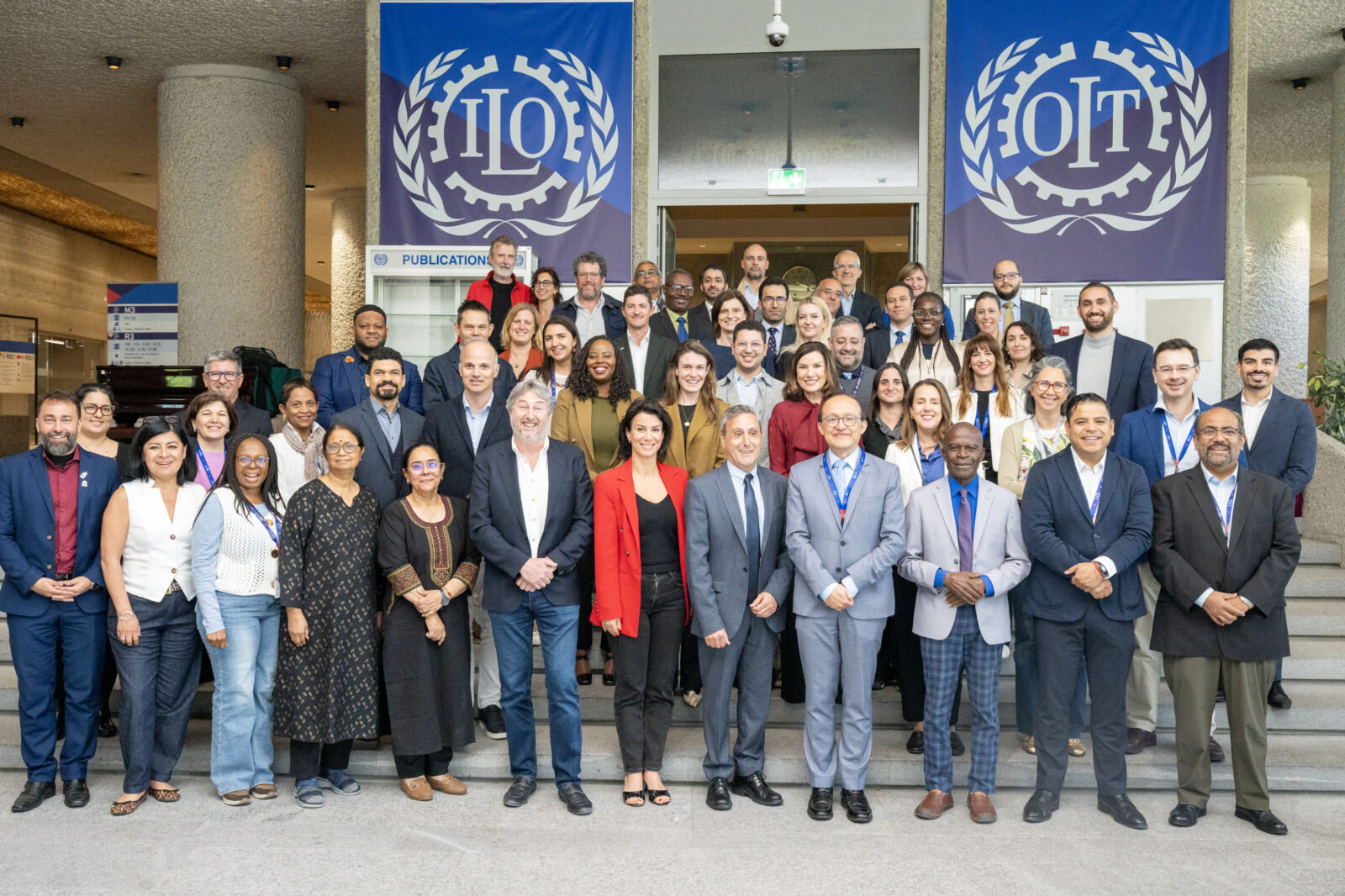
30 April, 2026The ILO meeting of experts on occupational safety and health in extreme weather events and changing weather patterns, held in Geneva from 20 to 24 April 2026, concluded with the adoption of conclusions that strengthen the protection of workers against climate-related risks that are becoming increasingly frequent and severe.
IndustriALL took part in this meeting as part of the Global Union Federations (GUFs), serving as advisors to the workers’ group and contributing actively to the debates and to the negotiation of the final text. The worker delegation was led by the International Trade Union Confederation (ITUC). Additionally, the discussions highlighted occupational safety and health climate risks and their relevance for worker protection.
IndustriALL at the table
During the meeting, the workers’ group defended a broad approach: not only responding to specific extreme weather events, but also recognizing that changing weather patterns create cumulative risks for occupational safety and health. That approach is reflected in the conclusions that were adopted, and it directly addresses ongoing climate risks in health and safety at work.
Strengthening the text: key gains for workers
The amendments put forward by the workers helped strengthen the initial draft in several key areas. The final text gives greater weight to freedom of association, social dialogue and collective bargaining, confirms that OSH protection must apply to all workers, including vulnerable workers and regardless of their employment status and improves the language on exposure thresholds, labour inspection, income protection when work must be stopped, health surveillance and safe return to work after extreme weather events. It also includes issues such as gender perspective, social protection and the need for resilient public infrastructure. With these improvements, occupational safety and health climate risks are more thoroughly addressed for every worker.
At workplace level, the conclusions are clearer on the importance of risk assessments, access to safe drinking water and adequate facilities, the provision of personal protective equipment at no cost and specific measures for workers facing higher risks.
They also make progress on two issues that are particularly important for IndustriALL. The first is the need to define clear responsibilities when more than one company operates at the same workplace. This means that the adopted text also covers contract and subcontract workers, as well as value chains, which is highly relevant in industrial sectors where subcontracting is widespread. Furthermore, addressing occupational safety and health climate risks is crucial in these complex environments.
Climate risks inside plants, mines and industrial facilities
The second important point for us was that the text should better reflect the reality of industrial sectors. In energy, mining and manufacturing industries, climate-related risks do not affect only those working outdoors. They also affect workers inside plants and industrial facilities, through accumulated heat, smoke, poor air quality, operational disruptions, emergency work and the increased risk of major industrial accidents when an extreme event affects critical infrastructure or hazardous processes. The fact that the conclusions advance prevention, preparedness, response and recovery in these contexts is an important outcome. Clearly, occupational safety and health must take into account climate risks in these sectors.
Diana Junquera, director of industrial policy, said:
“For IndustriALL, it was essential that this debate reflected the reality of our sectors and of the workers we represent. Climate does not only affect outdoor work: it also changes conditions inside plants, mines and industrial facilities. The adoption of conclusions that strengthen prevention, rights, social dialogue and protection for all workers is a very important step.”
Next steps
The conclusions adopted provide a useful basis for further progress towards stronger national policies and concrete measures in workplaces. IndustriALL will continue working to ensure that these principles are turned into real protection for workers across all our sectors, especially addressing occupational safety and health climate risks as part of our ongoing advocacy.