22 April, 2026The International Labour Organization is confronting the worst financial crisis in its recent history. The US has not paid its dues since 2023 and several other countries are late with their payments. The consequences for workers worldwide could be severe. IndustriALL Global Union is calling on affiliated unions to act now: press governments to pay their ILO dues.
A crisis not of the ILO’s making
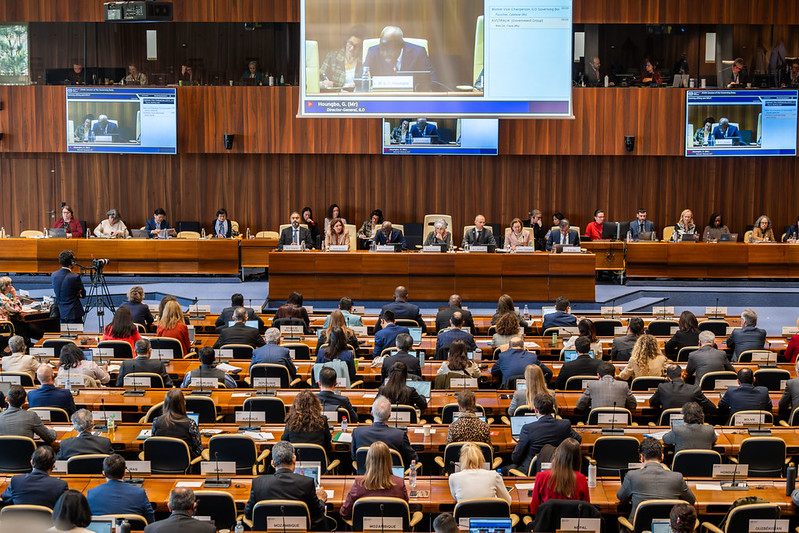
ILO director-general Gilbert Houngbo has described the situation as “serious” and “unprecedented in recent decades,” warning that it is “already affecting our ability to meet the expectations of our constituents.”
The cause is straightforward: member states are not paying what they owe. Arrears from several member states now total more than 260 million Swiss francs (US$295 million), approximately a third of the organisation’s biennial budget, pushing it into a serious liquidity crunch. According to reports, the United States, the ILO’s largest contributor providing 22 per cent of its regular funding, owes more than 173 million francs. China, Germany and others are also behind on payments.
Reform — but not retreat
The ILO has responded with a structural reform built around three pillars: reorganizing headquarters and reprioritizing its 2026–27 programme of work; reinforcing field capacity by reviewing regional structures and decentralising development cooperation; and consolidating support services and establishing a new global service centre.
But reform requires resources. According to internal documents reported by Reuters, without sufficient funding the ILO could be forced to cut up to 295 positions, around eight per cent of its global workforce. Gilbert Houngbo has confirmed that the organization has had to shut down some 50 projects in the United States and lay off around 200 staff as a direct result of the funding shortfall.
The ILO has also published a risk register and a live tracker showing which member states have paid their contributions and what remains outstanding — a public accountability tool that makes the problem impossible to ignore.
Why this matters for IndustriALL affiliates
The ILO is the only tripartite global body where unions sit alongside governments and employers to set binding international labour standards. Those standards — on freedom of association, collective bargaining, forced labour, child labour, occupational safety and health — underpin the legal frameworks that IndustriALL affiliates rely on every day.
IndustriALL general secretary Atle Høie is unequivocal:
“The ILO is the cornerstone of the international system that protects workers’ rights. A funding crisis of this scale is not just a bureaucratic problem — it puts at risk the standards, the oversight and the technical support that workers in every sector and every country depend on. We call on all governments to honour their commitments and pay their dues without delay.”
A diminished ILO means weaker standard-setting, less support for ratification and implementation of conventions, and reduced capacity to hold governments and employers to account. At a time when human rights due diligence frameworks are under political attack and multilateralism is being eroded, a financially crippled ILO is the last thing workers can afford.
What unions must do
The fix is simple, even if the politics are not: governments must pay what they owe.
IndustriALL calls on all affiliated unions to raise this issue urgently with their governments. Demand that your government pays its assessed contributions to the ILO in full and on time. The ILO’s ability to function — to protect workers, to set standards, to provide technical assistance — depends on it.