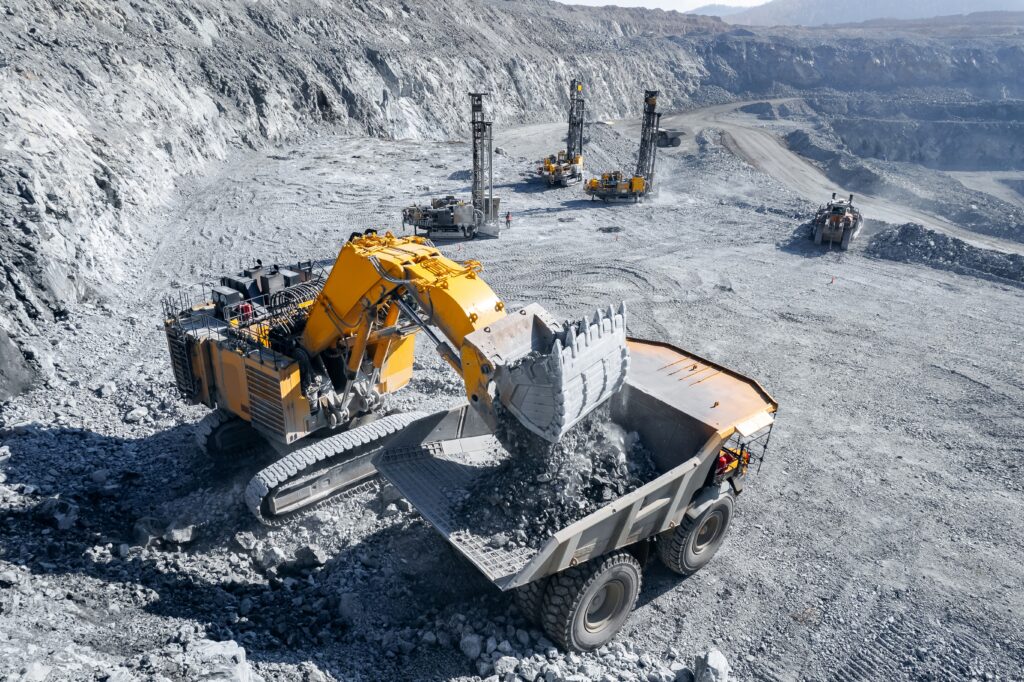
29 July, 2026IndustriALL Global Union brought together affiliates from around the world on 28 July 2026 to address health and safety in mining as a priority. Participants called for faster ratification and implementation of ILO Convention 176 (C176) on safety and health in mines and for greater trade union involvement in risk assessment.
The Sector Strategic Response and Action Plan was adopted by the World Mining Conference in November 2025. It commits IndustriALL to mainstream occupational health and safety in the mining sector, particularly through the campaign for ratification and implementation of International Labour Organization (ILO) Convention 176 (C176), Safety in Mines. The plan also commits IndustriALL to co-operate across international borders to identify health and safety best practice and continually raise safety standards in the sectors.
Why it matters
“Every 15 seconds, a worker dies somewhere in the world from a work-related accident or disease. Every week, thousands more die from lung disease or cancer linked to exposure to asbestos and other hazards,”
said IndustriALL assistant general secretary, Kemal Özkan.
Mining remains one of the most hazardous sectors in the world and one of the few with its own dedicated ILO convention.
“Occupational health and safety is a workers’ issue and a priority,”
Kemal Özkan said, calling on employers to accept responsibility for making work safer rather than blaming workers for accidents.
Trade unions and risk assessment
Stephen Smyth, vice president of the Mining and Energy Union(MEU) and co-chair of IndustriALL’s mining sector, presented on risk assessment and the role of trade unions. He urged affiliates to press for adoption of C176 as a starting point for building strong workplace health and safety committees and for securing workers’ rights to information, training and the right to refuse unsafe work.
Stephen Smyth also highlighted the Australian coalmining model, under which unions elect full-time safety representatives with powers similar to those of government inspectors, including the power to stop unsafe work. Independent reviewers rate the model as among the strongest in the world.
Key barriers to union participation in health and safety, he said, include: anti-union cultures that fail to recognise workers’ representatives, exclusion of union representatives from consultation processes and reprisals against workers and representatives who raise safety concerns.
New convention on biological hazards
Glen Mpufane, an occupational safety and health consultant and former IndustriALL’s sector director, presented on Convention 192 and its accompanying Recommendation 209, adopted at the International Labour Conference(ILC) in 2025. The convention is the first global standard aimed at preventing exposure to biological hazards, including bacteria, viruses, fungi and parasites. It covers every worker, not only those in mining.
Glen Mpufane set out the close links between silica dust exposure and tuberculosis in mining and described how the new convention builds on the general principles of Convention 155 to provide more detailed protection. He urged affiliates to campaign for ratification of Convention 192 in their own countries and to embed its protections in collective bargaining agreements, even where governments have yet to ratify.
The case for ratifying C176
Camila Meireles, of the ILO’s sectoral policies branch, outlined the ratification process and the ILO’s supervisory mechanisms. ILO C176 currently has 37 ratifications, including two new ones this year: Mexico and Côte d’Ivoire.
She cited Chile as an example, where a tripartite mining sector commission brought government, employers and workers together for the first time, leading to a unanimous commitment to ratify the convention and a national OSH policy shaped by regional consultations.
Workers’ organizations in countries that have not yet ratified C176 can still act, Camila Meireles said, by requesting a written explanation from their government, calling for tripartite consultation at national or sector level and building national campaigns and coordinating with other worker organizations.
Voices from affiliates
Representatives from Mexico, Morocco and Pakistan described the health and safety challenges facing their members.
Raphael Zuñiga Carmona, from SNTMMSRM Mining General Trade Union of Mexico, said that although Mexican law guarantees workers’ participation in risk assessment, many workers remain reluctant to raise safety concerns or stop unsafe work in practice.
Boutayeb Bouchkhach from SNIME-CDT Morocco called for stronger ratification campaigns, better harmonization between international conventions and national law and increased workplace inspection.
Abdul Haleem Khan, from the Pakistan Central Mine Workers Federation (PCMLF), described mines operating without updated safety practices and appealed for training programmes to build a stronger safety culture among mineworkers.
What happens next?
Kemal Özkan pointed to new data from the Business and Human Rights Resource Centre’s transition minerals tracker, which recorded 835 allegations linked to mining in 2024, of which around one fourth were raised to labour matters where more than 80 per cent of them are related to occupational health and safety. IndustriALL will continue to raise health and safety across its mining sub-sectors, regional networks and in company-level networks.