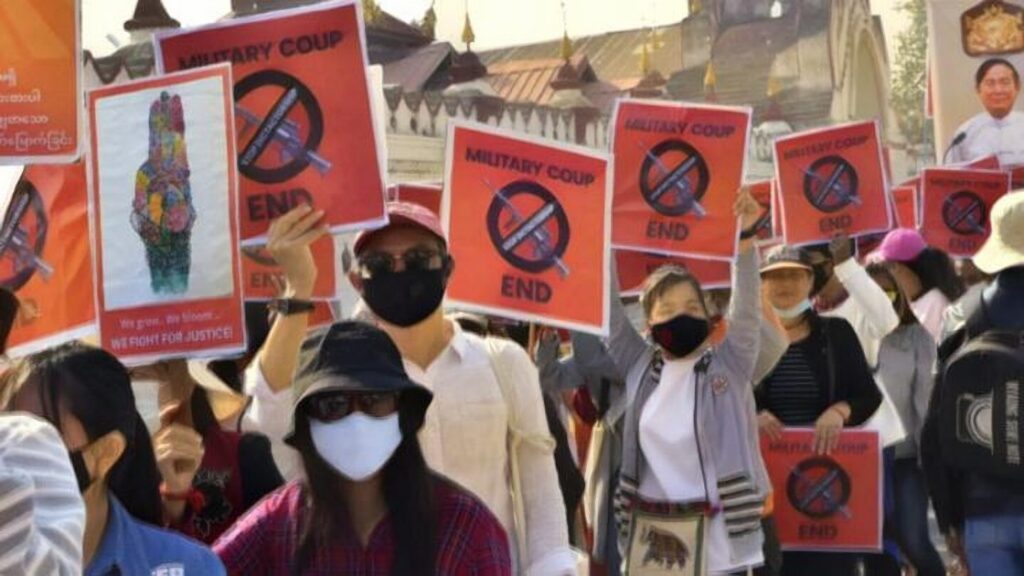
6 February, 2026As the OECD Forum on Responsible Business Conduct in Garment and Footwear convenes in Paris next week, Myanmar marks five years since the military seized power. For workers and trade unions, those five years have meant systemic abuses of the OECD Guidelines and the collapse of any meaningful due diligence.
In 2024, Myanmar trade unions and IndustriALL filed OECD Guidelines complaints with the National Contact Points (NCP) of Germany, the UK and Poland. The complaints name New Yorker, Next Plc and LPP and call for responsible disengagement until democracy is restored in the country.
Yet all three NCP processes have exceeded the OECD’s indicative timelines for initial assessment by more than six months. IndustriALL has provided valuable information to assist NCPs with implementation by the brands. The inaction prolongs violations of workers’ rights and allows continued enterprise investment inMyanmar.
ILO action confirms the need to end business links
At the International Labour Conference in June last year, the ILO invoked Article 33 of its constitution against the Myanmar military regime, an extraordinary measure reserved for the gravest situations.
The ILO resolution calls on governments, employers and workers to review and end relationships that may enable or prolong violations of freedom of association and forced labour, including through financial flows and supply chain links. Purchase orders from Myanmar factories are precisely the kind of relationship that Article 33 requires to be reviewed.
There is no due diligence under military rule
Most major clothing brands from OECD adherent countries have exited Myanmar or announced plans to leave since the coup. Those that remain face conditions that make effective due diligence impossible. Factories operate under police and military interference. Workers in industrial zones live under constant threat of prosecution.
Independent assessments confirm this reality. Ethical Trading Initiative-commissioned research found an almost total absence of human rights infrastructure following the coup. Human Rights Watch documents widespread and systemic abuses. The Business and Human Rights Resource Centre continues to track labour rights allegations across the garment sector.
Responsible disengagement is the only credible response
The OECD Guidelines were updated in 2023 to include responsible disengagement. Where companies cannot prevent or mitigate harm, ending business relationships is a requirement.
Garment brands still sourcing from Myanmar must disengage responsibly. NCPs that allow complaints to languish enable continued investment in a military-controlled economy and undermine the Guidelines themselves. Due diligence cannot be implemented at gunpoint. Until democracy is restored, divestment is the only Guidelines-compatible path.
Says IndustriALL general secretary Atle Høie:
“Five years after the coup, it is clear that responsible business cannot operate under military rule. When NCP processes stall, they do not simply delay outcomes, they allow continued investment in a context of repression and ongoing violations of workers’ rights. Until democracy is restored in Myanmar, divestment is the only credible and Guidelines-compatible response.”