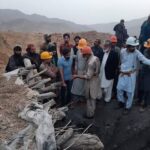
7 October, 2026More than 100 mine workers have died in Pakistan this year, in an industry where danger has become routine. But miners are not waiting for change to come to them.
Deaths follow a pattern
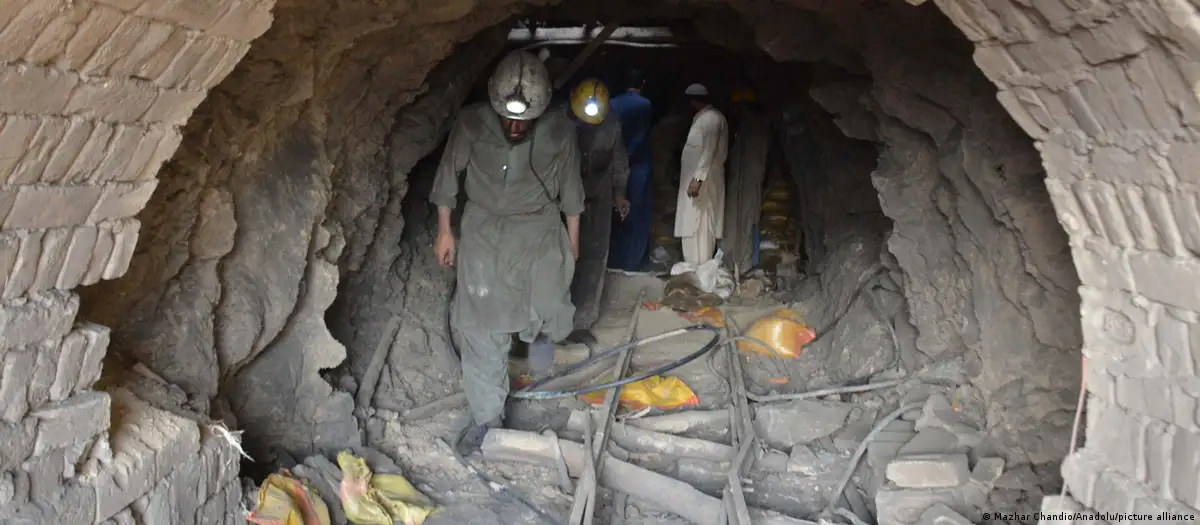
For many workers in Pakistan, a day’s work means going deep into coal dust and danger. Not all workers return home. Weeks before 36 workers were killed in Sorange, IndustriALL affiliate Pakistan Mine Workers Federation (PMWF) sent the authorities a report on why mine accidents keep happening. The report did not prevent the tragedy.
These deaths are not isolated accidents. In past years, more than 300 mine workers reportedly died and over 3,000 were seriously injured every year. The real figures are likely higher, because many incidents go unreported.
Pakistan is not alone. An estimated 400 mine workers died worldwide over the same period. The causes are well known: safety rules are weakly enforced, wages are low and social protection is thin. When work is this insecure, refusing dangerous work is hard.
The slow danger of coal dust
Coal dust damages the lungs slowly, over years. IndustriALL affiliate Pakistan Central Mines Labour Federation (PCMLF) recently held two medical camps where 105 miners had their health checked. All were declared fit to work, but a check-up only shows one moment in time. Doctors flagged lung disease, high blood pressure and blood-borne infections as risks to watch. They called for proper respiratory protection, better ventilation underground, safer shift patterns and regular check-ups.
Since 20 September, Shahrag Coalfield in Balochistan has had a permanent ambulance to take injured or sick miners to Quetta. Miners and their unions won it by pressing for it.
Emmanuel Adjei-Danso, IndustriALL mining director, says:
“Safety cannot end at the mine exit. The dust workers breathe today can take their health years from now. That is why health has to be at the heart of the work we do.”
Why Pakistan needs to ratify ILO C176 on mine safety
Miners are asking for more than ambulances. PCMLF and PMWF want the government to ratify ILO Convention 176 on safety and health in mines. The convention sets out what employers must do, what inspectors must check and the right of workers to leave dangerous work. The unions are also demanding gas detection, ventilation and rescue systems in every mine, along with a real say for workers in how mines are kept safe.
A law on paper is only a start. Workers also need to know their rights and how to use them.
The work has already begun. On 3 August, PMWF, IndustriALL and the workers’ union held a mine safety and health programme at Zamarud Mines. It brought 227 mine workers together with company managers, contractors and mines inspectors.
In 2027, IndustriALL plans to run mine safety and health training in Pakistan. Workers will learn how to:
- control the dust that causes silicosis and other lung diseases
- work safely in open-cast and underground mines
- refuse dangerous work
- report accidents and dangerous incidents
- assess risks
- track their exposure to dust and other hazards over time
The training will also cover the different risks women in mining face and safety plans must reflect these.
Organizing runs through all of it. When workers act together, these protections do not stop at one mine. They reach more workers, including those in small and informal mines.
The ambulance, the health checks and the meeting with employers and inspectors were all won because workers kept demanding them. The aim now is to make safety the rule in every mine, not a favour won one mine at a time.
Atle Høie, IndustriALL general secretary, says:
“In Islamabad, the government committed to moving forward on ratification of C176 alongside the two fundamental conventions on safety and health. What we haven’t had is continuity. We’ll keep going back to the table, because miners are paying the price of every delay.”