
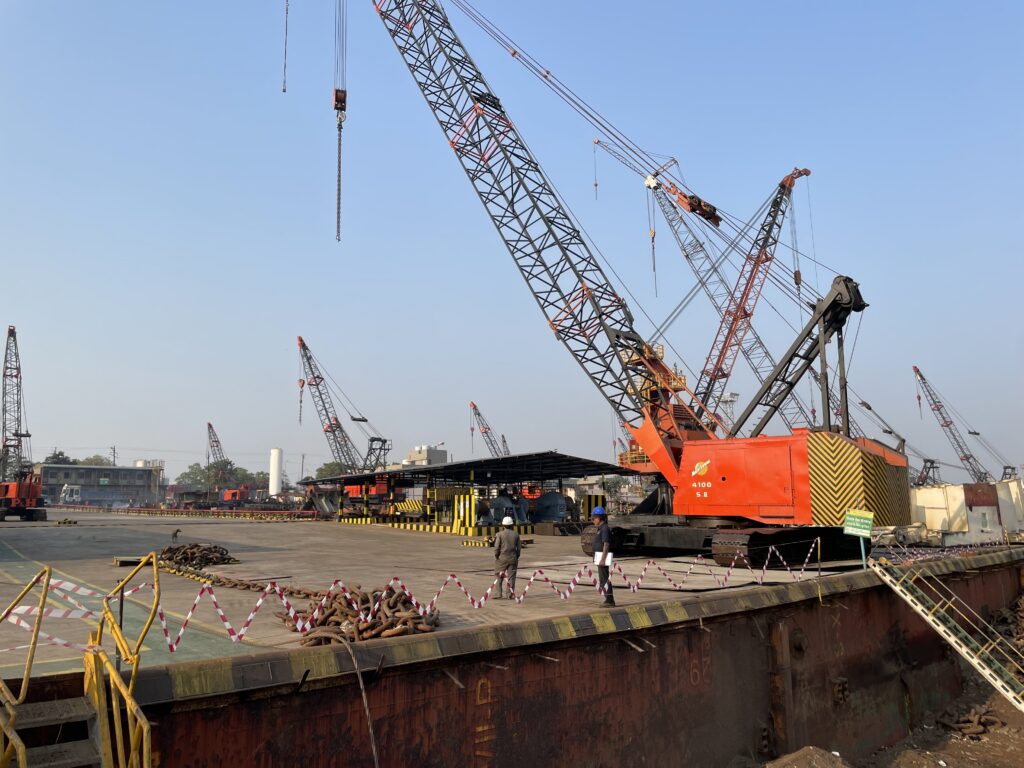
8 December, 2025Shipbreaking has often been described as the most dangerous job in the world and IndustriALL has long campaigned for the ratification of the Hong Kong Convention (HKC) as the most practical first step to clean up the industry. Supported by affiliates, together we maintained pressure on governments, ship owners, financiers and other industry stakeholders to promote the Convention. Despite these efforts and despite formal ratification not one of the major ship recycling nations has fully implemented the Convention in practice.
IndustriALL has been a long-time advocate for safer, cleaner and fair ship recycling, campaigning for years to make the HKC more than a paper exercise. As the HKC came into force in June 2025, IndustriALL highlighted that this represents both a “great test and greatest opportunity” for the shipbreaking sector globally.
India has not yet gazetted its new ship recycling legislation. Without the legislation in place, the country is not able to issue the all-important document of authorization for ship recycling (DASR), to certify that a yard meets HKC requirements. This is a serious issue for ship owners wanting to send their ships to compliant yards.
However, in India the ship recycling process is robust, with most yards meeting HKC standards and yard owners following the correct procedures. There is a strong union, a high level of social dialogue and a significant reduction in the number and severity of accidents.
In Bangladesh, the picture is mixed: the government created a ship recycling board to act as the competent authority and is issuing the DASR, which means ship owners sending ships to the country are complying on paper.
In addition, Bangladesh recently ratified three new ILO Conventions, including C155, which gives workers the right to refuse unsafe work and supports the creation of joint health and safety committees in the workplace.
However, many yard owners are not breaking ships according to the HKC, resulting in 30 accidents, four fatalities and many serious injuries this year. The government seems to lack the capacity or political will to enforce the new regulations.
Pakistan is still very much in development, with the area around the Gadani yards lacking adequate infrastructure. In this years’ budget, the federal government announced an investment of US$42 million, but this has not yet resulted in improvements. In the meantime, the first three upgraded yards have got their green certificates.
“The bottom line is that the HKC has its enemies: people who always said that it is an inadequate instrument for cleaning up ship recycling. It is the responsibility of everyone who championed the HKC to make it work. If it fails to protect workers' lives and the environment, it is no use at all, and we are back to square one. It is in everyone's interest to make it work,”
says Walton Pantland IndustriALL shipbuilding and shipbreaking director.