
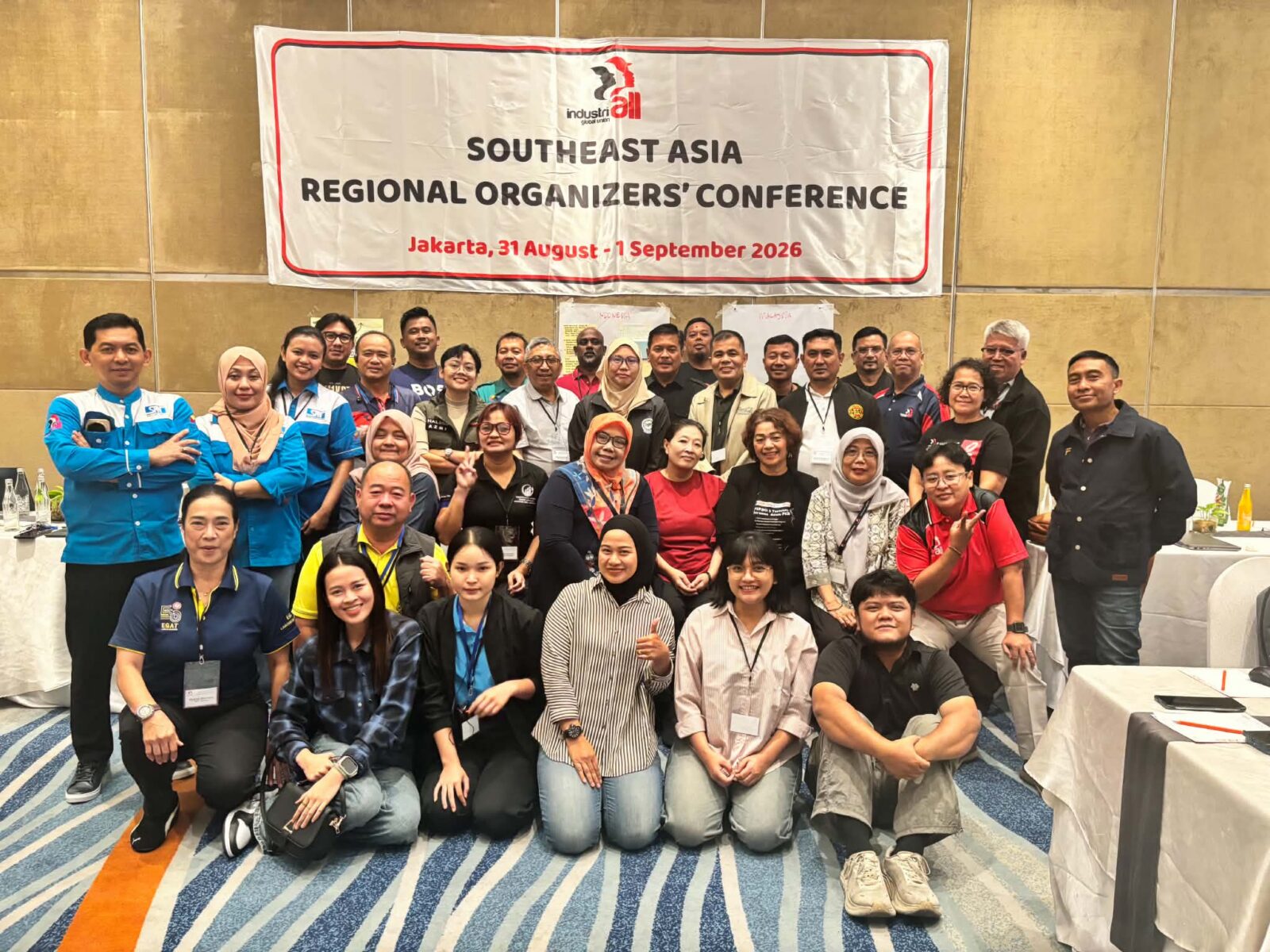
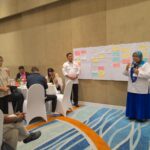
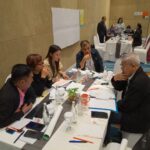
7 September, 2026Thirty-six trade union organizers concluded a two-day regional conference in Jakarta (31 August–1 September) with a renewed commitment to expand membership, defend freedom of association and give women, young workers and precarious workers a stronger voice in the labour movement.
Experienced and young organizers examined national legal frameworks. They also shared lessons from workplace campaigns and developed organizing strategies for evolving employment patterns and multinational supply chains.
Union-busting remains a widespread obstacle to freedom of association across the region. Despite legal protections in many countries, workers who organize often face intimidation, retaliation and barriers to collective bargaining. For example, they encounter dismissal or transfer of union leaders, disruptive shift changes, interference in union elections, refusal to bargain, surveillance and growing use of subcontracted labour to weaken membership and solidarity.
In the Philippines, organizers reported dismissals framed as redundancy and prolonged floating status. They also noted red-tagging and retaliation continuing even after unions won recognition or certification elections. In Thailand, legal protections tied to union registration and collective bargaining don’t always stop employers from dismissing or transferring union members. Experiences from Thailand, the Philippines, Indonesia and Malaysia show that legal recognition alone does not guarantee workers’ rights in practice.
Organizing workers in outsourced, subcontracted, migrant and precarious jobs remains especially hard. Countering anti-union practices requires stronger enforcement of labour rights, legal remedies, strategic organizing and solidarity. Unions are responding by building strong workplace committees, educating workers on their rights and documenting violations. This evidence underpins organizing, recognition and bargaining campaigns and supports legal action, solidarity networks and public advocacy against employer retaliation. When domestic mechanisms fall short, unions escalate cases through international labour, human rights and supply-chain accountability channels.
Affiliates promoted women’s representation in union structures, bargaining teams and decision-making bodies. They also advanced bargaining demands on equal pay, maternity protection, childcare, flexible work arrangements and protection from harassment.
Achievements included FSPMI’s appointment of 221 women leaders to plant-level union boards. The Philippines is also using ILO Convention 190 to bring more women into union activities. Notably, this ratification strategy is now being replicated by Indonesia and soon Cambodia.
Mentoring projects in Indonesia and the Philippines are building young women’s confidence and capacity to lead. As a result, young women are now taking active posts in union structures, including education committees.
Participating unions reported organizing successes that added approximately 5,000 members in 2026 and secured five collective bargaining agreements. Indonesian unions are targeting the nickel industry, key to the battery supply chain. Similarly, Thai unions are moving into petroleum, chemical and materials. Malaysian and Philippine unions continue organizing in electronics. Young workers were identified as a central priority, given how many are in temporary, informal, outsourced, migrant and platform-based work. Therefore, participants called for youth and women’s committees at all levels, alongside mentoring programmes.
Sifa Azmi (SPN) and Andrea Cayanan (PTGWO) said: “Young workers became interested in joining unions after building friendships, receiving answers to workplace concerns and recognizing the union’s role in defending other workers. Digital engagement must be matched with face-to-face communication.”
IndustriALL organizing and campaigns director Walton Pantland said:
“South East Asia is crucial to the future of the labour movement. Geopolitical de-risking and global supply chain realignment will create new industrial jobs and offer a huge opportunity for worker organizing.”
IndustriALL South East Asia regional secretary Ramon Certeza said:
“Organizing is not simply about recruiting members. It is about developing workers who understand their collective power, building workplace leaders who can mobilize their co-workers and transforming workplace issues into collective action.” He called for institutionalizing the organizers’ development programme (ODP) across the region as an investment in the organizing capacity of our unions.