Read this article in:
English
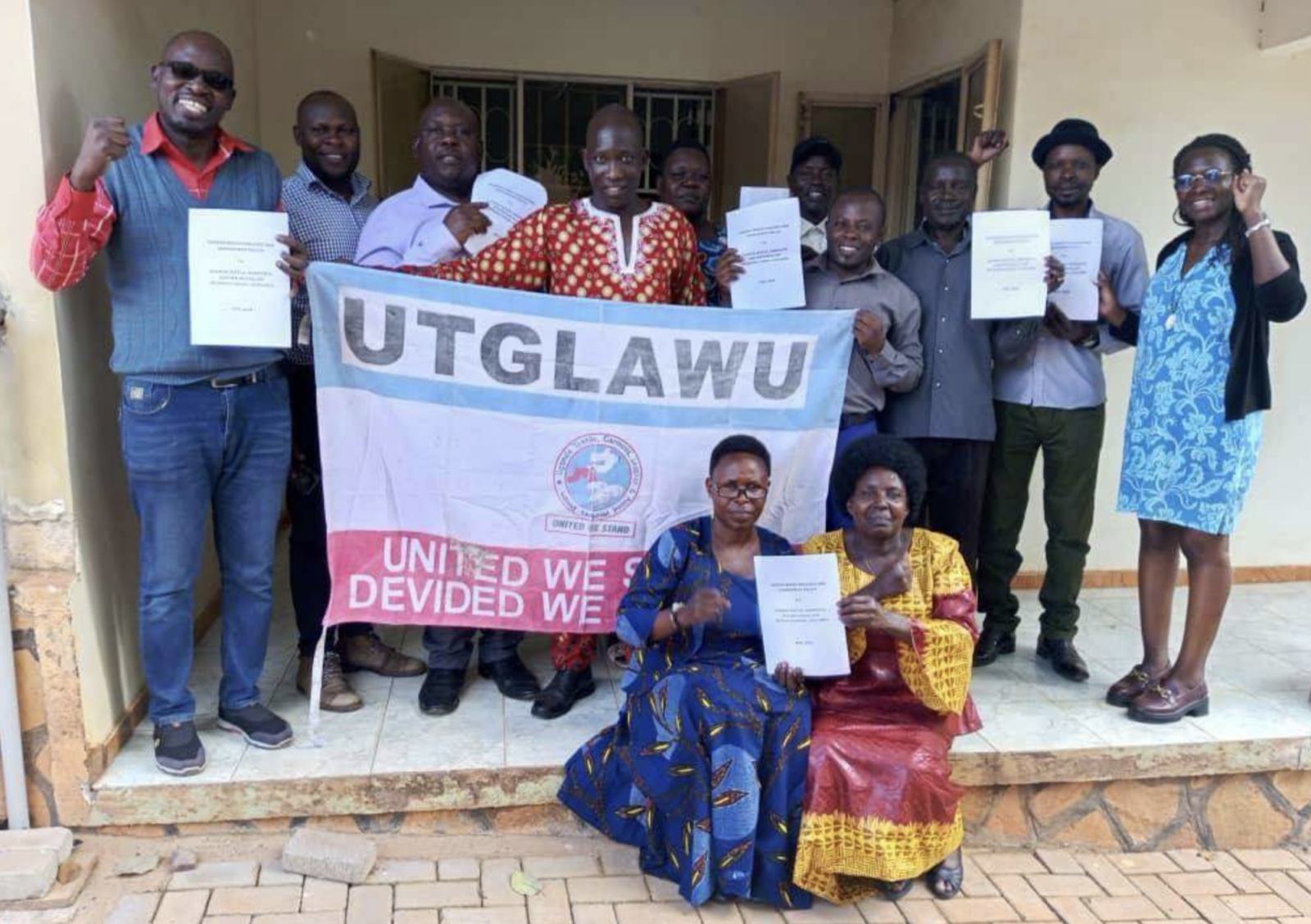
11 October, 2026Four collective agreements in Uganda’s textile and garment sector now contain enforceable clauses on gender-based violence and sexual harassment. This comes after women in the Uganda Textile, Garment, Leather and Allied Workers’ Union took the lead on human rights due diligence.
The clauses are aligned with ILO Convention 190 on violence and harassment in the world of work. Two of the agreements also include a mandatory human rights due diligence clause.
The union has secured permanent status for 30 precarious workers, 18 of them women, and trained 100 shop stewards in gender-responsive due diligence. Its mapping of supply chains has documented risks ranging from violence and environmental damage to inadequate maternity protection.
Irene Lanyero, the union’s deputy national treasurer, who is also responsible for women and youth, said:
“Employers resisted our human rights due diligence activities and tried to block trade unions from visiting factories. But by exposing workers’ rights violations in the media and with solidarity from trade unions and labour support organizations, we gained traction.”
Serious risks remain. The union is campaigning for justice for a garment worker who was raped by a supervisor and infected with HIV. Her case is due in court later in October.
Turning due diligence into union power
The human rights due diligence (HRDD) activities in Uganda are coordinated by IndustriALL’s Sub-Saharan Africa regional office, with support from project partners including TEKNA, DTDA and 3F. The results were presented at a conference in Abidjan, Côte d’Ivoire, on 1 October, where more than 130 trade union delegates from 23 African countries, 60 of them women, discussed HRDD. The conference was supported by the HRDD Competence Centre, ACV-CSC, 3F and SASK.