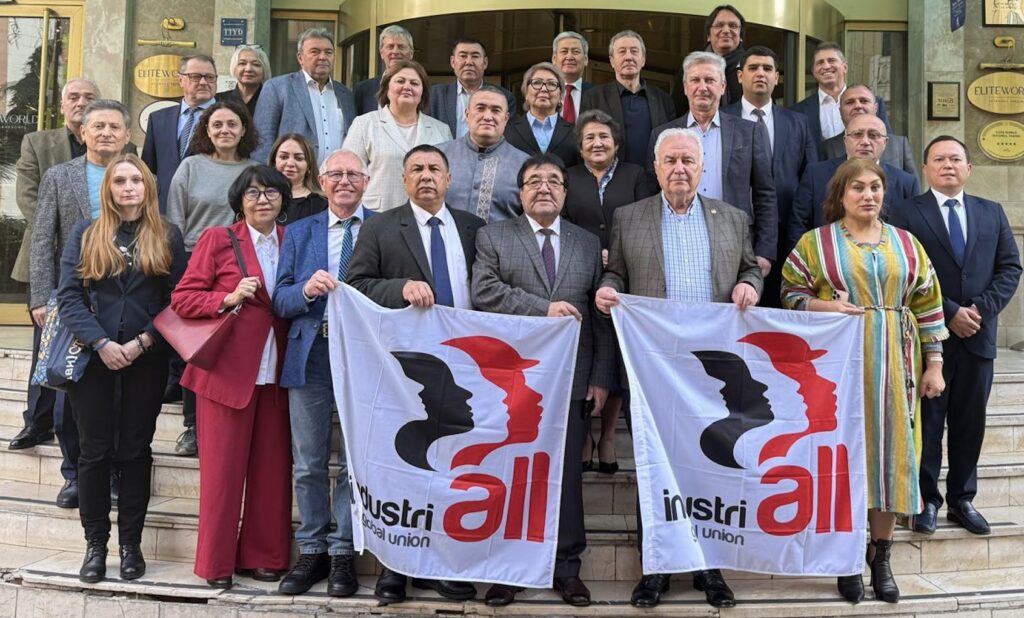

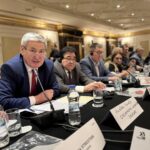
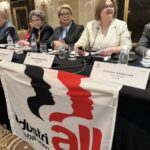
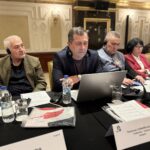
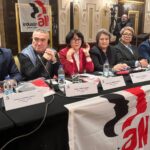
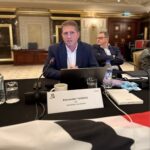
17 December, 2025For two days, trade unions from Eastern Europe, Central Asia and the Caucasus met at an IndustriALL sub-regional meeting to share experiences, assess the challenges facing workers and unions, and discuss joint actions to increase unity. Although many of the countries have formal rights to organize, bargain collectively and strike, in practice, unions often face procedural hurdles that make action hard. There are high thresholds for strike ballots, broad definitions of essential services, long mediation steps, or strict notice periods.
Opening the meeting, IndustriALL Global Union assistant general secretary Kemal Özkan reaffirmed IndustriALL’s commitment to affiliates in the region, stressing the importance of listening directly to unions and understanding their industries and members. He said the meeting was key to identifying how IndustriALL can help strengthen union capacity, highlighting the challenges facing the region, particularly the ongoing war in Ukraine:
“This region is facing exceptional challenges, and that requires continued international trade union solidarity.”
IndustriALL general secretary Atle Høie underlined that defending fundamental trade union rights, notably freedom of association and the right to collective bargaining under ILO Conventions 87 and 98, remains central to IndustriALL’s work. He stressed the need for unity and stronger organizing to counter authoritarian trends, weakening global governance and employer attacks on collective agreements.
“If we do not organize and defend these rights, it becomes easier for employers and governments to impose their will.”
Country reports highlighted declining union membership in some sectors, employers’ reluctance to sign collective agreements, limited labour inspection capacity and growing risks to occupational health and safety. At the same time, unions shared examples of collective bargaining coverage, organizing efforts in new sectors, work on youth and gender equality, and implementation of ILO standards.
Belarus: independent unions criminalized
The Belarusian trade union movement in exile reported that President Lukashenka has classified independent trade union activity as a terrorist act, exposing union activists to criminal charges and preventing unions from representing members. Although 109 political prisoners were recently released, they were immediately deported to Ukraine without national identity documents. And the number of political prisoners continues to grow as more organizations are designated as extremist. Sustained international pressure is needed, particularly for full implementation of ILO Article 33 as a prerequisite for any legal space for independent union activity.
Ukrainian unions described the devastating impact of Russia’s ongoing military aggression, including intensified winter attacks that have destroyed infrastructure and productive capacity. A large part of the energy network has been destroyed, leaving households without electricity for up to 16–18 hours a day, while unions in the nuclear and energy sectors struggle to operate due to damaged substations and power lines.
Union leaders warned that labour legislation is being amended under the pretext of European integration but is weakening trade union rights, including the right to collective bargaining, and undermining social dialogue at a critical time.
Wages, jobs and social dialogue across the region
Kyrgyzstan described widespread informality, management interference in companies and cases of repression against union leaders, while also noting progress on standards, including early ratification of ILO Convention 190 and its inclusion in labour legislation.
Armenia highlighted youth and occupational health and safety as priority matters, and the need to institutionalize social dialogue through legislation rather than personal relations, alongside concerns about multinational companies attempting to shut down unions and limited government understanding of the role of trade unions.
Kazakh unions underlined the importance of wage increases through collective bargaining negotiations as the current level of income is not sufficient for survival. Azerbaijan showed an example on how social dialogue at company level can bring benefits with the example of national oil company SOCAR. Tajikistan highlighted the difficulties of sustaining the national economy and preserving manufacturing jobs. Uzbekistan emphasized the need for closer cooperation in response to increasing international investment by multinational companies and global brands, as the country’s economy continues to develop.
Alexander Ivanou, IndustriALL sector director, addressed the meeting on IndustriALL’s solidarity and support across sectors, focusing on strengthening cooperation between Geneva and affiliates. He outlined how IndustriALL’s sectoral work provides a framework for coordination and support, helping affiliates connect across borders and reinforce their collective strength.
ILO ACTRAV desk officer for Europe and Central Asia, Sergeyus Glovackas, explained how the ILO system works, including convention ratification and the use of supervisory mechanisms to address violations in the region.
Regional priorities and collective action
A panel made up of members of IndustriALL’s Executive Committee from Georgia, Moldova, Kyrgyzstan, Ukraine and Kazakhstan discussed shared regional priorities and pressures.
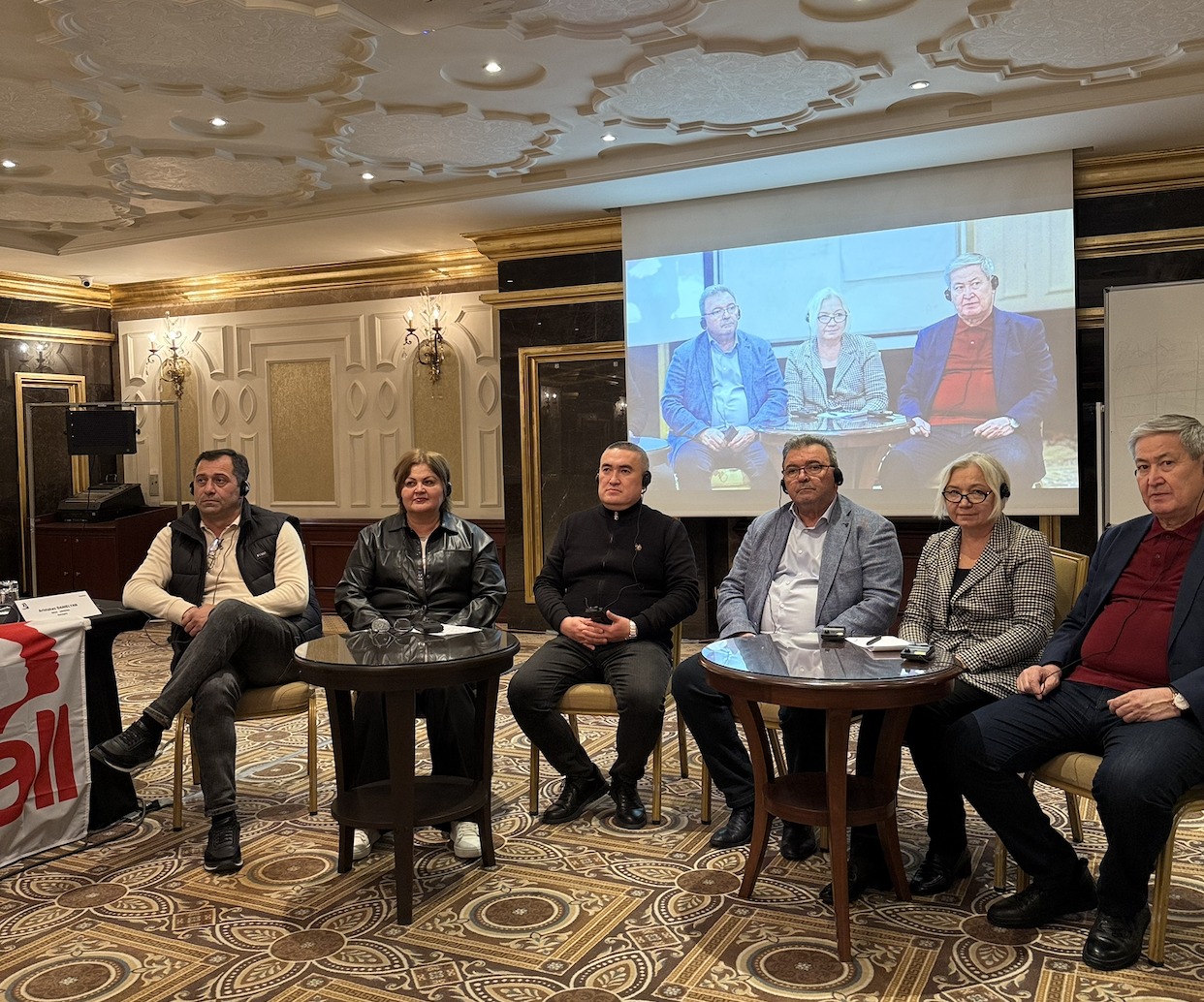
Kazakhstan highlighted job protection amid company “optimization”, occupational health and safety and the need to implement decent wages following ratification of ILO Convention 131. Ukrainian representatives stressed that the impact of the war extends beyond Ukraine and called for stronger sanctions against Russia, warning that labour law changes risk undermining workers’ rights without stronger cooperation with the ILO.
Kyrgyzstan raised concerns over precarious work, which affects nearly half of all jobs, limiting workers’ ability to organize, alongside labour law changes, occupational health and safety and environmental risks. Moldova emphasized the need to strengthen tripartite social dialogue, raise wages in line with EU standards and invest in training young activists, with a focus on gender, occupational health and safety and organizing. Georgia reported employers’ reluctance to sign collective agreements, an extremely low minimum wage and workers taking multiple jobs to survive, leaving little time for union activity. Kazakhstan mentioned the joint work in the sub-region to reinforce bargaining power for better wages.
The discussions made clear that formal rights alone are not enough. As unions across the region face war, repression and shrinking space for social dialogue, participants stressed the need for stronger coordination, concrete solidarity and sustained international pressure. By drawing on shared experience and expertise within IndustriALL, unions aim to strengthen their collective power and better defend workers’ rights under increasingly difficult conditions.