Read this article in:
English
13 October, 2026Workers making official Adidas shirts for some of Europe’s biggest football clubs earn a basic wage of about US$1 an hour and work in temperatures above 35°C, a BBC Sport investigation has found. Adidas is refusing to sign an agreement that would let Cambodian garment workers bargain for higher wages and protection from heat stress and harassment.
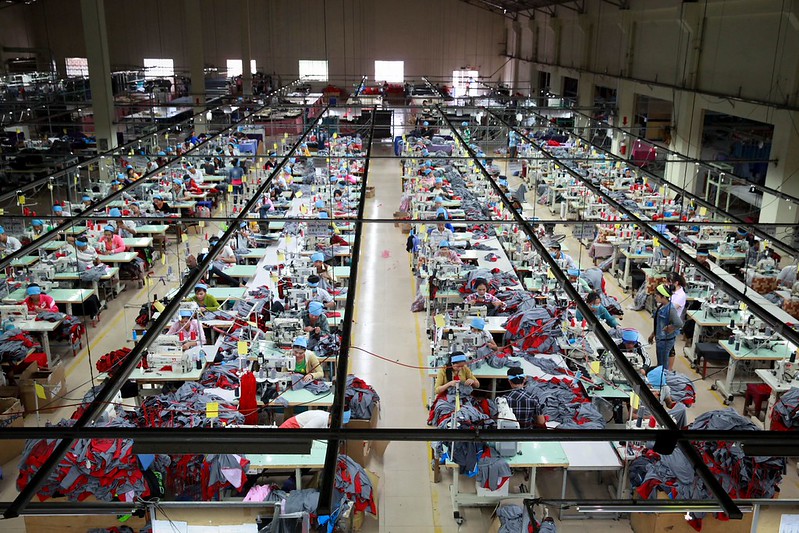
The investigation traced official shirts for clubs including Arsenal, Liverpool and Real Madrid to two factories on the outskirts of Phnom Penh. Bowker Garment Factory and Trax Apparel employ around 6,600 people, most of them women.
Payslips seen by the BBC show basic monthly salaries of US$210 to 220 for six eight-hour shifts a week. Total earnings reach around US$300 only with significant overtime. Workers described group production targets of up to 700 items a day, verbal abuse when targets were missed and extreme temperatures on the factory floor. One worker received two electric shocks from an exposed wire before the factory acted.
Adidas responded that its suppliers are audited around 1,200 times a year and that average wages across a sample of its Cambodian suppliers are 34 per cent above a living-wage benchmark. The workers’ payslips and testimony contradict this and show that brand-led social audits do not work.
A solution built in Cambodia
Unions and employers in Cambodia have achieved a template collective agreement for the garment, textile, footwear and travel goods industry. It gives workers a negotiated route to higher wages and benefits. It includes clauses on heat stress, gender-based violence and harassment, as well as an effective grievance mechanism, addressing the problems the BBC uncovered.
To make collective bargaining possible, IndustriALL signs legally binding support agreements with brands sourcing from Cambodia. Brands commit to backing collective agreements at their suppliers, maintaining their sourcing volumes in Cambodia and ringfencing labour costs, so the brands bear the cost of improved wages and conditions. Some of the world’s largest fashion brands, including H&M Group, Primark, Inditex and PVH, have signed.
Adidas must sign
For over three years, IndustriALL and the global Adidas trade union network, including unions in Cambodia, have demanded that Adidas sign the support agreement. It has not.
IndustriALL general secretary Atle Høie said:
“Adidas points to its audits. But audits do not raise wages, collective bargaining does. The solution is on the table, built by unions and employers in Cambodia and backed by some of the world’s biggest fashion brands. Adidas has no excuse and must sign the agreement now.”