
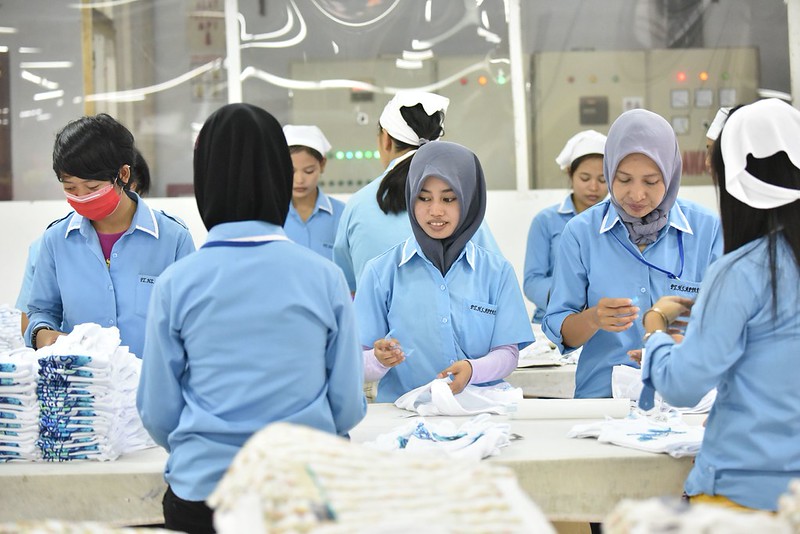
7 May, 2026Asia Pacific is the engine of global garment and textile production and home to some of its most exploited workers. The region accounts for around 60 per cent of global exports of garments, textiles and footwear and employs more than 40 million workers. Yet for the workers stitching the clothes that fill the shelves of global brands, wages have remained structurally low.
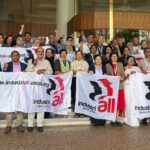
Despite real wage increases in many economies, working conditions have remained poor and characterized by widespread informality and vulnerability. Trade union representatives from across the region met in Penang, Malaysia this week for a two-day workshop on wage setting mechanisms, organized by IndustriALL Global Union and Japanese affiliate UA Zensen. The workshop brought together affiliates to share strategies and build collective capacity to tackle low wages in the sector.
Participants from Bangladesh, Cambodia, India, Indonesia, Japan, Malaysia, Nepal, Pakistan, the Philippines, Sri Lanka, Thailand and Vietnam shared experiences and strategies on wage setting mechanisms, collective bargaining and organizing. Drawing on examples from across the region, the workshop aimed to strengthen their collective capacity to win better wages for garment workers.
Setting the scene: the ILO perspective
Wage policy is the framework through which governments, employers and workers collectively shape wage outcomes. When it functions as a coherent system, it can make an enormous difference. Across Asia, that coherence is often missing. The region has more than 5,000 minimum wage rates; only India has more than 2,000. Yet in countries like Pakistan, one in four workers does not receive even the minimum wage to which they are legally entitled. Informal workers across the region earn roughly half of what formal workers earn.
ILO senior wage expert Xavier Estupinan stressed that setting a minimum wage is only the first step. The real question is whether it is adequate, regularly reviewed, effectively enforced and supported by strong social dialogue.
The ILO’s living wage programme builds on this foundation by bringing together governments, employers and workers to advance effective living wage policies and practices. It rests on two complementary pillars: first, the estimation of living wages and the development of a global wage data hub; and second, the operationalization of living wages in practice, including through technical assistance to countries and sectors ready to act.
IndustriALL’s gender director Armelle Seby warned that wage-setting systems can entrench inequality by institutionalizing the undervaluation of women’s work. Pay transparency and gender-neutral job evaluation are key tools to ensure gender-transformative wage systems. A gender-transformative approach is not an add-on. It must be built into the design of wage policies from the outset, based on gender analysis. Without this, minimum wage frameworks risk replicating, or even widening, the gender pay gap already prevalent in the sector.
The ACT agreement and collective bargaining in practice
The ACT initiative and its work on supply chain industrial relations was presented and discussed. Cambodian affiliates shared their experiences on renegotiating the template CBA, which will be valid for the next three years. They also presented their work on increasing the number of factories signing the agreement.
Wage setting in Japan: lessons from UA Zensen
The workshop also heard from UA Zensen on wage setting in Japan. Union density is shrinking, nearly all unions are company-based and women account for fewer than 30 per cent of union members. Since 2022, the annual Shunto spring wage offensive has delivered general wage increases of around five per cent. However, structural challenges remain. UA Zensen has focused on strengthening bargaining power through leadership training and frameworks for joint action, targeting legislative reform and industry-specific fair labour standards.
“Wages in the garment sector have been kept artificially low for too long. This workshop is about building the union power and knowledge to change that. Because without strong unions at the bargaining table, workers will continue to bear the cost,”
said IndustriALL textile and garment director Christina Hajagos-Clausen.
The regional meeting of IndustriALL’s TGSL network opened the week, before delegates moved into the wage setting workshop. Affiliates from across Asia Pacific came together to share updates and coordinate priorities for the sector.