
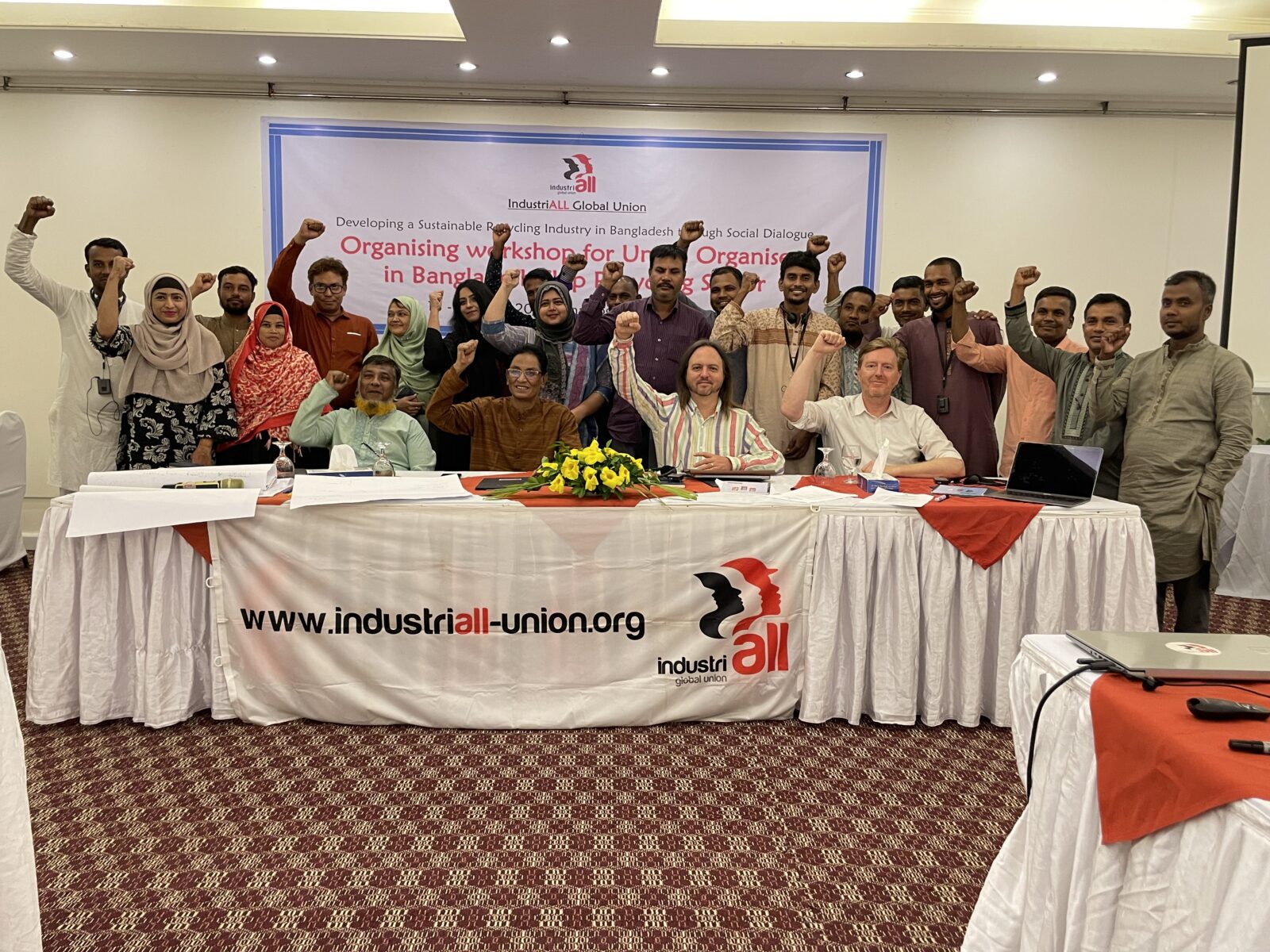



24 June, 2026IndustriALL Global Union has completed a three-day organizing workshop for shipbreaking workers in Chattogram, Bangladesh, equipping unions to target the industry's most influential employers for the first time.
The training, held from 18 to 20 June, brought together organizers from two affiliated federations: the Bangladesh Metal, Chemical, Garments & Tailors Workers Federation (BMCGTWF) and the Bangladesh Metalworkers’ Federation (BMF). Both federations represent workers in the ship recycling yards of Sitakunda, near Chattogram, which handles around one third of the world’s end-of-life ships.
Women from downstream industry join for the first time
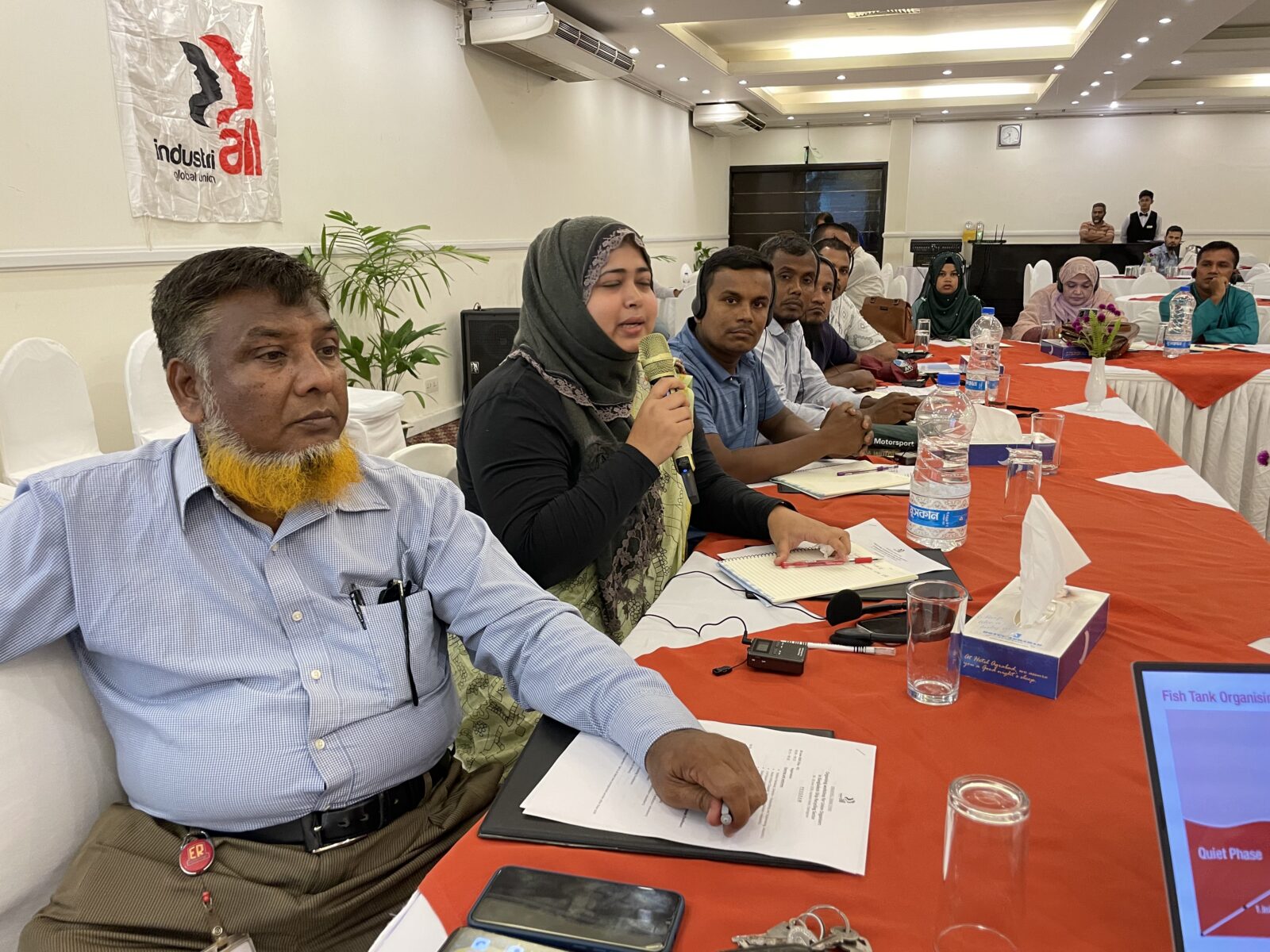
For the first time, women workers from the downstream recycling industry attended the workshop. This part of the sector, which processes scrap steel and components into new products, is predominantly female and currently unorganized. Participants developed a concrete plan to begin organizing this workforce.
Mapping power in the industry
Organizers spent the three days mapping the industry’s ownership structures, tracing links between industrial conglomerates, shipyards and rerolling mills. The analysis revealed a significant challenge: while union density reaches around 80 per cent in some yards, those yards tend to be smaller and less commercially significant. Overall density across the sector remains low, limiting the unions’ ability to drive meaningful change in conditions.
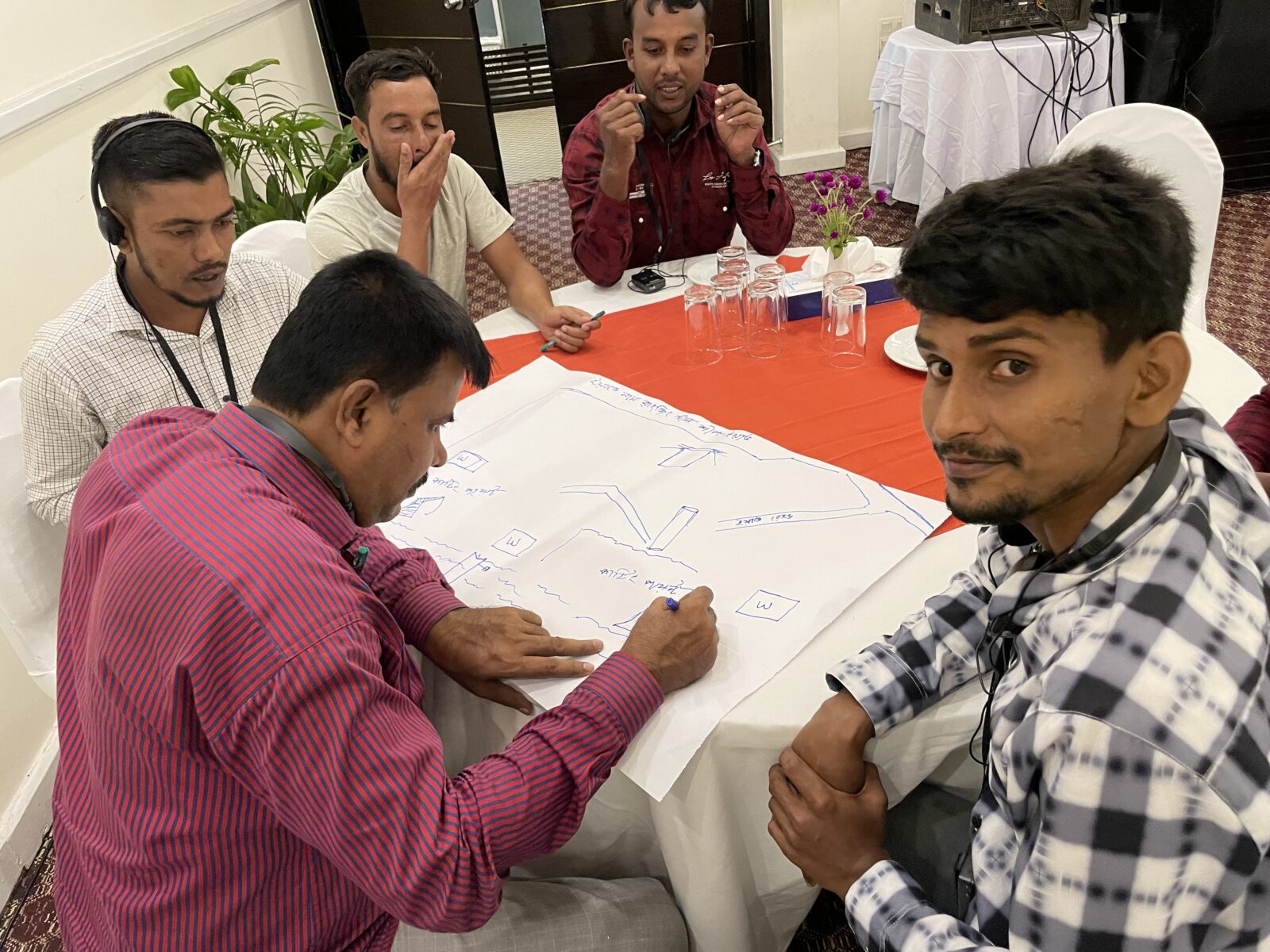
The unions used this mapping to identify the most strategically important employers and developed targeted organizing campaign plans around issues raised by workers themselves.
On the final morning of the training, participants put their new skills into practice, speaking directly with workers returning from night shift and visiting workers in their homes.
Wages and safety at the centre
Two issues emerged as the clearest mobilizing points. The industry’s tripartite Wage Board agreed a new minimum wage of BDT 22,000 (US$180) per month at a meeting on 17 June 2026, though the agreement has not yet been officially gazetted. Many yard owners are already failing to pay the previous minimum of BDT 16,000 (US$130). Separately, many yards continue to fall short of safety requirements under the Hong Kong Convention, placing workers at serious risk.
IndustriALL campaigns and organizing director Walton Pantland said:
“We’ve been organized in the shipyards for many years, but we have never had the density or the influence to significantly shift the employers. We’re going to change that by taking a more strategic approach: targeting the most influential employers. We want safe working environments, decent work and a living wage for all our members.”