
Read this article in:
English
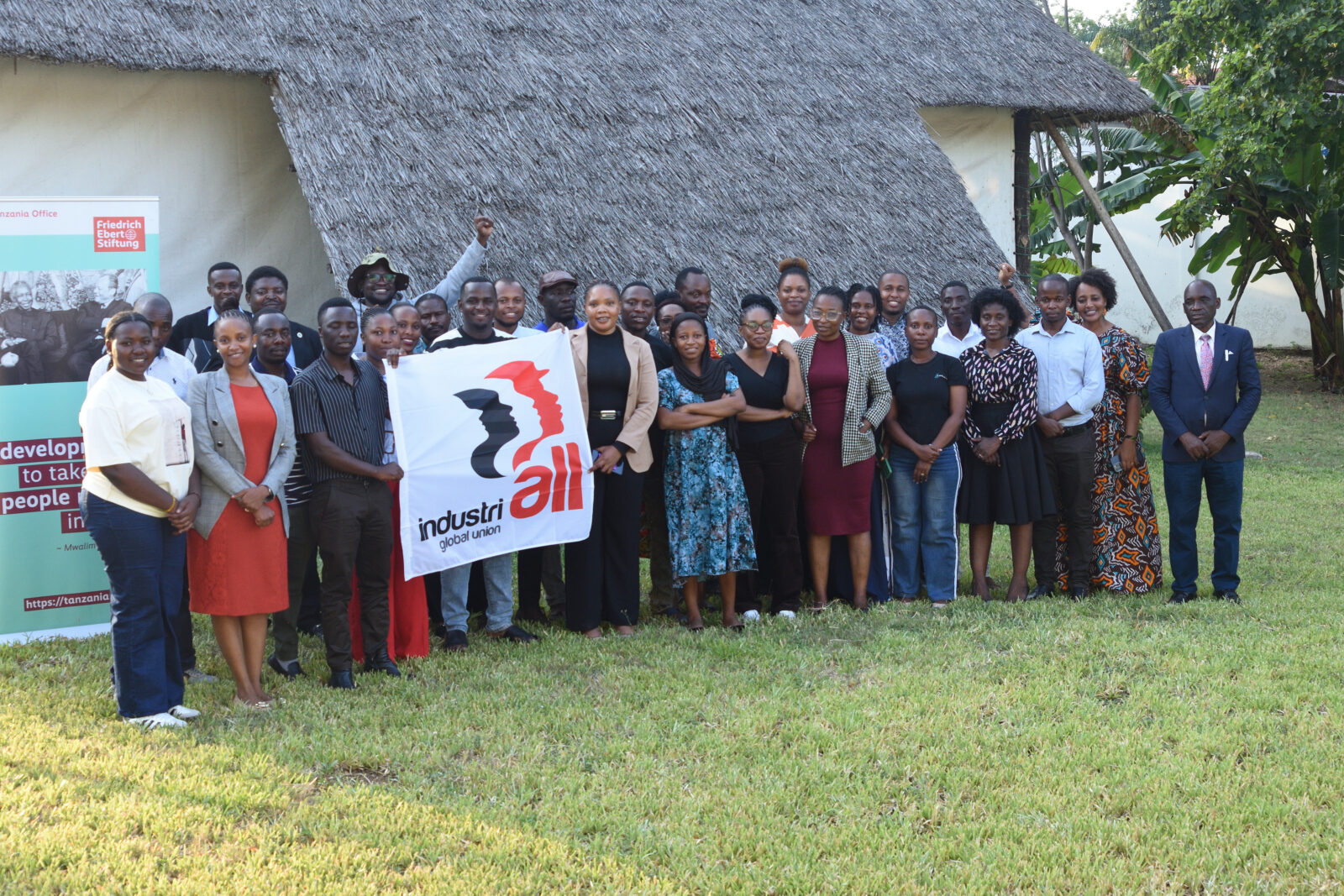
22 October, 2026Twenty-six young workers, including 16 women, met in Dar es Salaam on 20-22 October 2026. They examined how working class consciousness can strengthen union strategies to defend workers’ rights.
The fifth youth activist school, supported by FES Tanzania, NITO and STRYKE, linked political analysis with human rights due diligence. This included identifying, preventing and addressing abuses in workplaces and supply chains.
Participants included IndustriALL affiliates Tanzania Mines Energy and Construction Union (TAMICO) and Tanzania Union of Industrial and Commercial Workers (TUICO). BWI affiliate Tanzania Plantation and Allied Workers Union (TPAWU) joined via the partnership with IndustriALL’s African regional office. Likewise, Zanzibar Public Services Workers Union (ZAPSWU) and Vibindo Society participated from the labour movement and civil society.
Delegates represented mining, cement, textiles and garments and transport. Facilitators came from IndustriALL Sub-Saharan Africa, the University of Dar es Salaam and Tanzania Labour College.
With 70 per cent of Tanzanians under 35, job creation is urgent. The school aimed to turn this demographic dividend into informed workplaces and union activism.
From Karl Marx to Issa Shivji
Participants placed today’s organizing challenges in Tanzania’s labour history. They discussed Karl Marx’s argument that unions do more than represent individual workers. By organizing collectively, unions help a class recognize and act on shared interests. They also considered Issa Shivji’s analysis of tensions shaping class consciousness after the Arusha Declaration. This analysis also covered the period during Ujamaa (socialism).
Sabato Nyamsenda of the university traced workers’ responses to exploitation as Tanzania moved from Ujamaa towards neoliberal policies. Hezron Kaaya, the college’s principal, drew union history lessons for youth activism and decent work campaigning.
Christian Denzin, FES Tanzania resident director, said class consciousness builds critical thinking among Tanzania’s young workers. This helps them examine who holds power, identify rights risks and choose collective responses.
Silvester Issaya Mrope, TUICO general secretary, said organizing strategies must respond to the social and political systems shaping workers’ lives. This helps build trade unions as a social force for improving working conditions.
Participants, not spectators
“We are not spectators but participants at this historical moment,” said Nora Kerreti of TUICO, adding the school prepared young workers to defend rights and contribute to Tanzania’s future, turning analysis into collective action and observers into organizers.
Maria Mwemfula of TAMICO said union history will help participants develop consciousness to demand rights. Sometimes this means fighting for them.
“The future of trade unions in Tanzania and Africa belongs to young workers. Class consciousness is important for trade union revitalization,”
said Paule-France Ndessomin, IndustriALL regional secretary for Sub-Saharan Africa.