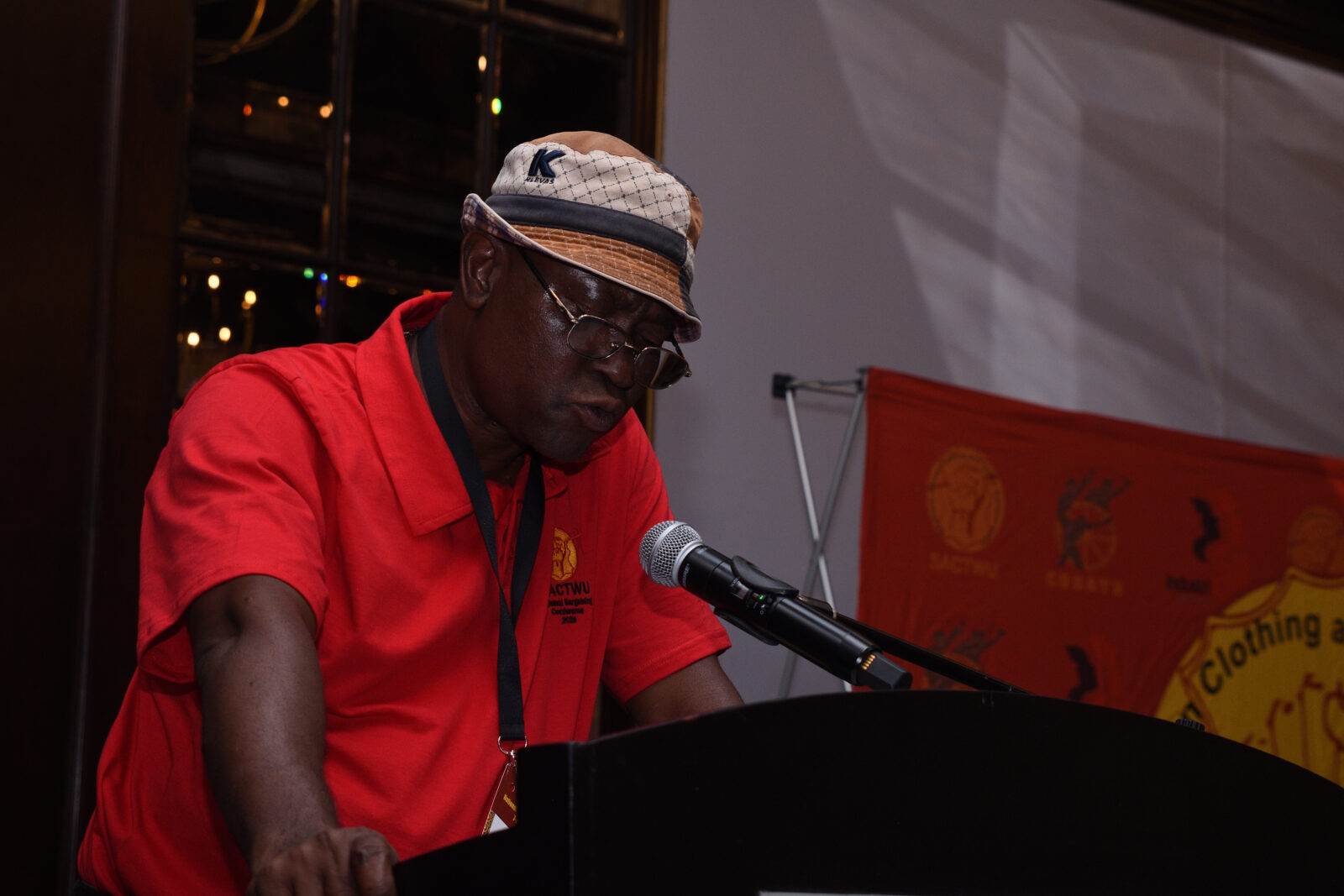
19 March, 2026More than 400 delegates representing workers across 21 sectors gathered in Cape Town from 7 to 9 March for the Southern African Clothing and Textile Workers’ Union (SACTWU) national bargaining conference, leaving with a mandate to fight for living wages and a declaration naming sweatshop conditions in Newcastle, KwaZulu-Natal a national crisis.
“We are workers by day, family members at home and community members by night,”
one delegate told the conference. The remark underscored the many roles workers juggle and why collective bargaining matters beyond the factory floor.
SACTWU, an IndustriALL Global Union affiliate, held the event from 7 to 9 March under the theme: unity, jobs, growth and service to members.
The union has more than 100,000 members across sectors including clothing, footwear, tanning, laundry, farming and agro-processing and was formed in 1989.
Newcastle: when the rule of law collapses
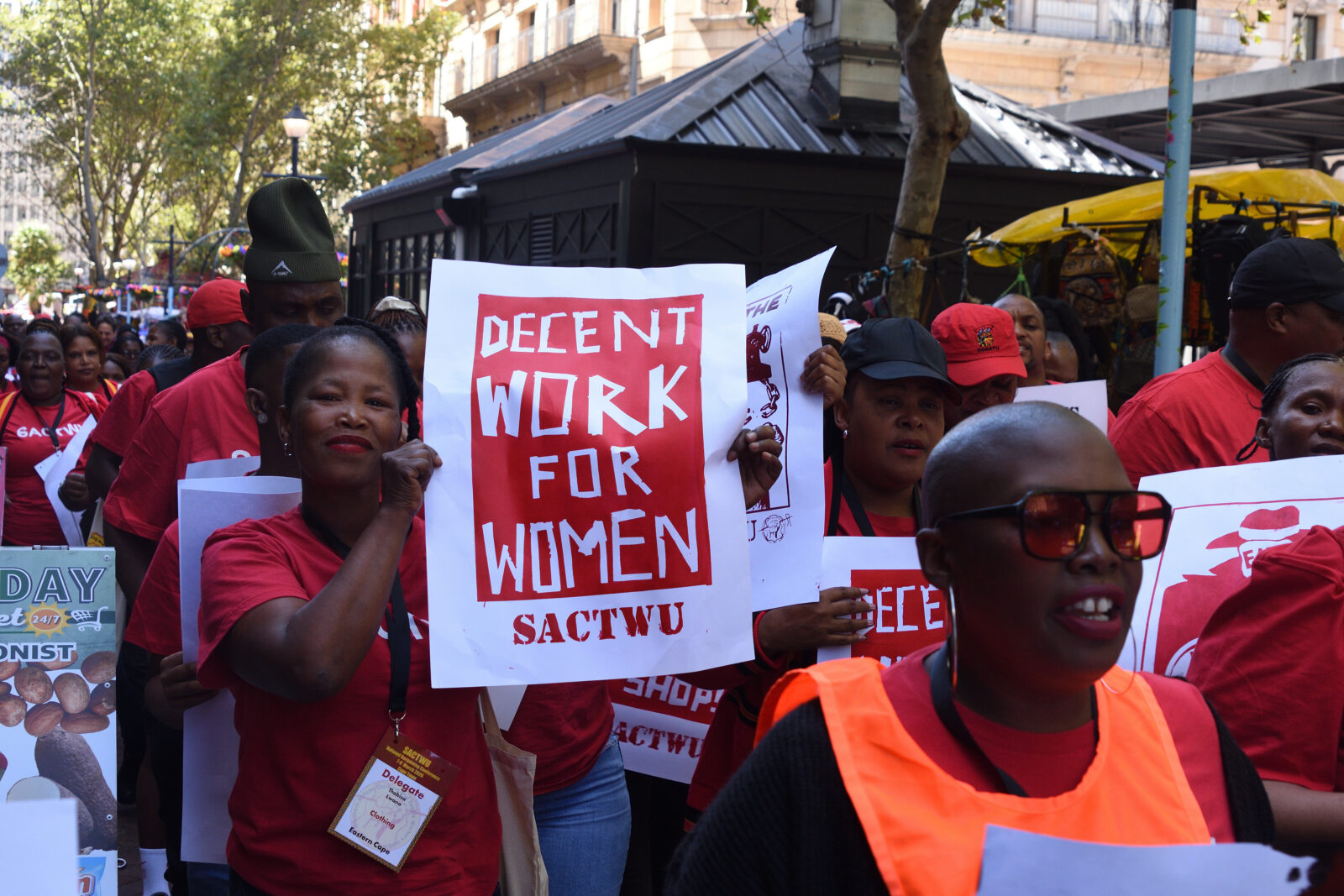
Delegates condemned appalling conditions in sweatshops in Newcastle, KwaZulu-Natal. A joint inspection blitz led by the Department of Employment and Labour, overseen by the Parliamentary Portfolio Committee on Employment and Labour, uncovered widespread labour and immigration violations in the Amajuba district on 5 February 2026.
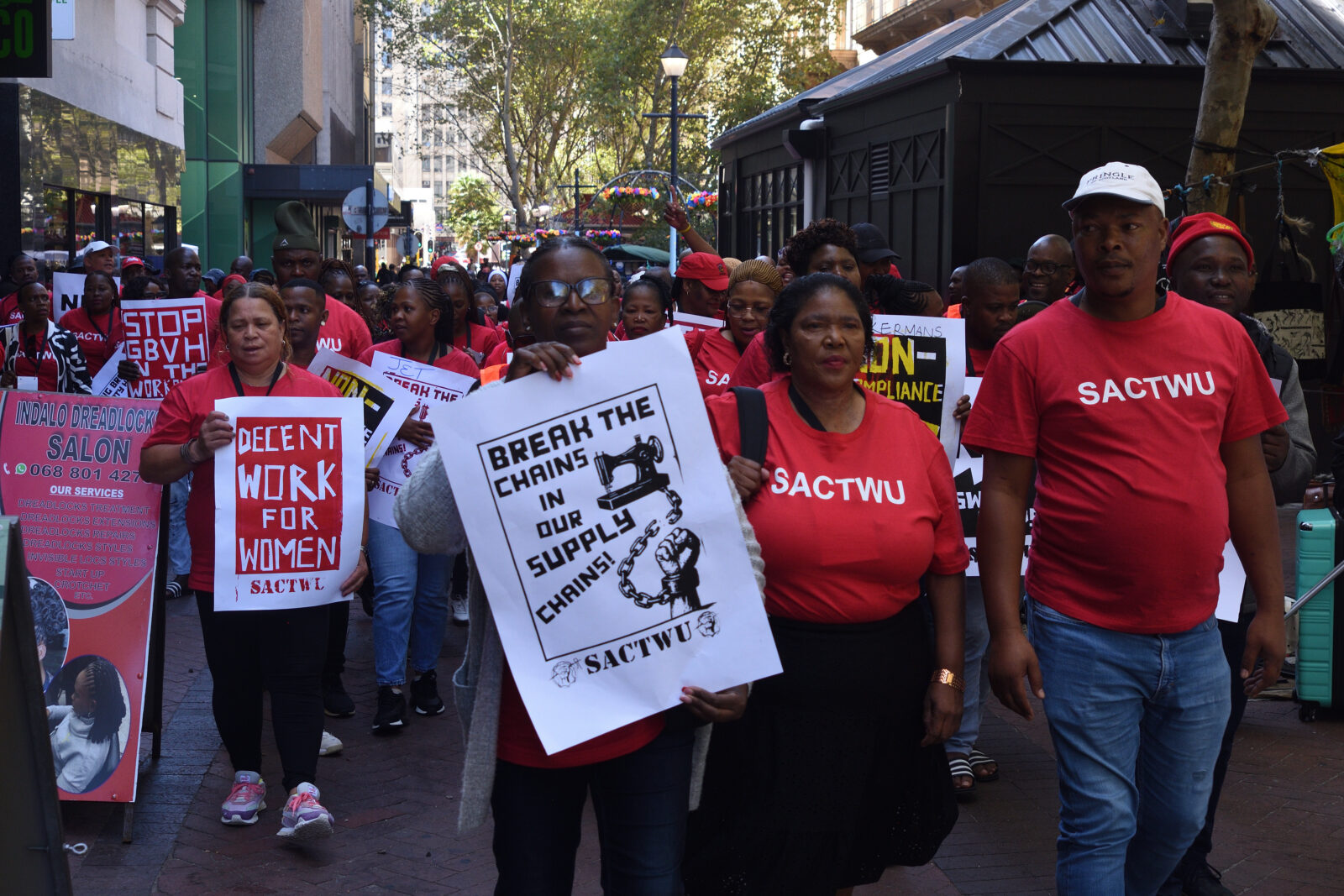
The operation exposed extreme exploitation, unsafe workplaces and slave-like practices in factories supplying major South African retailers including Mr Price, Pick’n Pay, Ackermans, Pepkor and JET, all violating labour laws and safety standards. Most workers in the factories are undocumented, SACTWU general secretary Bonita Loubser confirmed. The union is taking legal action through the courts and bargaining councils to enforce compliance with national labour laws.
Inspectors found undocumented foreign nationals living on the premises of clothing and textile factories in conditions described as unhygienic and at serious risk of fire. Video footage recorded during the raids showed hundreds of boxes of clothing bearing labels of well-known South African retail brands.
“The Newcastle horror shows what happens when the rule of law collapses,” SACTWU said in its conference declaration. Weak policing, sparse inspections, lax immigration controls and broken health, safety and justice systems have allowed profit-driven employers to exploit workers unchecked.
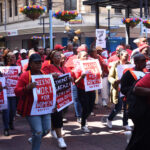
Conference delegates took the fight outside, picketing retail shops to “break the chains” of worker exploitation in national supply chains.
Fighting for living wages
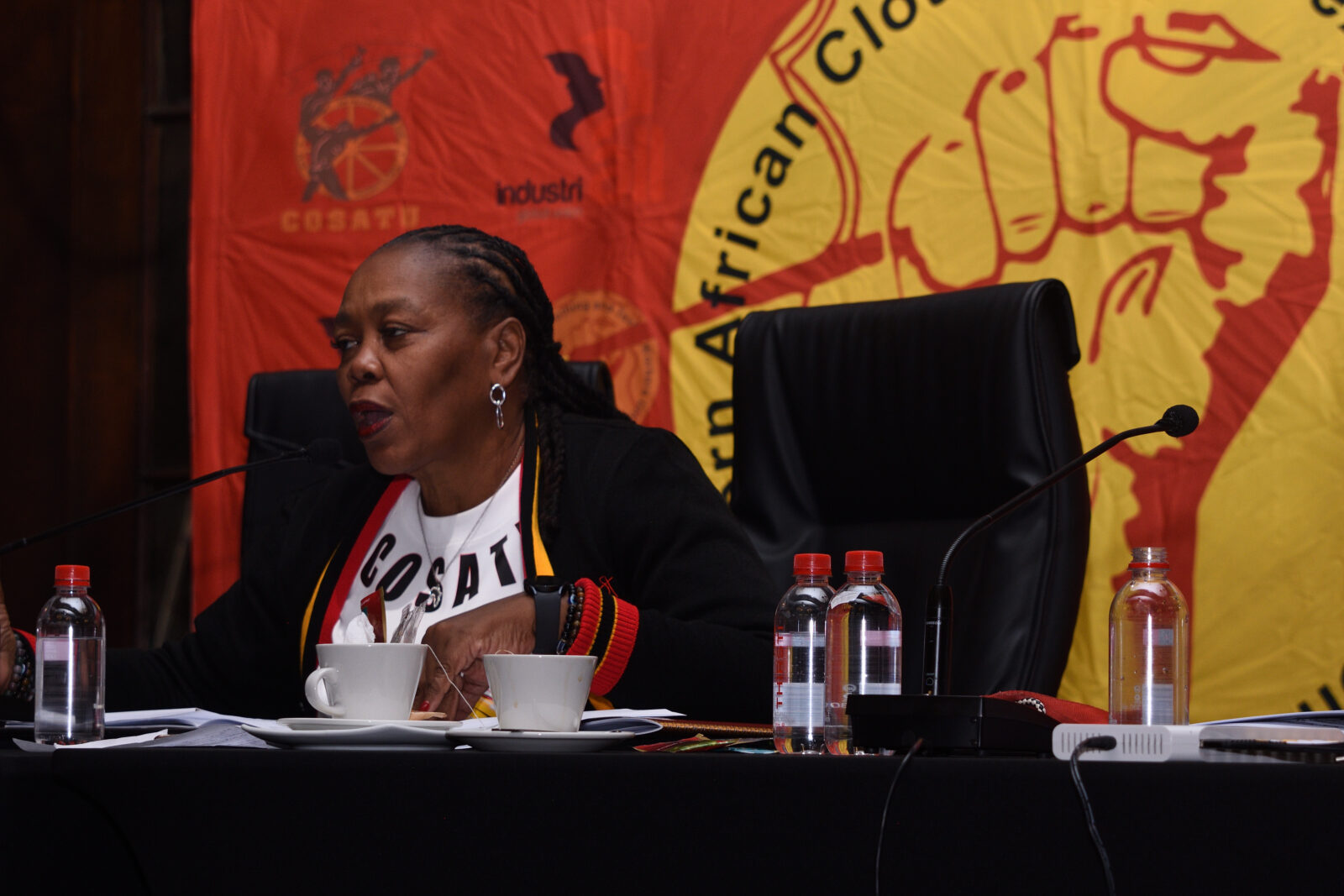
The next round of negotiations will cover annual and family-responsibility leave, working hours, job grading, healthcare, retirement benefits and job security.
The union also seeks organizational rights, wage guarantees and expanded bargaining units, with delegates stressing that demands must remain sector-specific to reflect the realities of each industry.
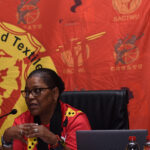
Bonita Loubser, SACTWU general secretary, called the conference vital.
“The conference consolidates living-wage mandates from workplaces, strengthens shop stewards, sharpens strategy and prepares for negotiations,” she said.
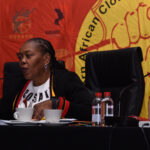
Susan Khumalo, SACTWU president and IndustriALL’s Sub-Saharan Africa regional co-chair, added:
“Collective bargaining changes lives through living wages, better conditions, stable industrial relations and protection of the right to organize.”
Unions transform society
Congress of South African Trade Unions (COSATU) president Zingiswa Losi addressed delegates, telling them:
“Trade unions organize workers, defend rights and transform society.”
With many young shop stewards attending for the first time, Losi emphasized that recruiting young workers is a way to secure union power. SACTWU is affiliated to COSATU.
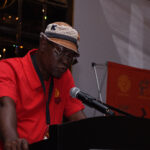
“Our membership growth campaign is crucial because membership is the heart of the union. Without sufficient and large membership, there is no strong union power. Our collective bargaining season provides us with a fantastic opportunity to further grow our union membership,”
said Michael Shabalala, SACTWU 2nd national organizing secretary.
On job protection, the conference stressed the need for campaigns to secure decent jobs under the African Continental Free Trade Area and other trade agreements.
Delegates also called for implementation of the Retail-Clothing Footwear Textile Leather masterplan and stronger safeguards against cheap imports.