
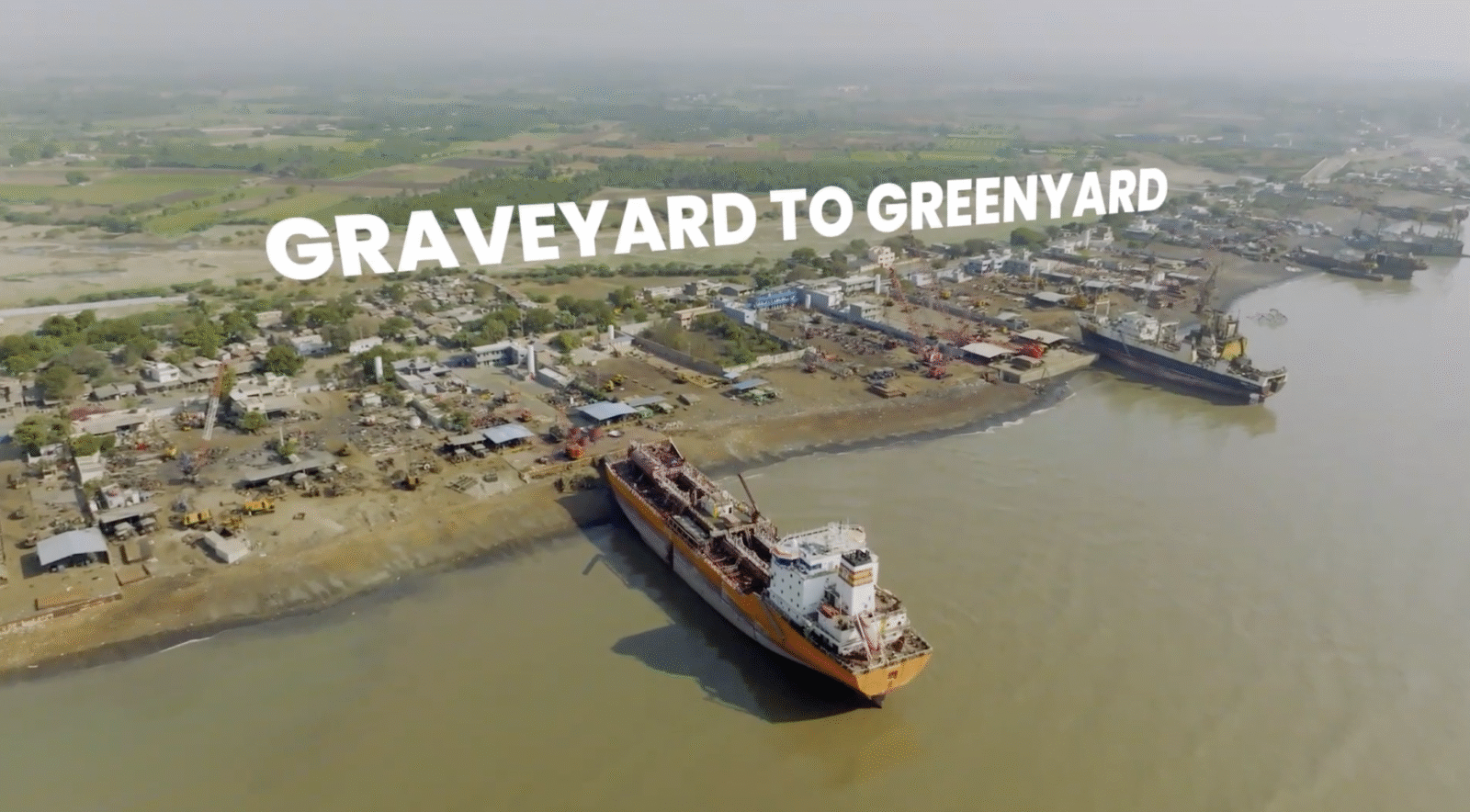
26 June, 2026Today is the launch of the film, Graveyard to Green Yard: the coalition that changed the ship recycling industry, a new film that tells the story of how one Indian shipbreaking union built a coalition to transform one of the world's most dangerous industries.
Released on 26 June 2026, exactly one year since the Hong Kong Convention for the Safe and Environmentally Sound Recycling of Ships (HKC) entered into force. That is not a coincidence.
The Convention is already driving dramatic changes: cleaning up the industry’s environmental footprint, making the work safer, and formalizing employment. Ship recycling is going through a Just Transition that is creating decent work in the circular economy. This film tells the story of the workers and unions who made it happen.
Graveyard to Green Yard: the coalition that changed the ship recycling industry
Organizing in shipbreaking in India started in 2003, when officials from the Mumbai Port and Dockworkers’ Union spoke to shipbreaking workers in a neighbouring yard and realized they had no drinking water or first aid as they worked 12-hour shifts in the most dangerous job in the world.
After organizing workers in Mumbai, the focus shifted to the bigger yards in Alang, Gujarat, where the Alang-Sosiya Ship Recycling and General Workers’ Association (ASSRGWA) was formed, an industry-wide union open to anyone working in the yards or the downstream industry.
By organizing the yards and relentlessly fighting for workers’ rights and social protection, ASSRGWA built strength and credibility with employers and government. By working with IndustriALL, they built a network of global solidarity, with unions in the Netherlands, Japan, Germany, Denmark, Australia and elsewhere lobbying their governments to ratify the HKC, and for the shipping industry to take responsibility for the full lifecycle of ships.
This brought together a coalition of governments, employers and shipowners committed to transforming the industry through the Convention and social dialogue.
The interplay between the Convention and mobilization on the ground is central: the HKC is a top-down tool that creates the conditions for a better industry. The union is the force on the ground that ensures change is real, and involves workers.
ASSRGWA now has a density above 70 per cent in the yards and has turned its attention to the downstream steel industry, including rerolling mills and small workshops. On 26 June 2026, representatives of the Indian national government, the port authority, the employers’ federation, ASSRGWA and SEWA, the union organizing downstream scrap recyclers, met in Bhavnagar to discuss the next stage of the transition: extending the benefits of the HKC to the downstream industry.