
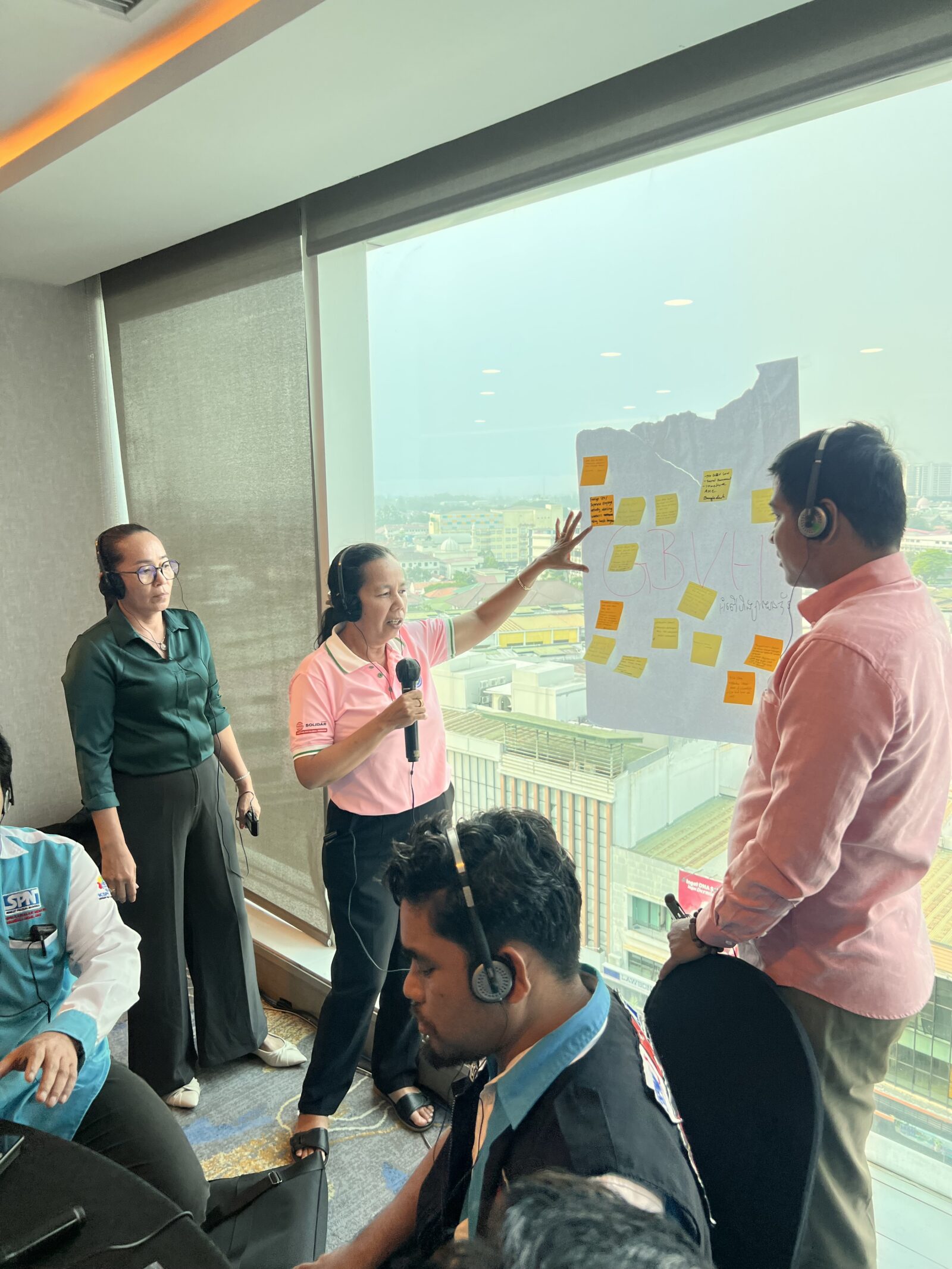






30 June, 2026Trade union representatives from Indonesia, Cambodia and Bangladesh gathered in Jakarta from 23 to 26 June to learn how to use mandatory human rights due diligence legislation to organize, bargain and hold global manufacturers accountable.
The workshop, convened by the HRDD Competence Centre in partnership with IndustriALL Global Union, is the first in a three-part pilot series targeting unions linked to global manufacturers Coats, Crystal International and Pou Chen.
IndustriALL textiles and garment director Christina Hajagos-Clausen said:
“For too long, due diligence has been a conversation between companies and regulators. This pilot puts workers and their unions at the centre of that process, with the knowledge and tools to hold employers accountable under the law.”
From classroom to factory floor
The three-day session brought together shop stewards, legal and paralegal staff, organizers and union leadership and put a direct question to them: how do you use the German Supply Chain Act, the EU Corporate Sustainability Due Diligence Directive and the OECD Guidelines as practical tools?
By the end of the workshop, all three country delegations could identify which instruments applied to their employers, had mapped supply chains using Open Supply Hub and the SOMO CSDDD Data Hub and had begun developing strategies combining national and transnational action pathways.
“It is a critical time to support workers with building the tools to put new trade and due diligence laws to work for workers. We can already see how countries such as Indonesia are creating and implementing new laws on forced labour and mandatory human rights due diligence. Workers play a critical role in ensuring safe and secure supply chains. As a centre, we support the global labour movement, to assume their seats at key decision-making tables,”
said Competence Centre executive director, Kelly Fay Rodriguez.
What comes next
The pilot continues in Bangladesh in October 2026 and concludes in Cambodia in January 2027, with findings presented in April 2027.