





What the wall said
"Men monopolize time to speak." "Limited slots for women in training" "Grievance committee not capable of handling GBV cases."
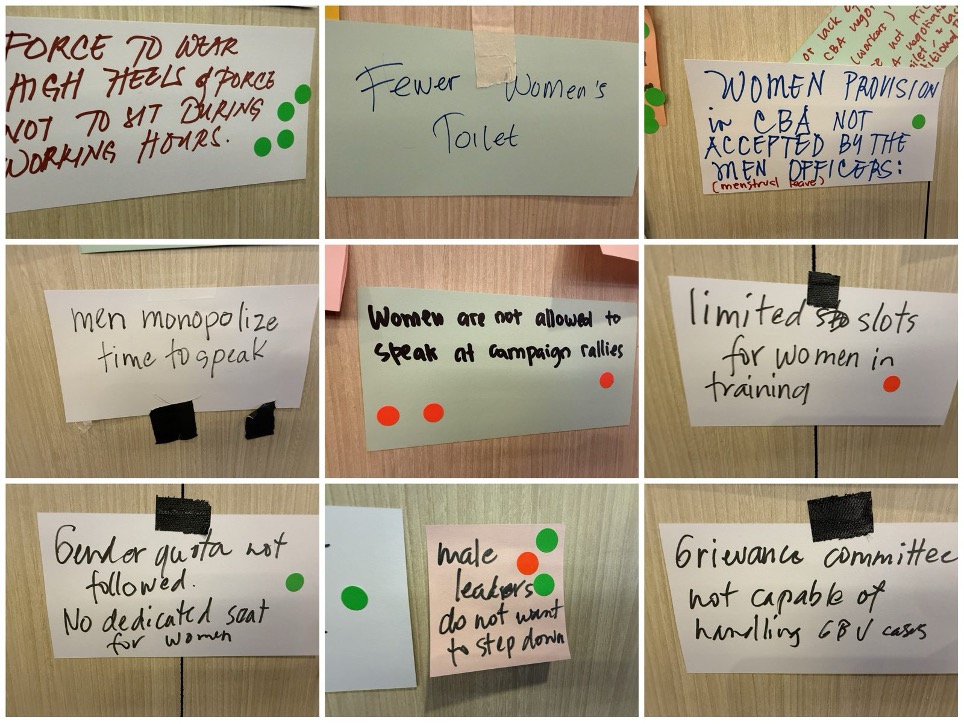
Young women trade unionists stuck these cards on the walls of a meeting room in Bali on 14 November 2026. Each named a barrier they, or women they know, have faced.
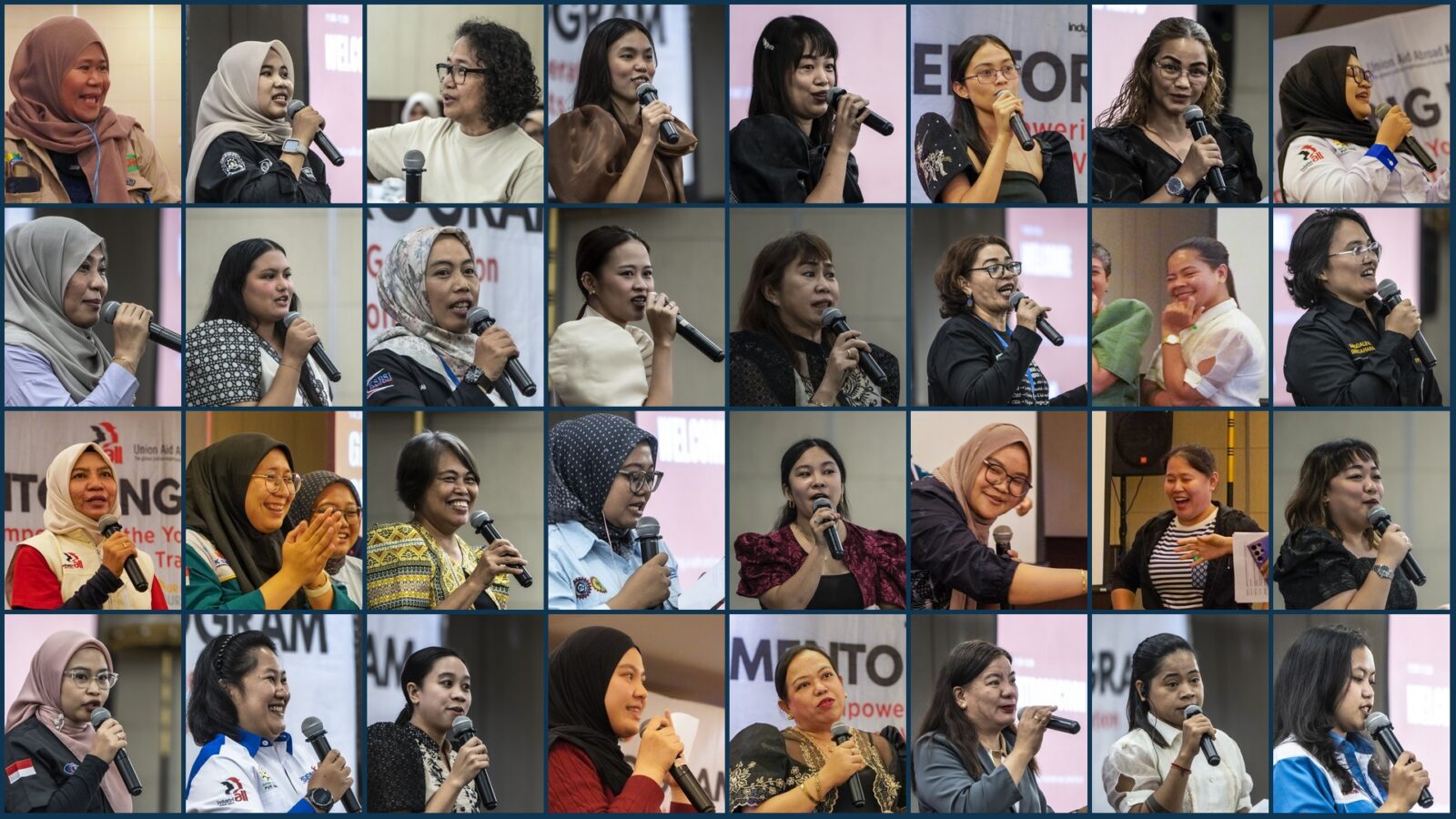
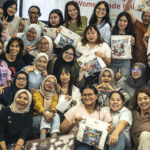
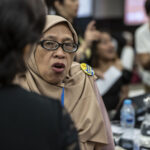
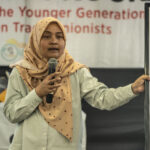
They were among 21 mentees and 17 mentors from Indonesia and the Philippines at a regional mentoring exchange. Each mentee works with an experienced woman leader on a plan to grow as a union leader. Union Aid Abroad-APHEDA, which supports the programme, has published an in-depth account of the exchange. This article sets out the methods behind it, so other unions can use them.
“This program has given me new knowledge, confidence and stronger solidarity with women workers from different countries. I will take these lessons back to my union, share them with other young women workers and create more opportunities for them to grow and become future leaders. Because I don’t want to grow alone, I want us to grow together.”
Indah Sulis Cahyani, mentee, FSPMI, Indonesia
Same room, different chances
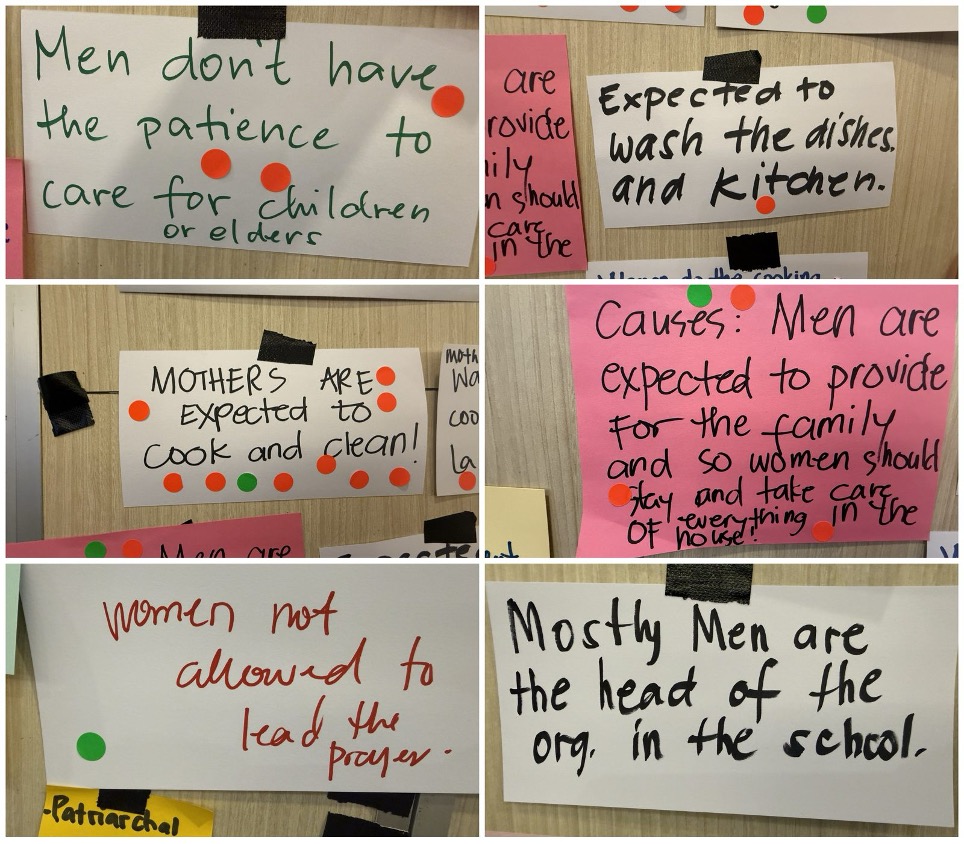
The cards came from a walk-through of women’s everyday lives, designed by the feminist organization Bai Laya with Indonesian human rights lawyer Siti Aminah Tardi. Four stations stood for the home, the community, the workplace and the union. Participants wrote in silence first, so women who rarely speak in meetings were heard too.
Many cards told the same stories in both countries: women expected to cook, clean and care at home, steered into welfare committees in their unions and kept away from meetings held after their shifts. Bai Laya then asked whether it had always been this way, looking at how colonial history reshaped gender roles in both countries. Norms that were made can be unmade.
Nicole Fears, co-chair of IndustriALL’s women’s committee and human rights director at the International Association of Machinists and Aerospace Workers (IAM), took the discussion to intersectionality, a term she credited to Black American legal scholar Kimberlé Crenshaw, who introduced it in 1989. A woman’s chances are shaped by her race and ethnicity,age, contract, care duties, disability or language, not only her gender. A temporary worker who cares for her mother may not risk staying late for a meeting. And a woman can sit in the room and still have little say in what is decided.
For Fears, the cost of getting this wrong is measured in years.
“It took me 30 years to get it, and I want to tell you that’s too long. (…) We’ve got to figure out a way to get the youth at the table sooner.”
Nicole Fears, IAM
Already leading
The mentees are not waiting to be invited. At IndustriALL’s South-East Asia organizers’ meeting in Jakarta from 31 August to 1 September 2026, unions reported that young women now hold active roles in union structures, including education committees.
APHEDA’s report gives two examples from this group. Maia Berco of ALU in the Philippines and her mentor Melba Tampakan have worked on a youth resolution and gender-responsive clauses in collective agreements. In Indonesia, Siti Zullaikha Nur Azizah of SPN is credited with a Safe House at a garment factory supplying UNIQLO.
“Through the mentor-mentee programme, I became an advocate for women and youth. Through developing my communication and advocacy skills, I aspire to become an effective young leader in our local union.”
Almira Alicanti, mentee, TF3-FFW, Philippines
Three methods unions can use
Every session was built so that unions can repeat it in their own training.
1. The walk-through of women’s realities
How to run it
- Set up four stations: home, community, workplace and union, from the kitchen to the bargaining table.
- Write in silence first: one experience per card, so quieter voices are heard.
- Name the causes: a second colour for the norms and power relations behind each one.
- Connect: read the walls together for patterns and links.
- Look back: ask whether these norms were always this way.
2. The study circle story exchange
Each mentee told the story of one study circle: what happened, who took part and what changed. Her mentor asked questions without taking over. Each pair left with one organizing action, shaped by young women.
“Mentorship sessions showed me that growth happens when young women have safe spaces, role models and real responsibilities.”
Jalyn Lalic, mentee, PTGWO, Philippines
Part of a bigger plan
The feminist resolution adopted unanimously at the 4th Congress in Sydney in 2025 places feminist trade unionism at the centre of organizing, bargaining and decision-making. The women’s committee’s 2026 to 2029 road map, adopted in June, puts it into practice. IndustriALL’s youth policy sets a 30 per cent target for young workers in decision-making bodies and names mentoring as one of its six objectives.
In brief
IndustriALL’s mentoring programme pairs a young woman trade unionist with an experienced woman leader for a set period, with a clear goal. It also runs in Sub-Saharan Africa and Latin Americ
Before leaving Bali, each pair reviewed its plan. The mentoring continues in their unions.
“True solidarity means refusing to look away from the unseen struggles. Four days in Bali taught me that real growth begins when we embrace intersectionality, turn empathy into action, and make sure no woman worker is left behind. Our voices aren’t just valid, they are unstoppable. When we fight, we win!”
Siti Masitoh, mentee, CEMWU, Indonesia
Organized by IndustriALL Global Union with the support of Union Aid Abroad-APHEDA.
Resources
5 steps for trade unions to close the gender pay gap
IndustriALL Global Union's Pay Equity Toolkit, developed to support trade unions in bargaining for pay equity.
IndustriALL's pay equity training modules. This practical tool aims to better equip unions in their collective bargaining and to put the value of work at the centre of wage negotiations.
Feminist trade unionism at the heart of IndustriALL
In November 2025, as delegates gathered at IndustriALL’s fourth congress in Sydney, feminist trade unionism took centre stage.
Contact

Armelle Seby
IndustriALL gender director
Armelle Seby is gender director at IndustriALL Global Union. She leads its work on gender equality and women’s rights, including the mentoring programme for young women trade unionists.