



7 September, 2026Mexico ranks among the world's top ten manufacturing economies. The country attracts significant foreign investment from large multinational companies, particularly in the automotive, aerospace and related supply industries. Yet the situation of the Mexican trade union movement has been a cause for concern. Trade union structures have not always effectively defended workers' rights, including the right to a living wage. This has contributed to significant wage gaps, particularly in sectors like the automotive industry.
Over the last ten years, significant changes have taken place. These include far-reaching reform of Mexican labour legislation, a ban on subcontracting and the entry into force of the United States-Mexico-Canada Agreement (USMCA). The USMCA includes a chapter on labour rights, particularly the fundamental rights to freedom of association and collective bargaining. The agreement also incorporated a rapid response mechanism. This allows for intervention in the event of certain violations of the rights to freedom of association and collective bargaining.
However, challenges remain, particularly in consolidating democratic, worker-centred and participatory trade unions in line with the changes brought about by labour reform. In recent years, significant victories have been won, with workers forming new unions and succeeding in union elections against traditional and employer-controlled unions. However, these cases remain limited.
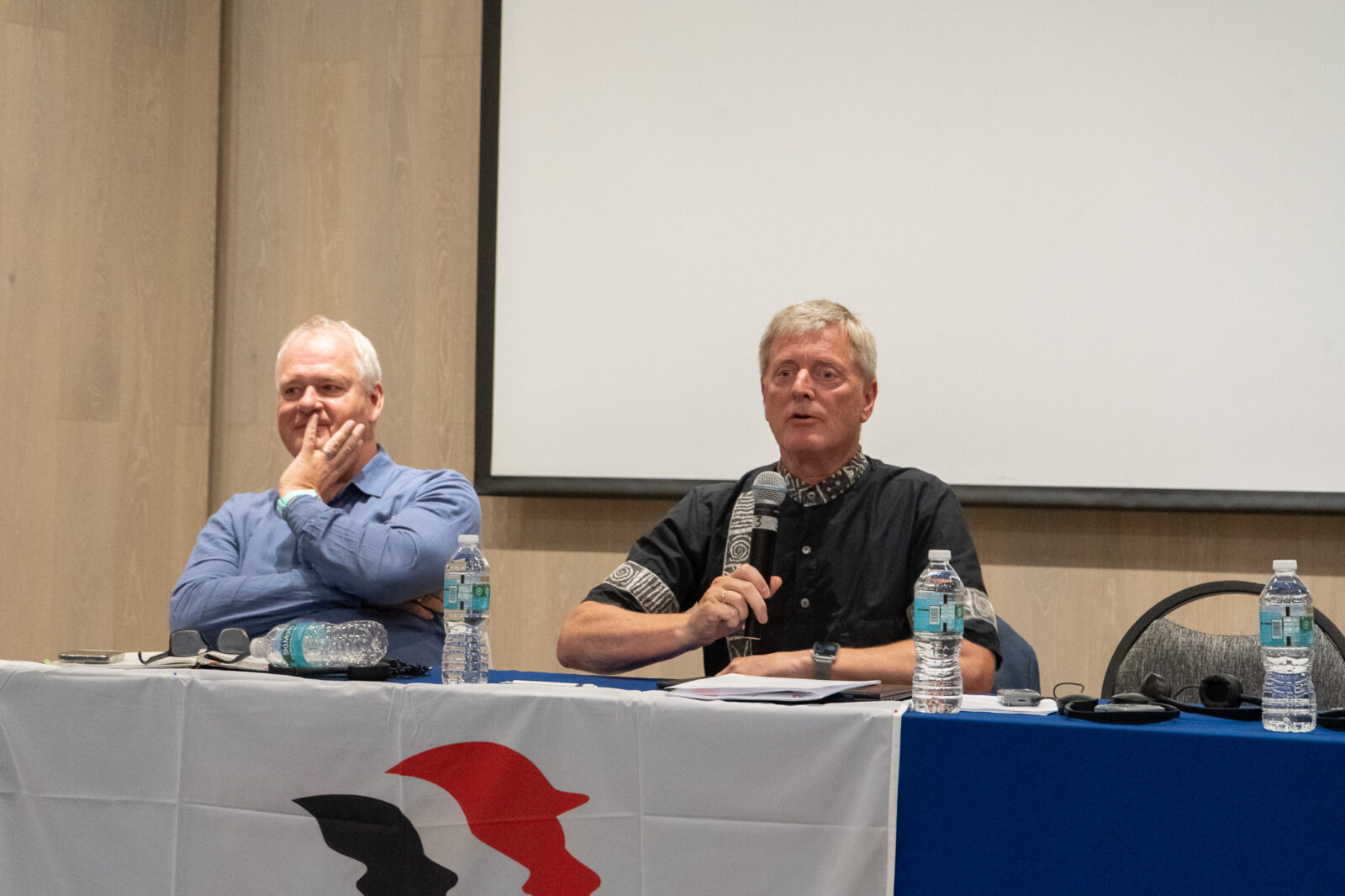
IndustriALL convened an international seminar-workshop on trade union rights in Mexico and the review of the treaty between Mexico, the US and Canada (T-MEC) in Mexico City from 25 to 27 August. Trade union representatives from Mexico, Germany, Brazil, the US, Japan and Sweden met with IndustriALL, leaders of the democratic trade union movement, as well as partner organizations including FES, Partners of the Americas (ES Chapter) and Compliance and Upholding Mexican Labour Provisions (CUMPLE). The aim was to examine challenges facing the Mexican trade union movement and explore opportunities for strengthening workers’ rights.
Strengthening democratic trade unions
Participants worked in groups to analyze future priorities and the role IndustriALL should play in strengthening the democratic trade union movement in Mexico.
The conclusions identified five priorities for IndustriALL:
- To actively support the growth of democratic, worker-centred and participatory trade unions in Mexico
- Develop criteria for identifying trade unions that share these values or that have the willingness and potential to adopt them
- Develop training programmes for these unions, with particular focus on strengthening bargaining capacities. Furthermore, explore options for developing bargaining structures that extend beyond the scope of the workplace or the company
- Strengthen the voice and influence of democratic unions in society, politics and tripartite social dialogue
- Fully integrate Mexican affiliates into IndustriALL’s global networks and explore new avenues and areas for trade union action
Said Atle Hoie, IndustriALL general secretary:
“The seminar fostered greater unity around the goal of strengthening the free and independent union movement in Mexico. Given that there are many actors working towards this goal, it was agreed to explore greater transparency regarding the various strategies. Partners would pool resources and specialist knowledge to ensure efforts are more joint and coordinated.”