19 May, 2026IndustriALL Global Union has withdrawn from its Principles of Social Responsibility and Human Rights agreement with Mercedes-Benz Group, after the company repeatedly violated the agreement's core commitments and refused all attempts to find a constructive way forward.
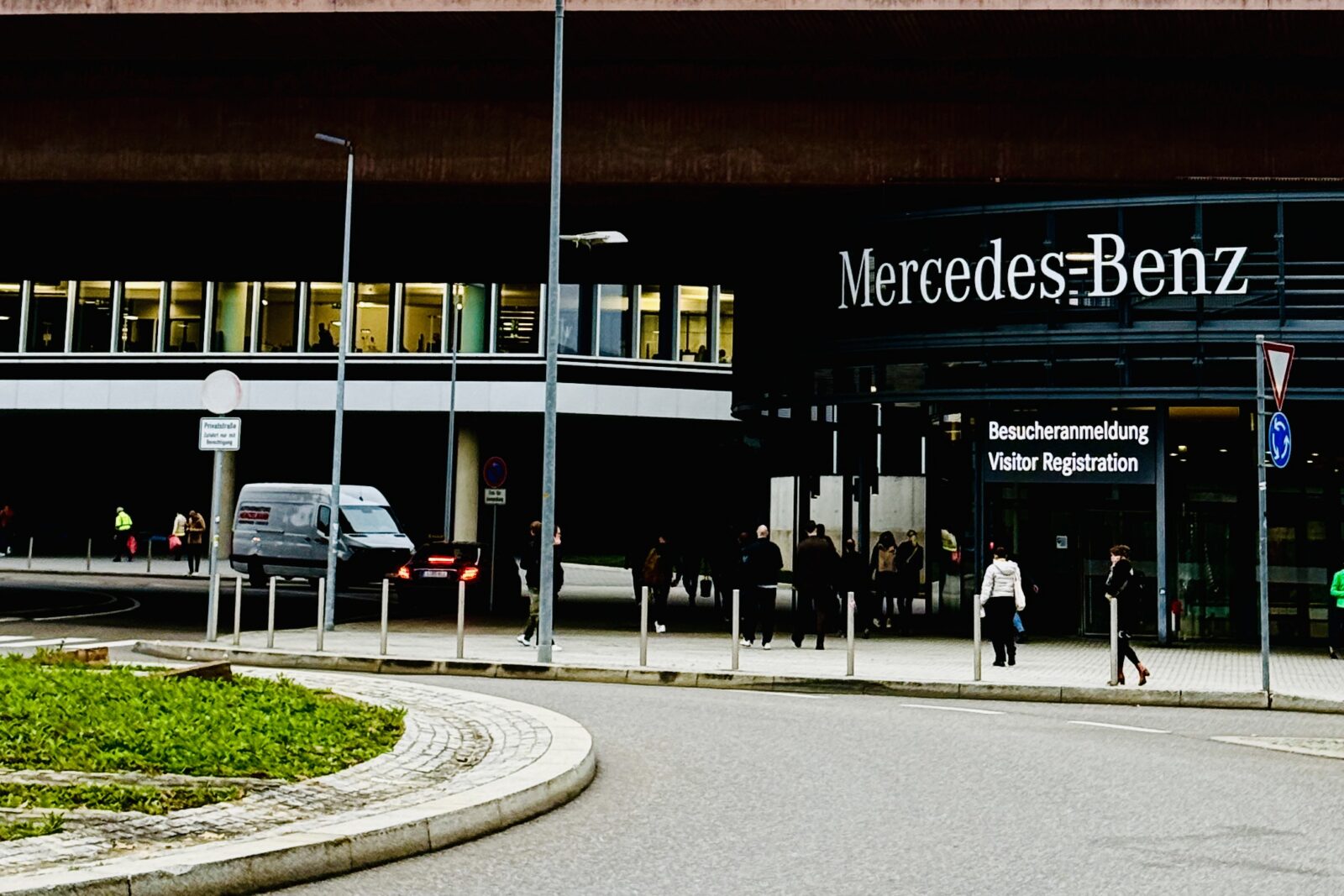
The decision follows years of documented anti-union conduct by Mercedes-Benz at its plant in Tuscaloosa, Alabama, confirmed by the US National Labor Relations Board (NLRB), and the company’s failure to address the violations despite repeated opportunities to do so.
In a letter sent to Mercedes-Benz Group CEO Ola Källenius on 11 May 2026, IndustriALL general secretary Atle Høie set out four grounds for withdrawal: the company’s failure to remain neutral during union organizing at Tuscaloosa, its refusal to engage constructively with IndustriALL on solutions, its 2025 unilateral update of the agreement without resolving the Alabama situation, and its continued use of law firms whose stated business is opposing unionisation, including the firm managing MB’s own whistleblower channel in the US.
“Mercedes-Benz has broken every rule in the book. They committed to respecting the right to organize, the right to collective bargaining and neutrality. At the same time, at their plant in Alabama, they paid more than US$650,000 to bring union-busting firms onto their own site to pressure workers into voting against a union. That is not neutrality. That is not even close to neutrality. When Mercedes tells the outside world that it is neutral, it is not telling the truth. The workers in Alabama should continue their fight for a collective agreement,”
said Atle Høie.
A commitment made and broken
The Principles of Social Responsibility and Human Rights were signed by Mercedes-Benz and IndustriALL on 1 September 2021. The agreement stated that MB’s labour standards were “binding around the world for all managers and employees” and that “in the event of organizing campaigns, the company and its executives shall remain neutral.”
In January 2024, workers at the Tuscaloosa plant launched a campaign to join IndustriALL affiliate the United Auto Workers (UAW). What followed was one of the most aggressive union-busting campaigns in recent US history.
Mercedes-Benz hired at least five anti-union consulting firms, spending a documented US$659,116 to oppose the workers’ organizing drive. The most notorious was Road Warrior Productions, which advertises its expertise in getting workers “to vote non-union.” The company held mandatory captive-audience meetings, threatened workers with plant closure and loss of benefits if they voted for the union, and brought a minister onto the shop floor three days before the election to urge Black workers, who make up roughly 60 per cent of the workforce, to vote no.
Workers were told unionizing would be pointless. A 25-year employee with a spotless record was disciplined for telling colleagues he had union cards. The leading union organizer, Jeremy Kimbrell, had worked at the plant for 26 years. He was fired in February 2025 on what the UAW describes as a fabricated pretext.
The NLRB investigated and found merit in multiple charges that Mercedes had violated US labour law. In March 2026, Mercedes settled those charges. As part of the settlement, an official notice, signed by an HR manager and bearing the seal of the US government, was posted on the walls of the Tuscaloosa plant. It reads: “WE WILL NOT threaten you with the closure and/or relocation of the facility to a non-union location, like Mexico, or anywhere else, if you choose to be represented by a union.”
Mercedes did not admit wrongdoing as part of the settlement.
Refusal to engage
Despite the NLRB findings, Mercedes refused to engage with IndustriALL on how to move forward. The company cited ongoing legal proceedings as justification for declining all attempts at dialogue, what Atle Høie’s letter describes as a “flimsy excuse.”
In 2025, Mercedes unilaterally updated the Principles of Social Responsibility and Human Rights without addressing or acknowledging the Alabama situation. IndustriALL considered this an attempt to reset the agreement’s credibility without earning it.
“You rejected all our attempts to jointly elaborate constructive solutions. You updated the Principles of Social Responsibility and Human Rights in 2025 without clarifying the incidents in the US, making it impossible for IndustriALL Global Union to continue as a signatory to the agreement,”
Atle Høie wrote to Ola Källenius.
The consultants hired by Mercedes compound the problem. The firms engaged to fight the Alabama organizing drive openly advertise their union-avoidance services. Their own promotional materials describe “defeating a union” as “gratifying,” offer to help employers maintain “union-free workplaces,” and promise to get workers “to vote non-union.” Several of these firms have documented records of unlawful conduct in previous campaigns. US federal labour judges found their principals had violated workers’ rights, before Mercedes hired them. These records were publicly available before Mercedes engaged them.
Under Mercedes’ own Integrity Code, the company is required to ensure its business partners comply with its principles. It did not.
The hearing
On 26 May 2026, the NLRB opens a formal hearing in Birmingham, Alabama, on UAW objections to the conduct of the May 2024 election. A regional director has found that five of those objections raise substantial and material issues of fact that could be grounds for overturning the election result. The hearing will examine, among other things, Mercedes’ mandatory captive-audience meetings and its discriminatory application of workplace policies against union supporters. It will also look at whether the company compelled workers on sick leave to attend and vote. The central question is whether this conduct prevented workers from making a free choice. In 2024, workers voted 2,642 against the union and 2,045 in favour, a margin of 597 votes out of approximately 5,075 eligible voters.
A different road is possible
IndustriALL has not closed the door. Should Mercedes change course, the agreement can be renewed.
The example of Volkswagen demonstrates that a different approach is possible. In Chattanooga, Tennessee, VW adopted genuine neutrality during the UAW’s 2024 organizing campaign. Workers voted by more than two to one to join the union. VW and the UAW subsequently reached a collective bargaining agreement. That is what the Mercedes Principles were supposed to guarantee for workers in Alabama.
“We once again call on Mercedes-Benz to cease its anti-union behaviour in the US and urge you not to cede the field to law firms and other opinion formers,”
Atle Høie wrote to Ola Källenius.