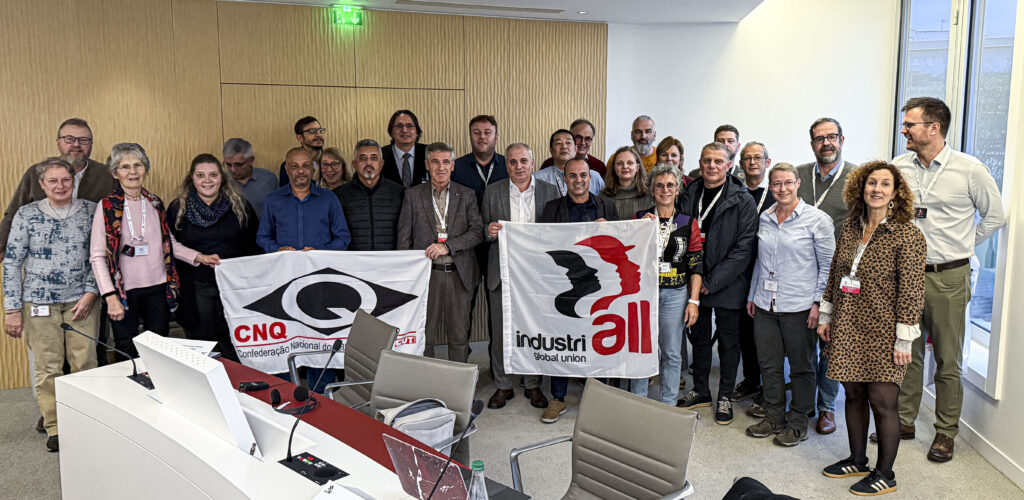

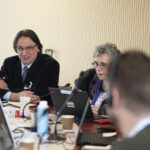
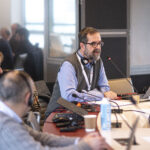
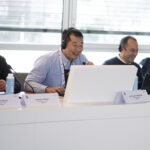
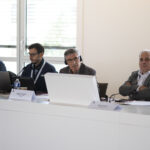
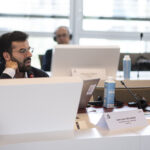
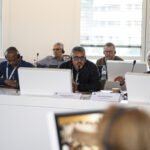
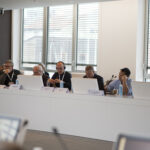
12 December, 2025The Sanofi global trade union network met in Paris on 10-11 December, bringing together over 50 worker representatives from countries where Sanofi operates globally. The network examined changes and restructuring in the company, shared national reports, heard from Sanofi management and set out a clear call for stronger global dialogue.
This long-standing network has proven its value for almost a decade. Yet in a company as global as Sanofi, participants agreed that ad-hoc structures are no longer enough. The meeting sent a united message: the time has come for a structured mechanism for global dialogue.
Solidarity across regions
IndustriALL’s Tom Grinter opened the session by welcoming delegates from Japan, Türkiye, Brazil, the Philippines and across Europe. He began by noting that Sanofi has formally named IndustriALL as a stakeholder in its latest Universal Registration Document. This recognition reflects years of interaction but stops short of the structured global dialogue needed at a company of Sanofi’s global scale.
Grinter emphasized that the network is mature, well organized and ready for the next step.
“A global company needs a global structure for social dialogue. The network exists. The relationships exist. Now we must give them a formal foundation.”
Understanding the reality of change
Aline Eysseric, secretary of the Sanofi European Works Council (EWC) and coordinator of the global network, gave an overview of the company’s transformation in 2024–2025. The full divestment of Opella, major relocations in India, Hungary, Malaysia, Colombia and Spain, and reorganizations and job losses in many countries signal a deep strategic shift. In research and development, oncology research axes have been significantly reduced. Sanofi’s future portfolio is now driven by immunology and rare diseases, a direction that will reshape manufacturing needs and skills.
Eysseric also highlighted concerns related to the company’s new global telework directive which has significantly reduced flexibility for employees.
“Workers are adapting to enormous change. Our role globally and locally is to ensure that no one navigates this transformation alone.”
A strategic moment for global dialogue
IndustriALL assistant general secretary Kemal Özkan placed the meeting in a wider geopolitical and industrial context. He warned that union density in the pharmaceutical sector is extremely low in many regions which makes coordinated global action essential. He highlighted pressures created by trade tensions at global level, restructuring across all regions and the erosion of industrial capacity in Europe.
Özkan underlined that restructuring is not a technical exercise but a strategic political choice. Workers therefore expect all restructuring processes to be carried out in full consultation and negotiation with their representatives. He welcomed Sanofi’s recognition of IndustriALL as stakeholder yet stressed that dialogue must be structured.
“Dialogue cannot depend on personalities or on goodwill. Workers need a structured and reliable global mechanism and Sanofi needs it too.”
Decent work and global labour standards
The meeting welcomed an intervention from Shreya Goel from the International Labour Organization (ILO). She outlined the ILO’s unique tripartite mandate and the importance of social dialogue in delivering decent work. Shreya presented global trends in the pharmaceutical sector, including automation, skills transformation, occupational safety and health, and gender inequality.
The ILO stressed that digital and structural transitions must be managed through worker participation. This aligns closely with IndustriALL’s demands for a Just Transition and strong union involvement in all restructuring and technological change.
Pressures on production and the need for an EU industrial strategy
Juan Jose Delgado from IndustriAll Europe presented the situation facing pharmaceutical workers across the continent. He highlighted job losses over the past two decades, pressure from U.S. trade policy and the need for a strong European industrial strategy that protects skills and quality employment.
He also raised concerns about attempts to weaken social Europe, including attacks on the EU corporate sustainability due diligence directive and other labour standards. Delgado stressed the need for a coordinated response to defend workers’ rights and shape upcoming EU initiatives in critical medicines and biotechnology.
Sanofi management addresses global meeting
Sanofi’s management presented two major initiatives: the Speak Up programme and the internal Ombuds Office. Both aim to improve psychological safety, fairness and early conflict resolution. The union network welcomed these initiatives but emphasized that they must complement, not replace, established unions and works council structures. Participants also raised the issue of power imbalance and fear of retaliation. Management clarified that the programme is designed to apply standards fairly at all levels including for managers.
The company also presented its global Cancer and Work programme. Delegates recognized the importance of supporting workers through illness with job security, flexibility and peer support.
Sanofi management introduced the company’s new Labour Relations & Social Dialogue Position Statement which reaffirms freedom of association and the right to organize. Unions welcomed the declaration as an important step yet stressed that a declaration must be followed by the structures needed to make dialogue effective in practice.
Global reports: workers’ voices from around the world
Delegates from Japan, Türkiye, Brazil, Italy, the Philippines, Greece and other countries presented national updates on collective bargaining, restructuring, working conditions and major organizational changes. Reports highlighted successes in negotiations, concerns over job security and the need for stronger channels to raise issues that transcend national borders.
These exchanges illustrated clearly that many challenges are global while existing mechanisms are regional or local. This reinforced the central conclusion of the meeting.
A shared conclusion: the need for engagement, preferably a Global Framework Agreement
After intense discussions a united message emerged: Sanofi and its unions need a formal global structure for social dialogue, preferably framed through a Global Framework Agreement.
The global union network is well established and has delivered results for almost ten years. What is missing is a framework that ensures sustained global dialogue, full participation for unions and a structured way to address issues in an increasingly globalized company.
Strengthening the voice of Sanofi workers worldwide
The meeting concluded with a strong sense of global solidarity and determination. Workers across continents are ready to engage constructively and to build a stronger global relationship with Sanofi.
“We have proven that global cooperation works. The next step is to anchor it formally so every Sanofi worker everywhere in the world has a voice that is heard,”
said Aline Eysseric
“Structured dialogue with its unionized workforce is an important asset for a multinational company like Sanofi. It is to ensure predictability, transparency and shared responsibility. It is what a global company needs,”
said Kemal Özkan
The global union network leaves Paris more united than ever. The foundations are in place and the momentum is clear. The next phase will require commitment from both sides to build a formal global framework that reflects the reality of Sanofi today and secures a proper channel for dialogue.