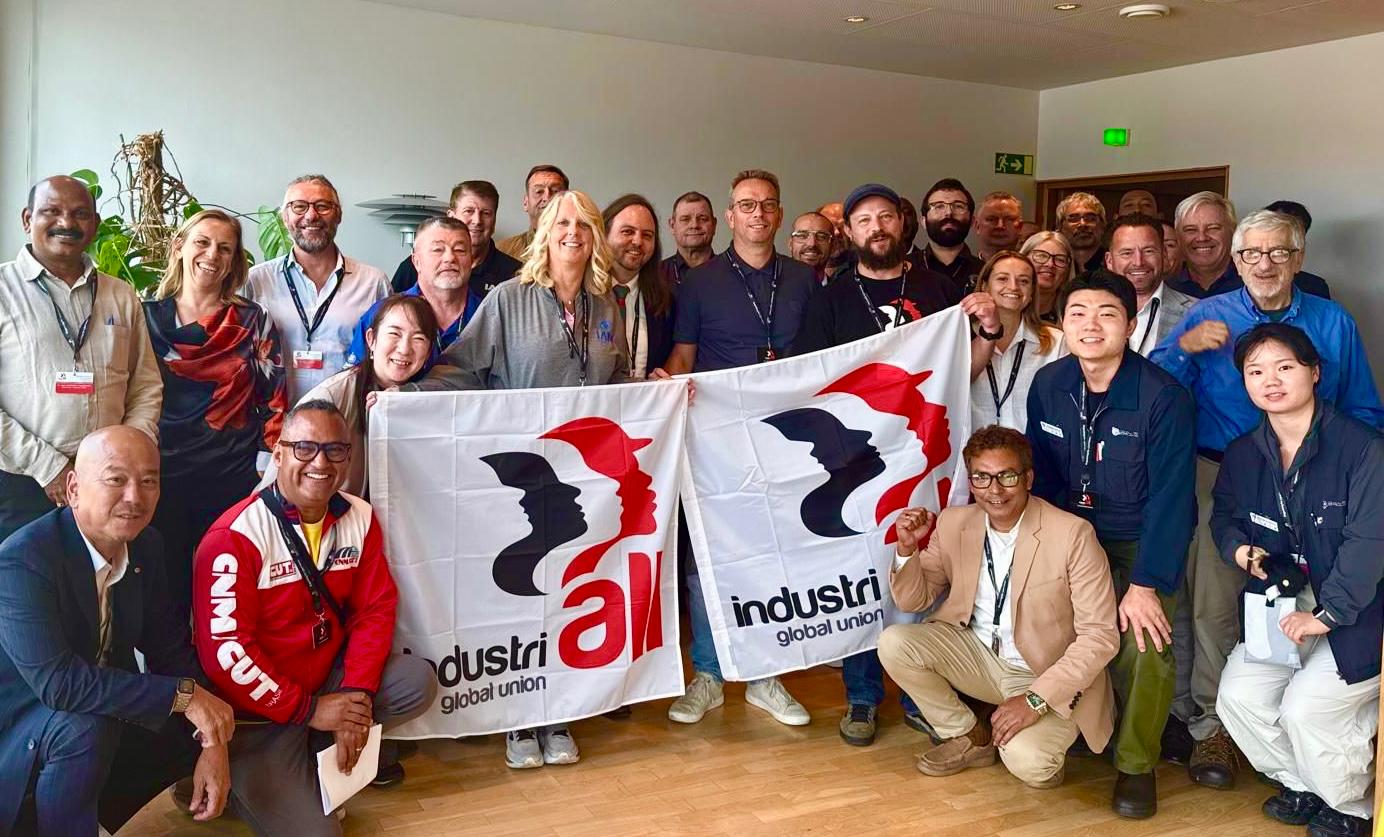

3 September, 2026Delegates from across the shipbuilding and shipbreaking sectors met in Helsinki on 2 September for IndustriALL Global Union's Shipbuilding-shipbreaking action group meeting. Their imperative was clear: when capital organizes globally, unions must too.
The shipbuilding industry has exploded – 27 per cent growth since 2021. The growth is driven by increased international trade and defence investment. China dominates with 60 per cent market share. This is measured in compensated gross tonnage, backed by subsidies and a deep industrial ecosystem. Countries are responding through deliberate international coordination: AUKUS (Australia, UK, USA), the ICE pact (Canada, Finland, USA), Japan-USA cooperation agreements, the Korean-US Make American Shipbuilding Great Again initiative, and British-Norwegian defence partnerships. These are not trade deals but strategies to pool investment and expertise, coordinate production and lock in labour agreements across borders.
Yet growth creates acute pressure on workers. Labour shortages, inadequate pipelines into the industry, ageing workforces, heavy reliance on subcontractors and migrant workers, and corners cut on health and safety are the universal challenge. From Japan to South Korea to the US and Italy, unions face the same crisis: skilled labour is scarce.
But scarcity is leverage. A major part of the discussion focused on union labour agreements that set minimum standards before global projects are agreed. These include bilateral agreements between unions involved in the projects. Delegates committed to demanding wage premiums, building proper skills pipelines, organizing new entrants, pushing for real women’s participation, and refusing to compromise on occupational health and safety. Unions are negotiating to ensure AI and new technologies support rather than replace workers, that heat protection is recognized as legitimate worker investment, and that migrant workers, predominately from Asian countries, have equal organizing rights and protections.
The invisible workers
One year ago, the Hong Kong Convention entered into force. Yet a critical gap remains in the industry. In India’s shipbreaking yards, the Alang-Sosiya union has built over 70 per cent density and forced genuine improvements: safer work, formalized employment, environmental cleanup. But this progress masks dire conditions for downstream workers, mostly women, who collect, sort and recycle raw materials: anchor ropes, electronics, scrap metal.
In India, women make up less than one per cent of shipbreaking workers but the vast majority downstream. The Self Employed Women’s Association (SEWA) organizes these women, fighting for three essential demands. The women want access to skilled, better-paid work moving up the value chain, access to quality scrap rather than leftover waste, and formal recognition as workers with social security and supply chain visibility.
Rashim Bedi from SEWA presented on downstream work and conditions. This built consensus to integrate downstream women’s concerns and standards into broader shipbreaking industry safety and standards discussions.
The crisis is starkest in Bangladesh. On 14 August, nine workers died from toxic gas exposure at a Chattogram shipyard, despite the yard holding HKC-compliant certifications. Bangladesh has ratified the Convention. The tragedy exposes a fundamental truth: certification without enforcement is worthless.
Participants in the meeting were clear in extending support to organize downstream recycling workers and push for their inclusion in maritime shipping legislation. The meeting closed with commitment to deepen international cooperation on migrant worker organizing and worker protections across the sector.