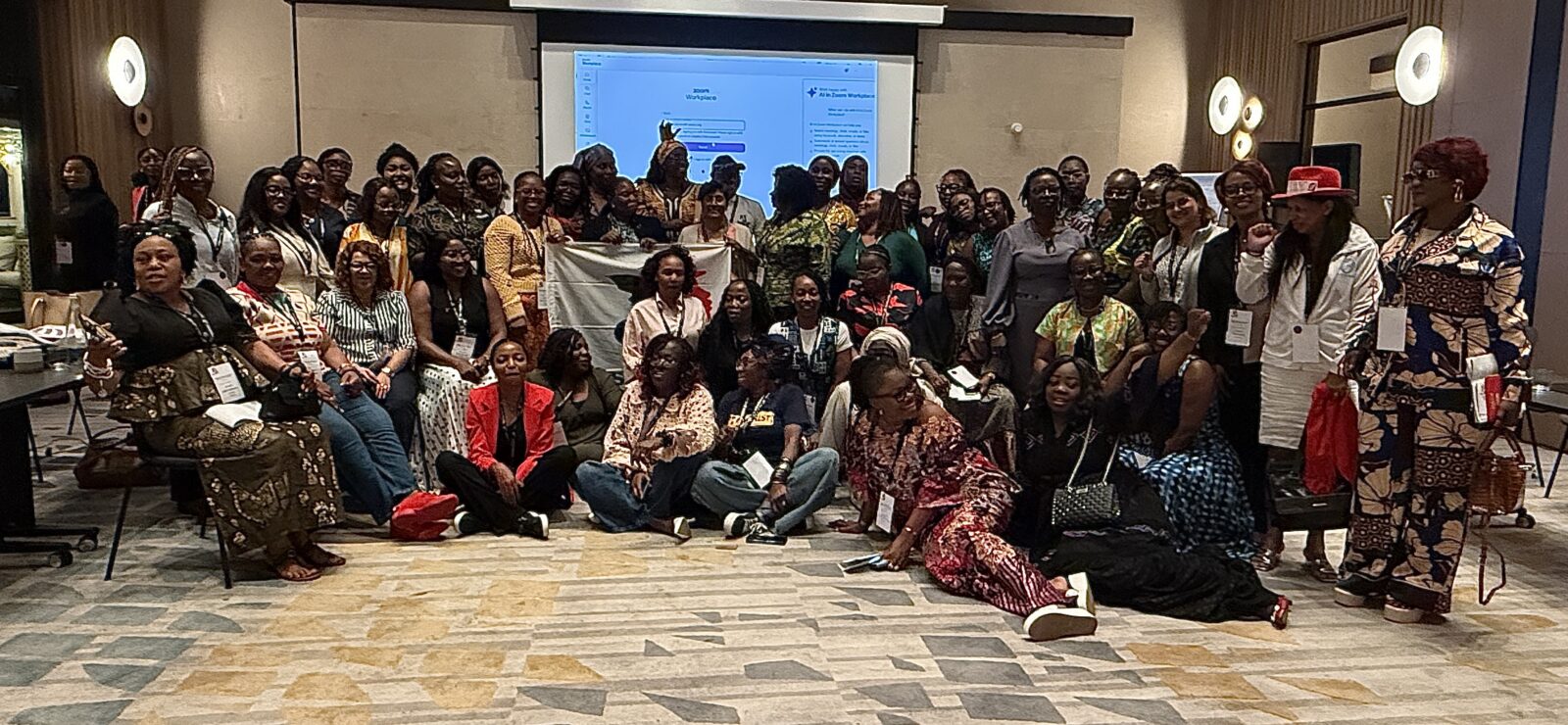

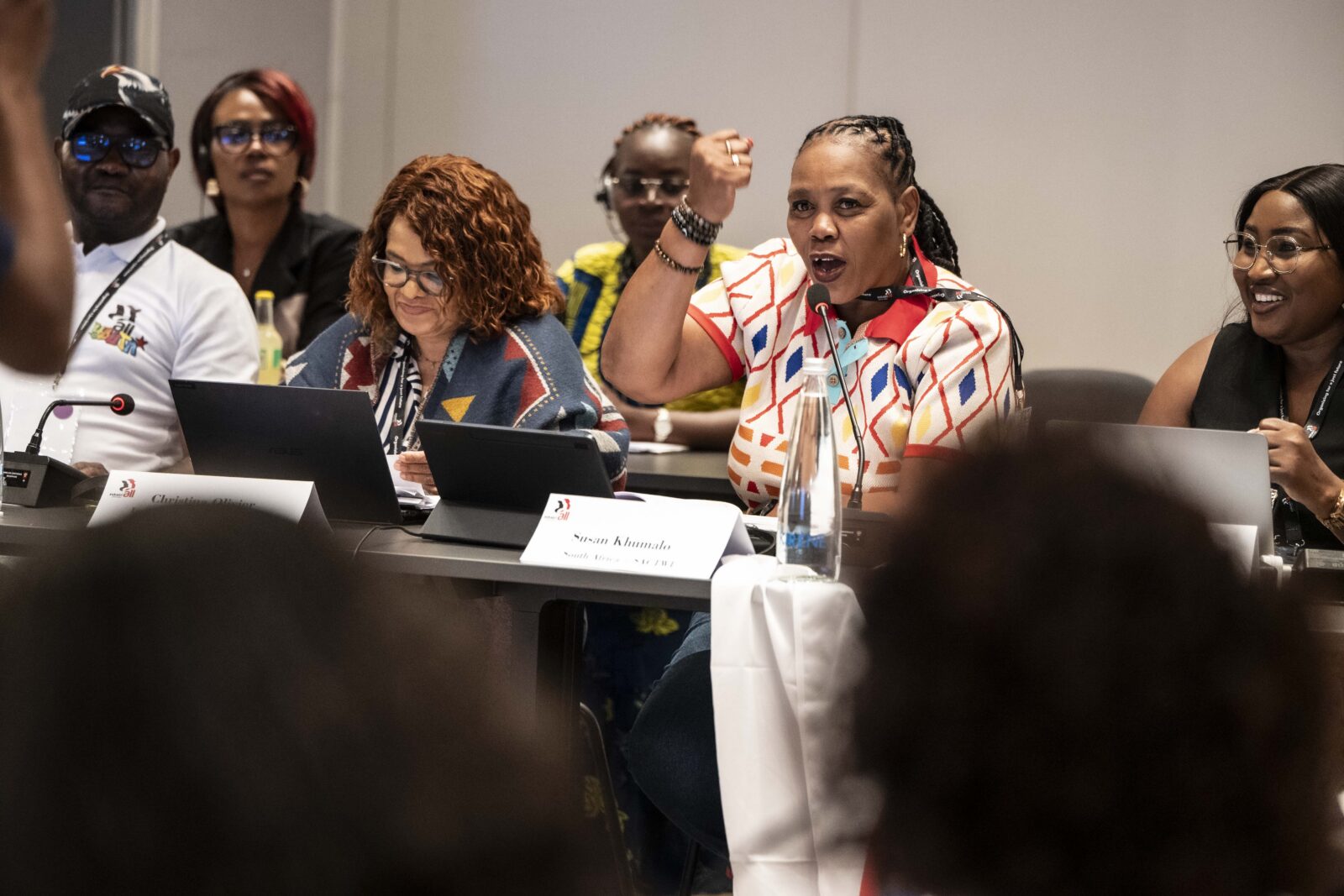
29 September, 2026IndustriALL Global Union's sub-Saharan Africa regional women's committee met in Abidjan, Ivory Coast, on 28 September to work out how the union's feminist resolution will function in practice; from union leadership to the workplace.
A resolution born in the region
IndustriALL’s feminist resolution, born in the sub-Saharan Africa’s feminist schools, was adopted unanimously at the 2025 Congress in Sydney.
IndustriALL assistant general secretary Christina Olivier said the resolution goes further than a standard gender policy:
“It is not only about getting women in the room. It is about changing the room, changing the rules and changing who has power.”
She said feminist trade unionism must shape collective bargaining, health and safety, care work, the Just Transition and corporate accountability. Union budgets, programmes and leadership development must also reflect that commitment.
IndustriALL Sub-Saharan Africa co-chair Susan Khumalo said the region has moved beyond a focus on quotas and representation towards a gender-transformative agenda.
Gender sensitive or gender responsive?
Regina Nambahu of the Mineworkers Union of Namibia (MUN), co-chair of the regional women’s committee, said the challenge now is implementation:
“It is not just a theme. It is a political commitment, a call to action.”
She asked the 60 delegates in the room to consider what would change for women workers as a result. Would women gain greater access to leadership? Would workplaces be free from sexual harassment? Would gender equality show up in collective bargaining?
IndustriALL regional secretary Paule France Ndessomin used the example of a breastfeeding room at a mine site in Ghana. Installing the facility may be gender sensitive. Being gender responsive means first asking women what they need. Do women actually want to breastfeed on a mine site?
Participants were clear about where past efforts went wrong: measures for women were introduced without consulting them. Nothing can be done for women without women.
Agnes Ama Agamasu said the region is driving the feminist agenda, but not everyone understands it yet, including some in union leadership. Women should expect resistance and build resilience to meet it.
Some leaders act as gatekeepers of patriarchy, she warned, using language to shut women out. But women don’t need feminist theory to fight for their rights, because their working lives already teach them what they need to know.
The task, she said, is to break the agenda down so that every sister can see herself in it. Many of the demands women already make, such as menstrual leave, are part of the gender-transformative agenda.
“Sometimes you don’t need to go and read the whole book.”
She acknowledged that not every woman will back another woman. But women face the same struggles across the region, and that common cause unites them.
When a woman identifies a need, she said, it is real, and it does not need validation from men.
Different countries, shared struggles
Although national contexts differ, the stories from across the region showed how similar the issues are:
- Guinea. Marliatou Diallo, now deputy general secretary of her mining union, said IndustriALL’s mentorship through the union building capacity building programmes helped her grow from a shy young member into a union leader. She once refused to attend a meeting at a mine site until women’s toilets were installed. Her union also won a collective agreement that included clauses benefiting women, signed in February 2025.
- Nigeria. A delegate said men often resist making way for women with the question “who do you want to displace?”
- Ghana. A young delegate called for the fight for maternity leave to be extended from twelve weeks to between 16 and 18 weeks.
- Côte d’Ivoire. Delegates said IndustriALL support was key to the country’s ratification of ILO Convention 190 on violence and harassment at work.
The region’s mentorship programme supported by LO Norway currently has six mentors. Two of them were mentees who completed the programme last year and are now mentoring others.
A fight that cannot stop
The meeting took place as anger grew in South Africa over the killings of eleven women whose bodies have been found in Ekurhuleni, east of Johannesburg, since July.
IndustriALL sub-Saharan Africa co-chair Susan Khumalo told the meeting that
“Comrades, eleven women were brutally killed in South Africa. These are our sisters, our daughters and our mothers. While poverty, inequality and unemployment remain rife, it is women who carry the heaviest burden, at home, in our communities and at work. As women, we have a responsibility to channel our own issues, and we will not stop fighting until every woman is safe.”
For the women in the room, the killings were a painful reminder that gender-based violence is not a distant issue. It shapes women’s lives at home, in their communities and at work. Ending gender-based violence and harassment is one of the priorities of the regional action plan. It commits affiliates to campaigns on ILO Convention 190, workplace policies, training for workplace representatives and survivor-centred support systems.
The action plan
The meeting reviewed a regional action plan for 2026 to 2029, to be approved by the regional executive committee. Its priorities are: women’s mobilization and leadership, engaging men as allies, pay equity, gender-based violence and harassment, gender-transformative occupational health and safety, gender-responsive human rights due diligence, unpaid care work, maternity protection and confronting anti-feminist backlash.
Once approved, affiliates will develop national and workplace action plans. The plan will be a living document, reviewed every year.
Nambahu said:
“The women workers of sub-Saharan Africa are not asking us for promises, they are asking us for action.”