
16 January, 2026After years of dangerous working conditions in Pakistan’s mines, reported accidents have declined in 2025, following sustained union pressure, the introduction of new safety legislation and targeted occupational health and safety measures in high-risk mining areas.
Pakistan’s mining sector has long been among the country’s most dangerous, marked by unsafe working conditions, weak enforcement of safety standards, low pay and limited social protection. Until recently, more than 300 mine workers were reported to die each year, with over 3,000 suffering serious injuries, according to IndustriALL affiliates in Pakistan—figures likely understated due to widespread under-reporting, particularly in remote areas like Balochistan.
Conditions improved in 2025 following several key developments. After a series of attacks, the Balochistan government deployed army troops to affected areas, curbing illegal mining operations that had accounted for a significant share of fatal accidents. In March, the enactment of the Balochistan Mines and Minerals Act 2025 introduced a new legal framework more closely aligned with international safety standards.
Severe flooding over the past year has also forced the closure of numerous mining sites, contributing to a decline in reported accidents.
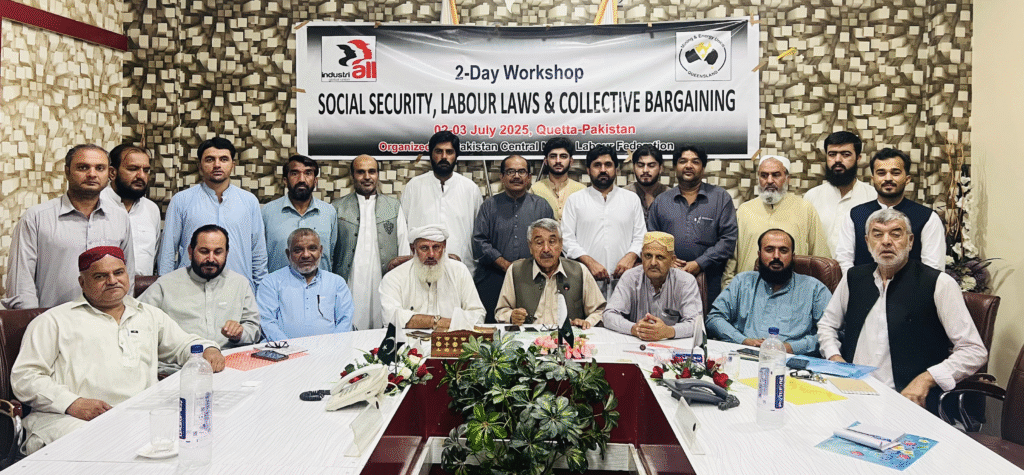
A further step came in November 2024, when mining employers and the Pakistan Central Mines Labour Federation (PCMLF) signed an agreement, following a meeting supported by IndustriALL and Australia’s Mining & Energy Union (MEU), covering occupational safety and health, skills development, access to medical care, wages, protective equipment, safer transport and social protection. Regular OSH campaigns and awareness workshops were also carried out under the Save Mining campaign.
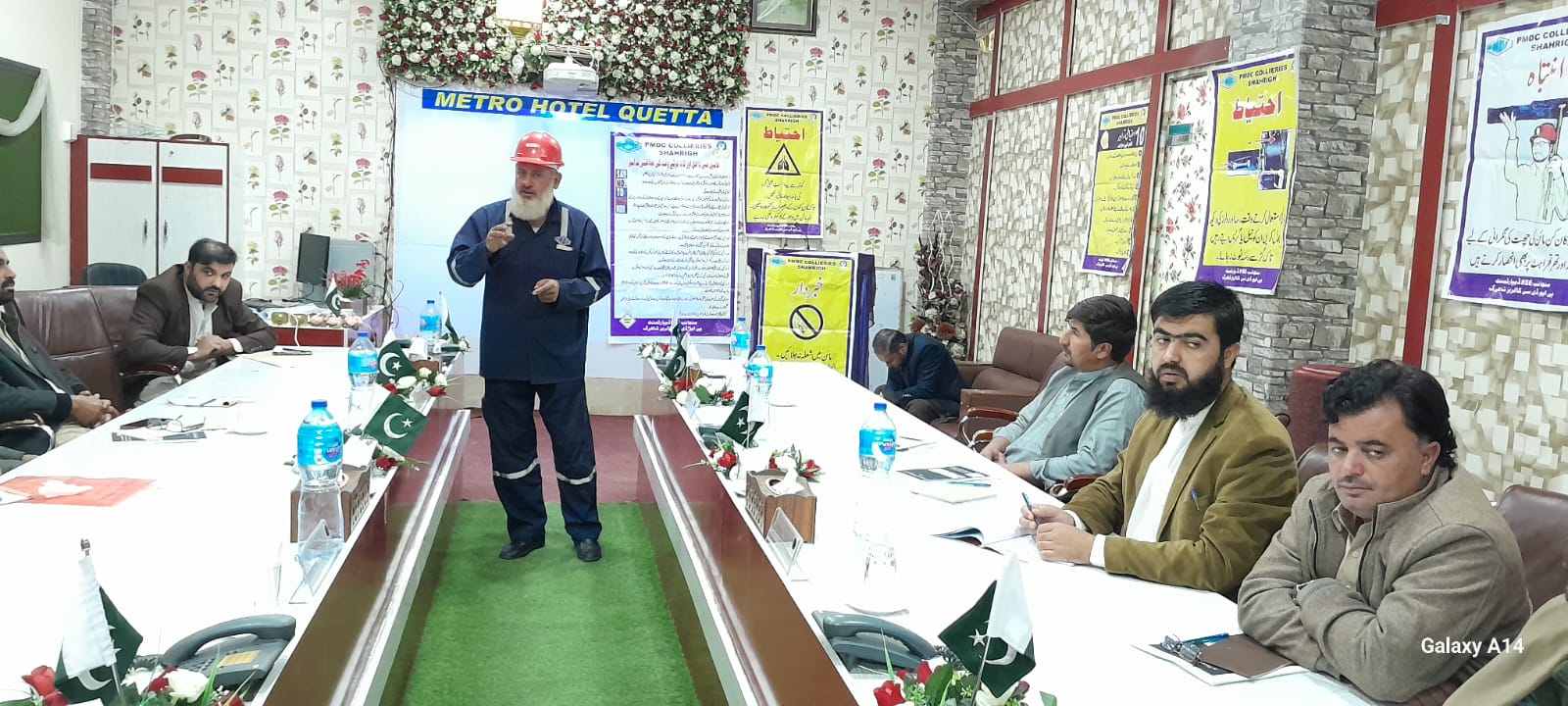
Health and safety workshop
Another mining affiliate in Pakistan, PMWF has also been actively campaigning to improve safety and health standards, urging federal and provincial authorities to ratify and implement the ILO Safety and Health in Mines Convention (C176). Its efforts include raising awareness among more than 840 miners about safe mining, promoting training and medical support, and advocating for stronger enforcement of safety regulations to prevent accidents and fatalities.
Throughout 2025, IndustriALL mining affiliates PMWF and PCMLF, with support from MEU, held monthly occupational health and safety awareness workshops across major mining clusters in Balochistan, focusing on hazard identification, workers’ rights and emergency preparedness. At the same time, IndustriALL stepped up its campaign for Pakistan to ratify C176 on safety and health in mines, pressing the government to align national legislation with international standards and strengthen accountability.
Despite these gains, illegal mines continue to operate in some areas with institutional backing, while restricted media access has contributed to the under-reporting of accidents. Although official figures point to a 50 per cent drop in accidents in 2025, unions and the National Commission for Human Rights (NCHR) estimate the decline at closer to 20–25 per cent. IndustriALL affiliates in Pakistan will continue to the fight for safety for mine workers across the country.
Atle Høie, general secretary, IndustriALL says:
“In May 2025, the government expressed its intention to ratify three key ILO conventions; C155 on occupational safety and health, C187 on the promotional framework for occupational safety and health, and C176 on safety and health in mines. The ratifications are expected to be completed by early 2026 and are an important step forward. However, these commitments must now be translated into real implementation on the ground.”