
Read this article in:
English
28 October, 2026Mineworkers at Chinese-owned mines in Zimbabwe and Zambia are winning pay rises and union recognition. Lithium workers in Zimbabwe have secured a 75 per cent wage increase and Zambian mineworkers have won recognition at three companies.
In Zimbabwe, a new collective agreement raises wages from US$200 to US$350. The win came after a campaign in which workers’ spouses joined them on strike.
The Zimbabwe Diamond and Allied Minerals Workers’ Union used human rights due diligence (HRDD) tools to organize the workers. It succeeded despite short contracts and restricted access to the sites, which make recruitment difficult.
At Bikita Minerals, owned by Sinomine Resource Group, the union has organized 600 subcontracted workers. It brought in traditional and community leaders to press for freedom of association, collective bargaining and occupational health and safety. The campaign also led to a clinic being built at the mine this year. It will provide primary health care for workers and a surrounding community of about 5,000 people.
The union found that copying Chinese ambassadors into correspondence with Chinese multinationals gave workers extra leverage.
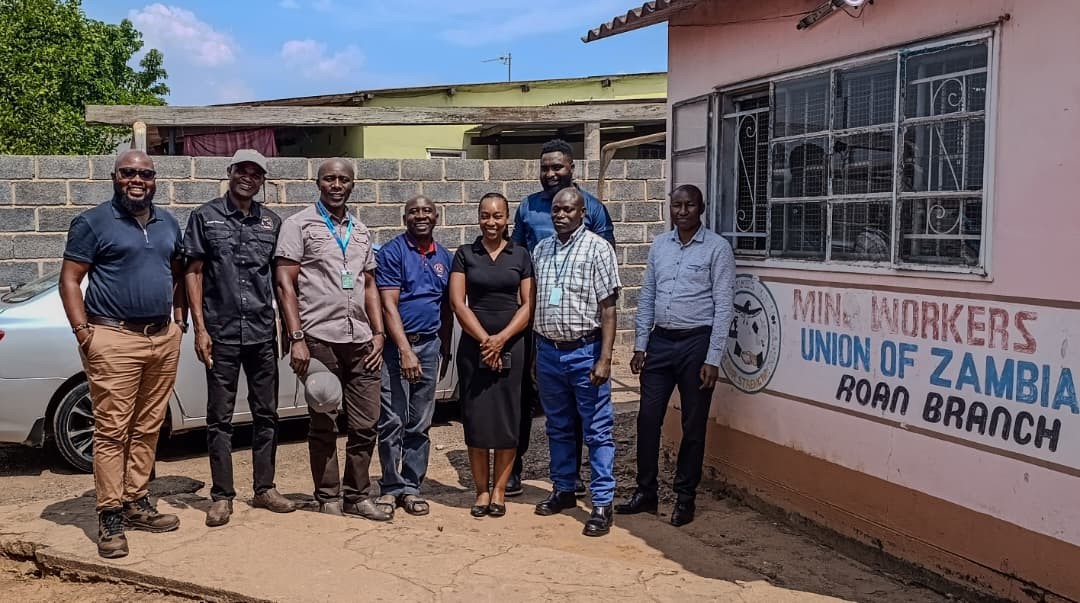
In Zambia, the Mineworkers’ Union of Zambia (MUZ) surveyed 525 workers at Chinese-owned mines in July. It found low pay and poor conditions. In addition, at some sites, there was no grievance mechanism at all. At two mines, between 68 and 75 per cent of responses showed that workers did not know how to report violations.
Since then, a ten-member union team has won recognition agreements with three companies. The team also recruited more than 300 workers and set up committees at the target mines. The union’s next priority is to build grievance systems at CNMC Luanshya Copper Mines and Sino Metals Zambia. In addition, they want to win due diligence clauses in collective agreements.
Turning due diligence into union power
The results were presented at a conference on human rights due diligence for trade unions in Abidjan, Côte d’Ivoire, on 1 October. At the conference, more than 130 trade union delegates from 23 African countries, 60 of them women, discussed HRDD. The conference was organized by IndustriALL’s Sub-Saharan Africa regional office with support from the HRDD Competence Centre, ACV-CSC, 3F and SASK.