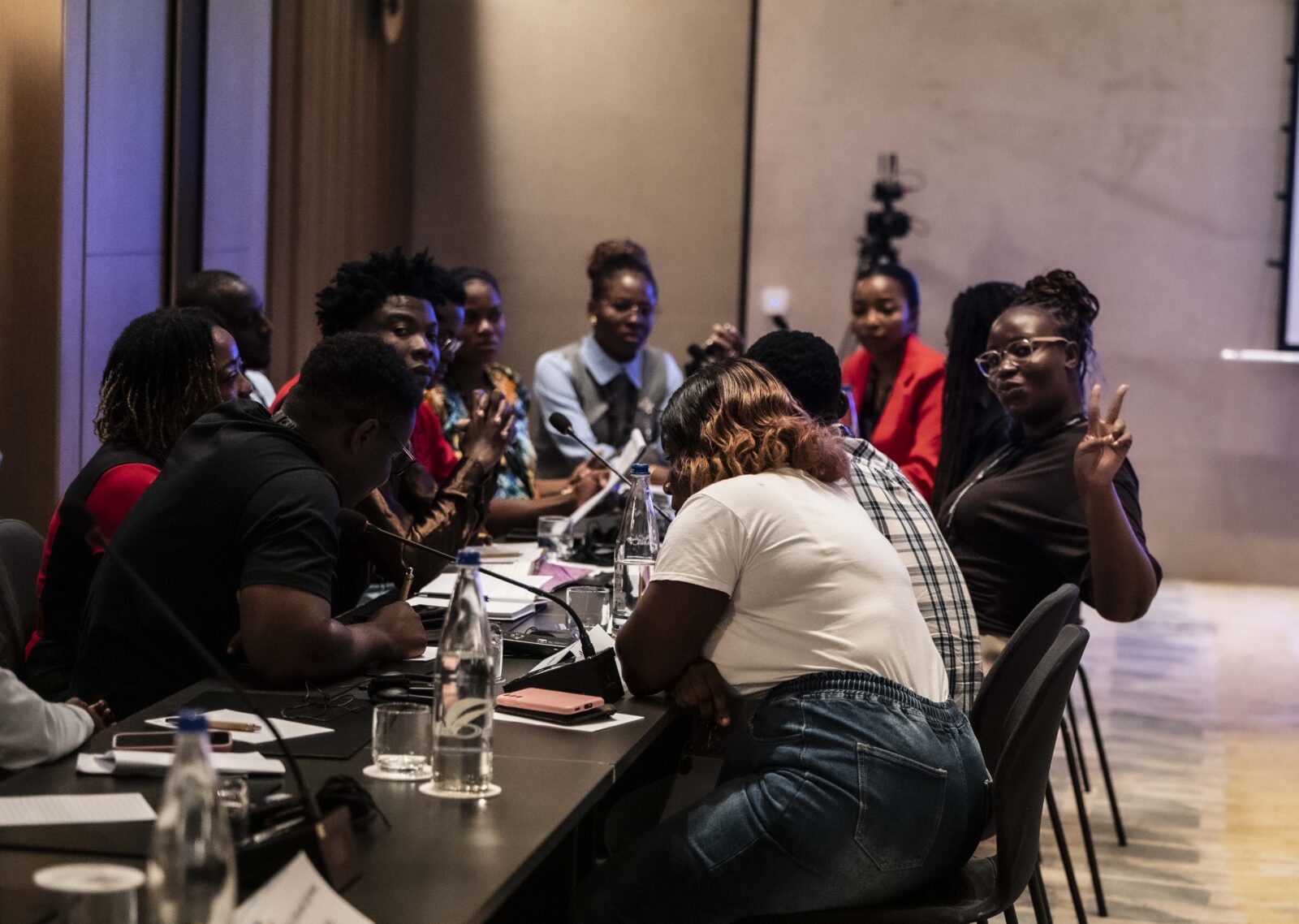




29 September, 2026Young trade unionists from across sub-Saharan Africa met in Abidjan, Côte d'Ivoire, on 28 September 2026, calling for decent work, a Just Transition that protects jobs and a real say in union decision-making.
New youth-led research presented at the workshop reveals deep inequalities facing young workers in mining and energy in the DRC, South Africa and Zimbabwe.
The workshop, held under the theme “Promote inclusivity in the world of work”, opened a week of regional meetings.
“Do not wait for permission to lead”
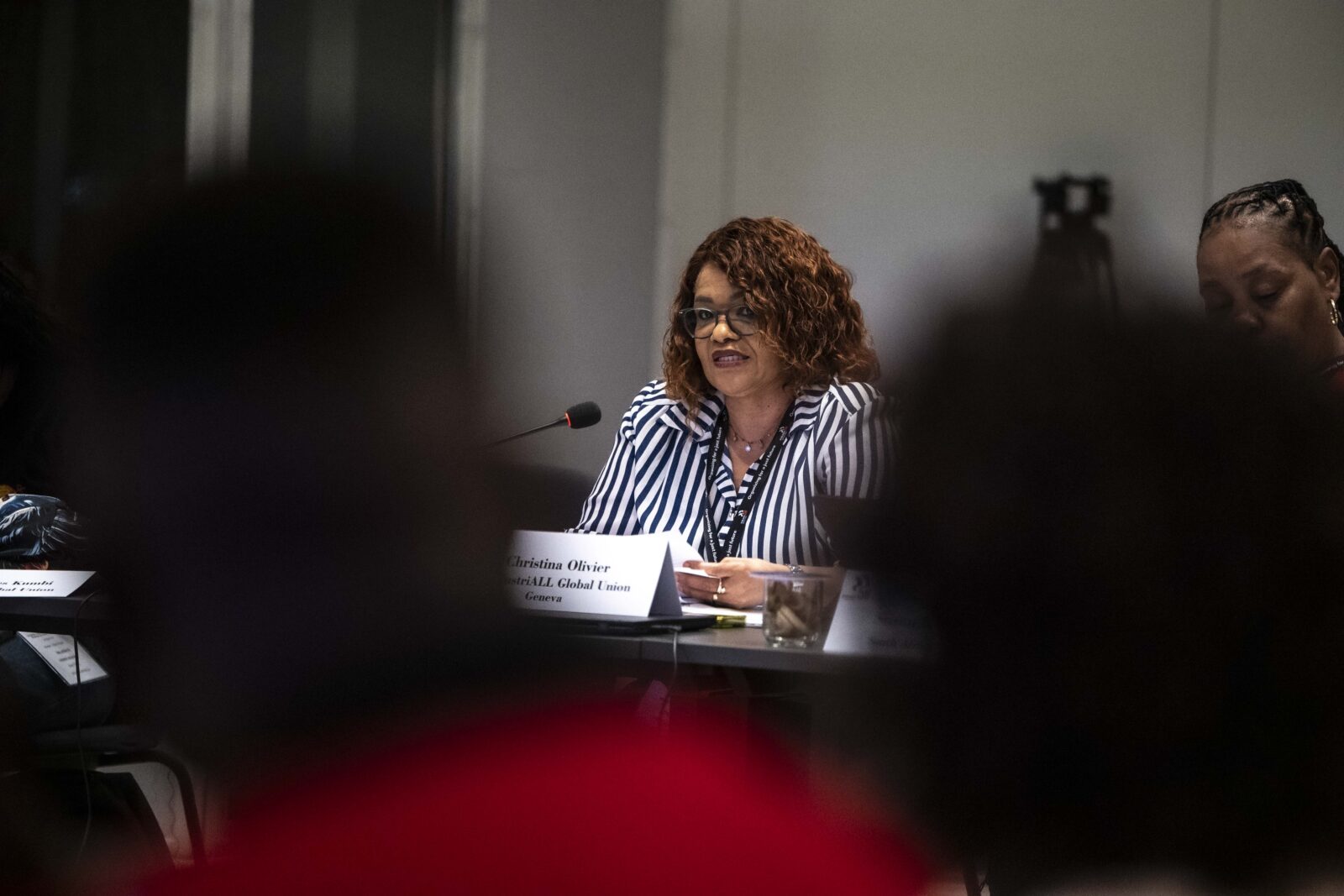
Opening the workshop, IndustriALL assistant general secretary Christina Olivier urged young workers to claim their place in the movement:
“Continue to challenge us when youth participation becomes symbolic instead of meaningful. And do not wait for permission to lead. If you wait for permission to lead, you will wait forever.”
Olivier pointed to the latest International Labour Organization (ILO) youth report. Global youth unemployment rose to 12.4 per cent in 2025, leaving 67 million young people out of work. More than 257 million are not in employment, education or training.
“Young people are often told the problem is a lack of skills, when the real problem is a lack of decent work,” she said.
She also called on participants to engage with IndustriALL’s draft youth policy, which goes to the Executive Committee for adoption.
Jobs must not be the price of climate action
Regional co-chair Susan Khumalo said poverty, inequality and unemployment remain rife across Africa, fuelling unrest and tension. She called for human-centred migration policies and African unity.
“We don’t want climate policies that destroy jobs in our communities,” said Khumalo. “As young workers, you must be at the forefront of these struggles.”
Regional youth committee chair Kelvin Ayemhenre, from the Steel and Engineering Workers’ Union of Nigeria (SEWUN), challenged participants to analyse their societies from a left political framework rather than a capitalist mindset.
Young workers navigating an “age of confusion”
Dr Mbuso Moyo, an academic at the University of the Witwatersrand, presented the research, titled Young workers in transition: structural inequalities, industrial transformation and the Just Transition in the DRC, South Africa, and Zimbabwe, carried out by the IndustriALL youth committee with his support.
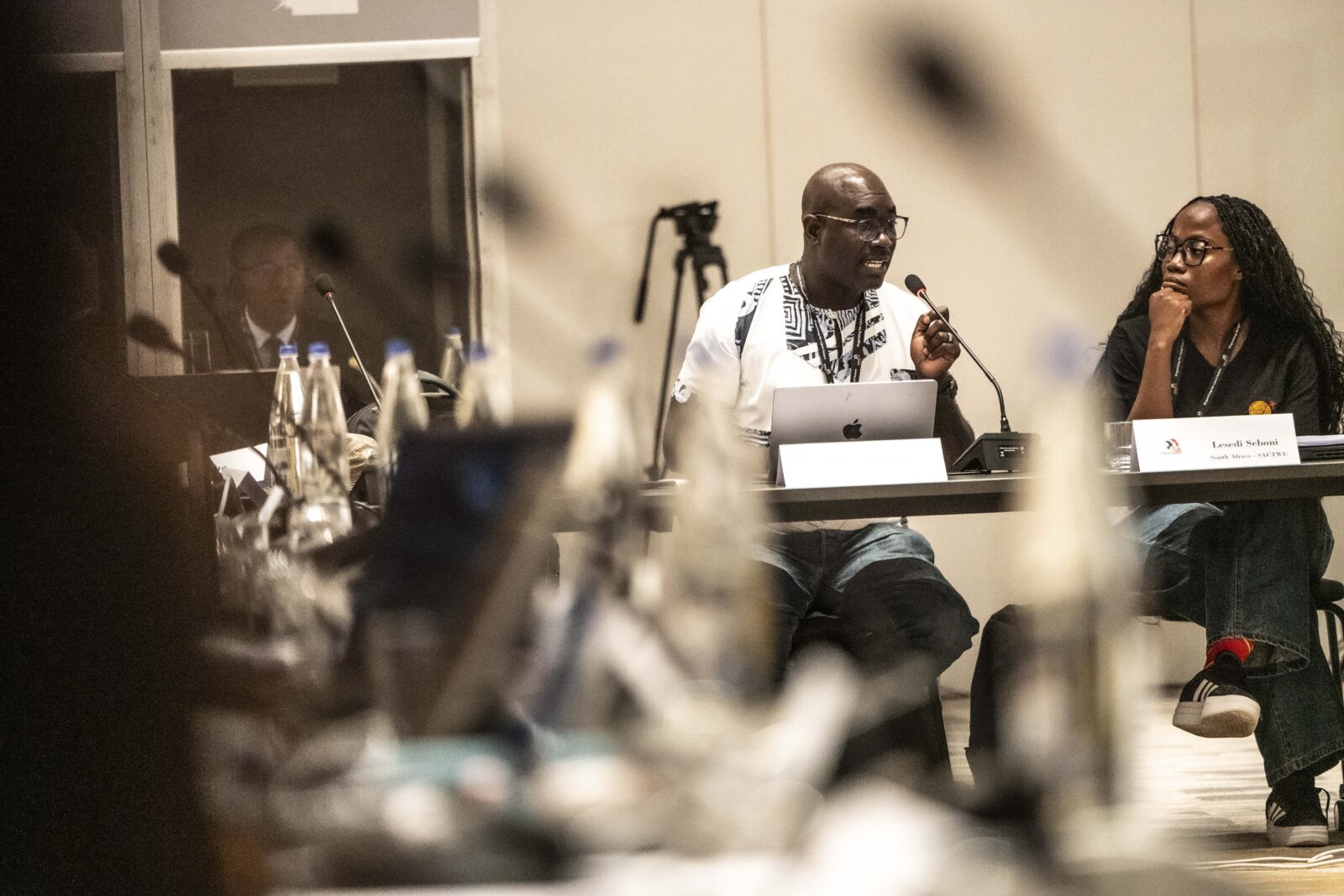
Drawing on Antonio Gramsci, he described the present as an “interregnum”, an age of confusion. Its symptoms include “waithood”, where young graduates wait for jobs that never come.
He warned that the Just Energy Transition risks becoming “palliative care”: promises that absorb workers’ demands without solving the structural crisis. Renewable energy projects may not replace coal jobs, nor be built where coal workers live.
What the research found
The findings, based mainly on existing studies, paint a stark picture:
- In the DRC, Subcontracted young mineworkers earn around US$330 a month, compared with US$898 for permanent staff doing the same work
- In South Africa, young people make up 35.7 per cent of the population but only 10 per cent of formal mining jobs. The coal phase-out in Mpumalanga puts more than 200,000 direct and indirect jobs at risk
- In Zimbabwe, almost half of young people (49.5 per cent) are not in employment, education or training. Young people working in mining are 92 per cent men and youth union density is below 10 per cent.
In all three countries, young women face wage gaps, the risk of gender-based violence and a lack of protective equipment designed for them.
What needs to change
Moyo set out key recommendations from the research:
- 30 per cent youth representation in affiliate national executives, bargaining teams
- Regional campaigns against layers of subcontracting, demanding equal pay for work of equal value and permanent status for contract workers after six months
- Employer-funded academies to train young workers in new technology and renewable energy, which would also generate research
- Gender equity charters in collective agreements, with zero tolerance of gender-based violence, equal pay audits and protective equipment designed for women.
Unions respond to a changing world of work
Participants split into three groups to reimagine an inclusive and equitable world of work.
The groups identified automation, artificial intelligence, precarious work and the green transition as the biggest pressures on young workers. They noted that young workers are often the first to lose their jobs under “last in, first out” rules.
Participants shared union responses, including:
- Collective agreement clauses in Kenya protecting workers’ pay when floods prevented them from reaching work
- Bargaining for reskilling and upskilling to prevent job losses
- Unions extending organizing to informal and outsourced workers
- Amending union constitutions to make space for young workers
- Pushing governments for tripartite consultation on the Just Transition.
From general concerns to hard evidence
Responding to the group discussions, Moyo said participants’ contributions lacked specificity. He challenged unions to name the exact mines closed, jobs lost and policies responsible in their own countries.
“We can’t afford to speak in generalities,” he said. “As trade union leaders, we must be able to say: in my country, because of these policies, these are the effects.”
He called on unions to build their own research capacity, so their demands rest on solid evidence.
Looking ahead
Closing the workshop, IndustriALL youth secretary Lesedi Seboni challenged participants to link the Just Transition to what is happening on the ground:
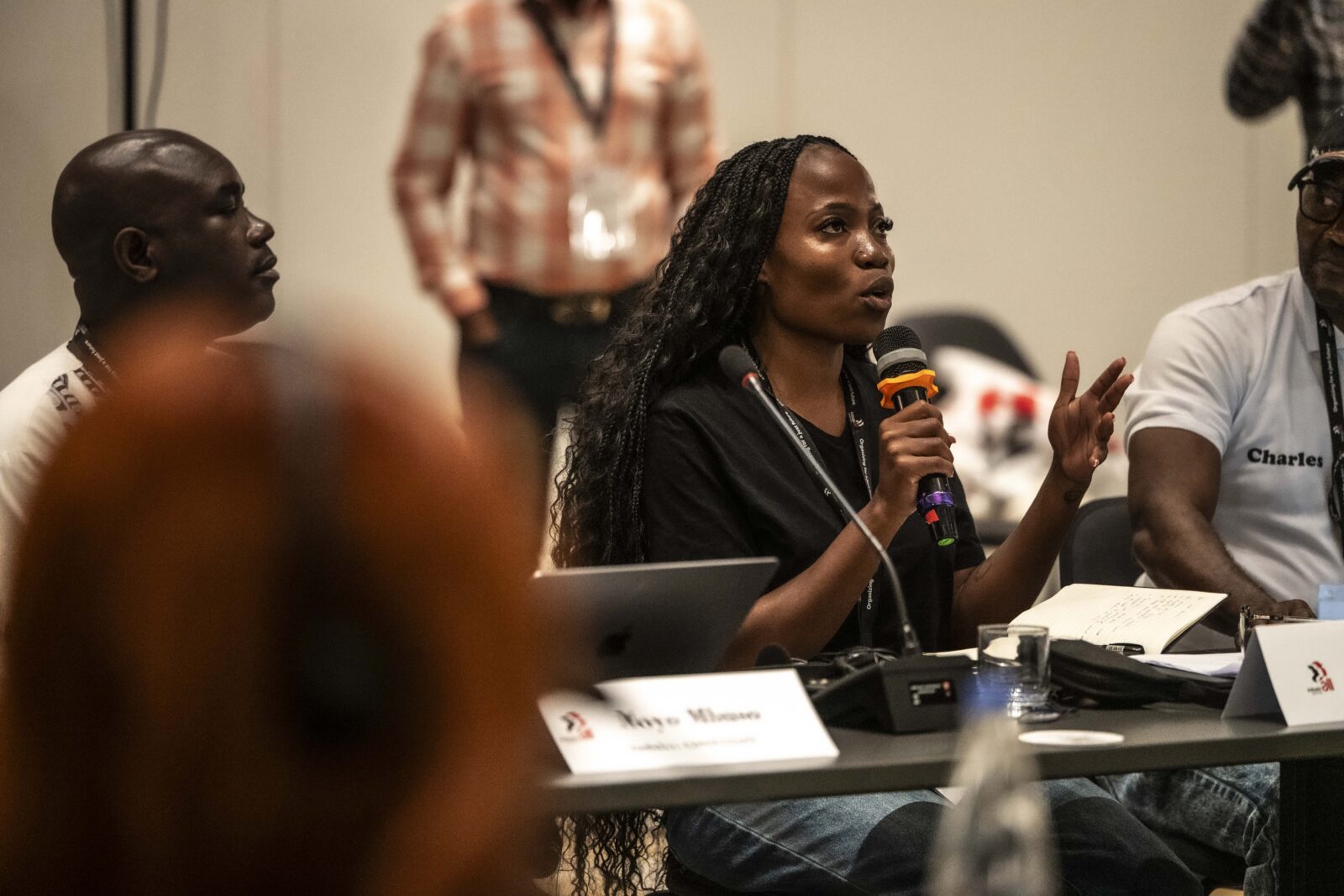
“How can we decarbonize while ensuring that jobs are secure and at our own pace as African countries?”
Regional co-chair Susan Khumalo summed up the spirit of the day:
“The future is youth and youth is the future.”