
Read this article in:
English
19 October, 2026Union networks at Pou Chen, Crystal and Coats are using their cross-border links to write human rights due diligence into collective agreements. This gives workers in Bangladesh, Cambodia and Indonesia a common route to enforce their rights across the same multinational employer.
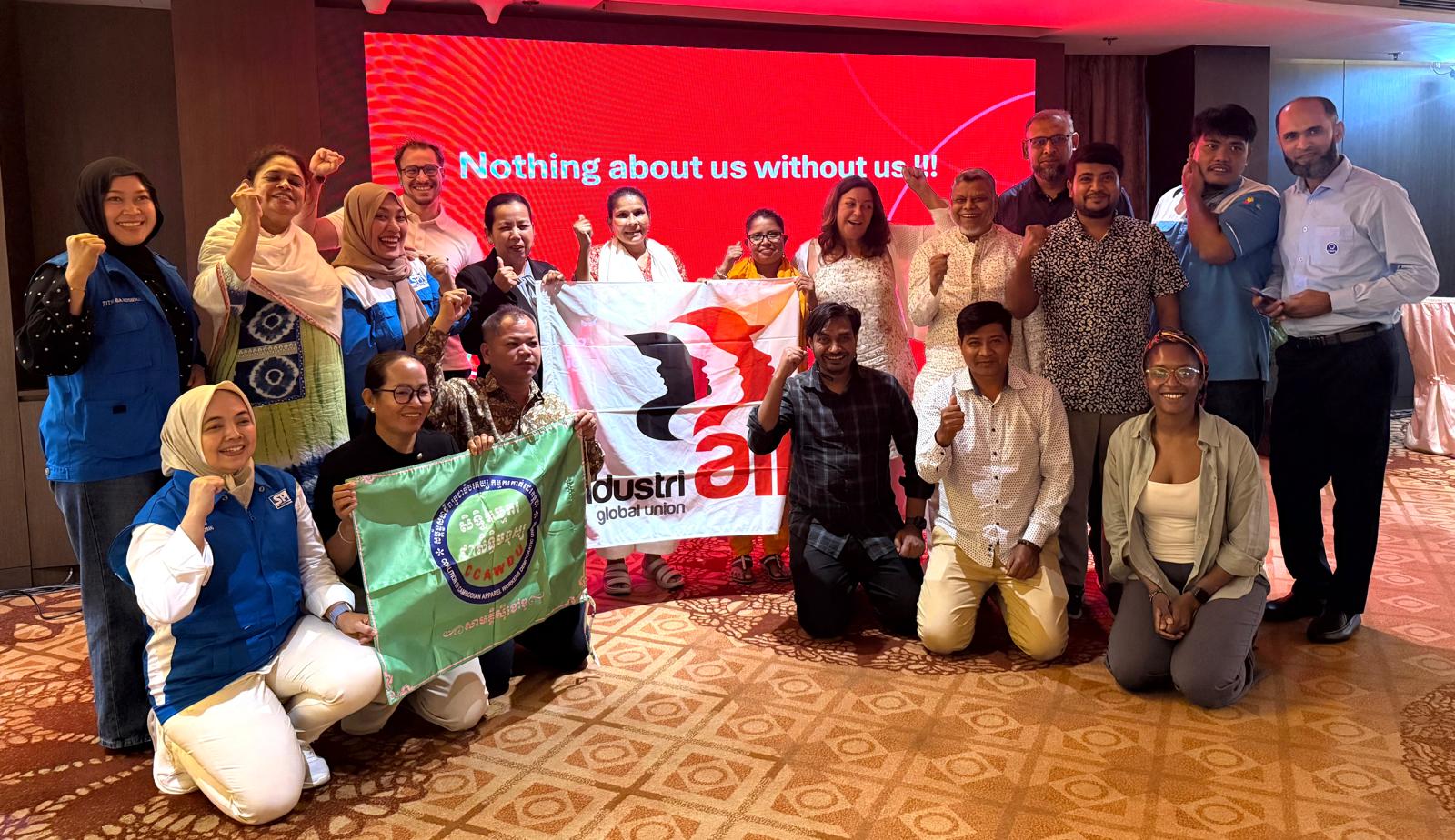
Representing workers at the same manufacturers across countries, the networks can compare agreements and push for common standards. Meeting in Dhaka from 13 to 15 October, they looked at how to embed human rights due diligence (HRDD) in collective bargaining. This was the second of three workshops in the Competence Centre for Human Rights Due Diligence’s garment pilot programme. The programme is supported by GIZ on behalf of the German Federal Ministry for Economic Cooperation and Development (BMZ).
The pilot builds on networks developed over several years and covers five factories in Bangladesh, Cambodia and Indonesia: one Pou Chen, two Coats and two Crystal. All have a local union, some with a collective bargaining agreement and some still fighting for one. Two workplace activists and two federation officials from each factory take part in the whole programme, so the legal expertise stays with the unions.
The networks have already delivered results. In Bangladesh, the Crystal network organized a workplace union, which is now negotiating its first CBA. The Coats network has supported organizing in Morocco. In Cambodia, unions are in ongoing discussions with the employers’ association TAFTAC on heat stress. The newly negotiated template collective bargaining agreement under ACT has opened the door to further gains.
From commitments to binding clauses
Nazma Akter, president of the Sommilito Garments Sramik Federation in Bangladesh, asked participants what one problem in their workplace they hoped to solve using HRDD and collective bargaining. Participants stressed that HRDD clauses must cover wages and freedom of association.
Unions reviewed their own CBAs and global framework agreements for clauses that already put HRDD into practice, such as joint occupational health and safety committees.
Florian Yelin, strategic legal and policy advisor at the Centre, explained why a vague commitment to “respect human rights” is not enough. Strong agreements need binding obligations, joint committees, union involvement and enforceability. Unions then drafted HRDD language on priority issues such as gender-based violence and harassment.
Participants also mapped the HRDD tools already available to them, such as the International Accord, wage indicators and grievance mechanisms. An RMG Sustainability Council representative explained how the Bangladesh model combines union-brand agreements, independent safety inspections and a complaints mechanism. Together, these make it enforceable where voluntary multi-stakeholder initiatives are not.
Christina Hajagos-Clausen, IndustriALL textile and garment director, said:
“Human rights due diligence is moving from voluntary to mandatory. Unions from the shop floor to national leadership must know how to use it to strengthen industrial relations at factory, national and international level, and this work gives them the chance to build those skills.”
The third workshop takes place in Cambodia in January 2027, just before the textile and garment world conference.