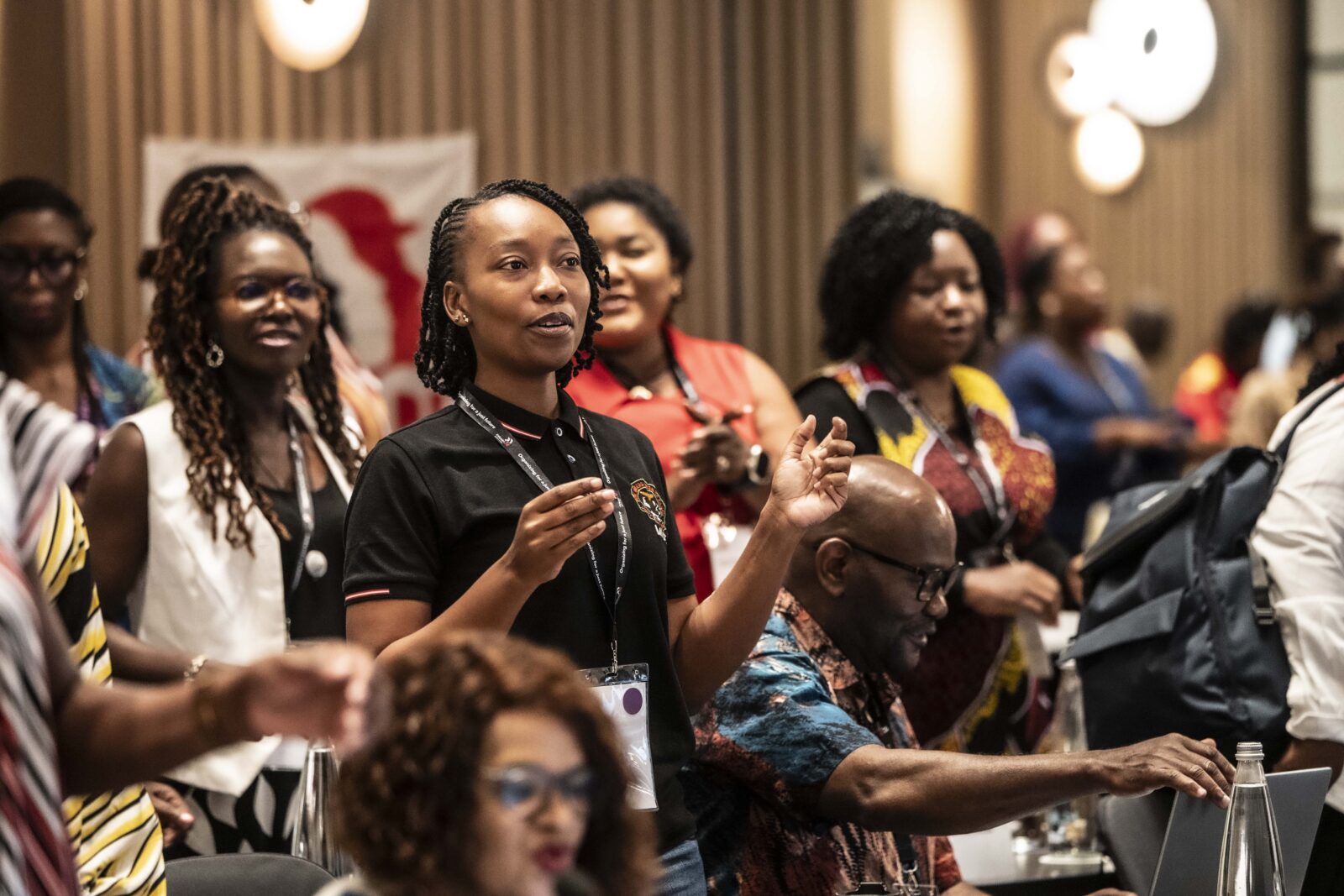

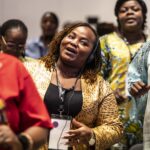

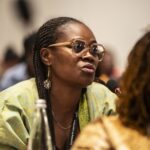
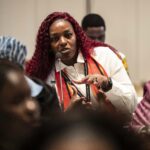

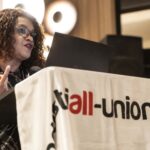
1 October, 2026Women trade unionists from mining and energy unions around the world met in Abidjan, Ivory Coast, on 30 September. They agreed to set up a Global Women in Mining Committee to turn IndustriALL Global Union's feminist resolution into action in the sector.
The conference was the first to bring women from both sectors together. It follows IndustriALL’s last Global Women in Mining Conference in 2021 and the adoption of the feminist resolution at IndustriALL’s 2025 congress.
Key takeaways
- Women remain a small minority in mining and energy and they are concentrated in lower-paid and support roles.
- Violence and harassment must be treated as a health and safety issue, not an individual complaint.
- Occupational health and safety is not gender neutral. From PPE to extreme heat, systems designed around men put women at risk.
- Better gender-disaggregated data is essential for unions to bargain effectively.
- Strong workplace unions and collective agreements are the key to making commitments real.
- Unsafe and degrading practices, reproductive health risks and excessive working hours remain serious concerns.
From participation to transformation
Opening the conference, IndustriALL Women’s Committee co-chair Regina Nambahu said the goal was not simply more women in the sector:
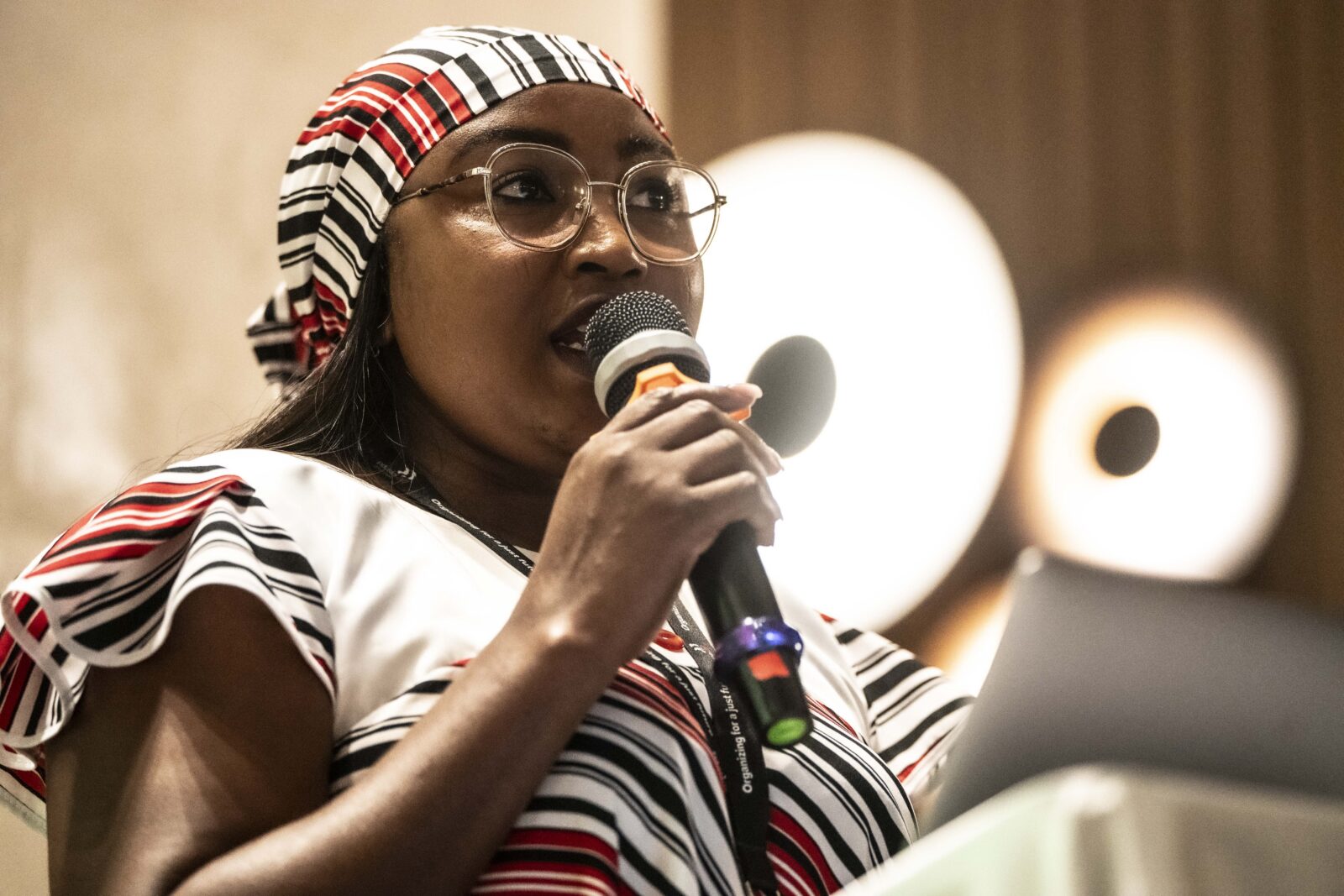
“We do not just want participation, we want transformation.”
She challenged participants to ask who sits at the negotiating table, who benefits from the energy and technology transition and who is always left out. Moderator Paule France Ndessomin, IndustriALL regional secretary for Sub-Saharan Africa, added a further question: why?
IndustriALL assistant general secretary Kemal Özkan described an inequality emergency in the world, with gender at its heart. IndustriALL assistant general secretary Christine Olivier said a gender-transformative approach means changing the systems themselves:
“Women should not simply be expected to fit into systems that were designed without them and not for them.”
Where women stand
Speakers agreed that the data on women in mining is incomplete. Olivier cited a 2024 International Women in Mining report which found that 35 of the top 100 mining companies studied did not publish gender-disaggregated workforce data. Among those that did, women made up only about 15 per cent of the workforce.
Camila Pereira Rego Meireles of the International Labour Organization (ILO) said the key question is not only how many women work in mining, but what jobs they do and whether they have an equal voice. Women face a “leaky pipeline”, with their numbers falling mid-career due to long shifts, remote sites, inadequate facilities and PPE and unequal access to training.
She warned that the boom in demand for critical minerals will not automatically deliver equality:
“The mine of the future is not predetermined. It is still being negotiated.”
Courtney Smith of the Mining and Energy Union (MEU) in Australia said public gender targets can backfire when employers fail to invest in training and inclusive workplace cultures. In Australian mining, women hold only 16 per cent of jobs in the highest-paid quarter.
Violence and harassment is a safety issue
Speakers returned repeatedly to gender-based violence and harassment. Meireles said ILO Convention 190 on violence and harassment covers far more than the mine site, including camps, transport and the journey to work.
Participants raised the killings of 11 women in Ekurhuleni, South Africa and asked Anglo American what it is doing to protect its workers. Tana Van Straaten of Anglo American’s Living with Dignity Hub described measures including safe company transport, avoiding early and late shifts for vulnerable workers and trauma counselling.
“Women feel that asking them to be careful is not good enough,”
she said.
Smith said class actions in Australia raised a serious question for the whole industry: can a woman who reports harassment trust she will be protected rather than punished?
In the plenary, a participant from the National Union of Mineworkers (NUM South Africa) described a woman worker being strip-searched, which participants condemned as degrading and unacceptable. Others said rights are most eroded among subcontracted workers and that many women still do not feel safe raising concerns.
Making hidden health risks visible
Dr Vincent Kouame, a senior public health physician, said occupational diseases kill far more workers than accidents, but often go unrecorded. Women’s exposure is overlooked because they often work in jobs seen as secondary, such as cleaning near crushers or in laboratories.
“Just because a disease is not recorded, does not mean it is not occupational,”
he said.
On pregnancy, his message was clear: act on the hazard, don’t exclude the woman.
Gender expert Dr Amanda Odoi warned that extreme heat is now unavoidable and some responses make things worse for women. Heat tolerance screening could push women out of underground work, while toilet access and ill-fitting PPE lead some women to avoid drinking water. She called for cooling rights for all workers, PPE designed for women and non-punitive rest breaks.
Bargaining for change
IndustriALL director of mining and energy Emmanuel Adjei-Danso set out how unions can use collective bargaining to advance gender equality:
- Job evaluation to tackle the gender pay gap
- Minimum standards for maternity and reproductive health protection
- Zero tolerance of gender-based violence written into collective agreements
- Gender-responsive PPE
- Attention to subcontractors, where inequality and harassment are most common.
“Feminism is not a fight against men. It is a fight against patriarchy,”
he said.
Özkan urged affiliates to share model collective agreement language on gender-based violence. He said the gender pay gap is narrower where there is a union and a collective agreement.
Ndessomin said IndustriALL can provide training and expertise, but change depends on unions at the workplace:
“The emphasis is on how strong you are as a union in the workplace.”
What happens next
- Global Women in Mining Committee: the 12-member committee will have representatives from all regions and advise IndustriALL’s Mining Steering Committee. Applications close on 5 October 2026.
- Africa: the African Mining Network (AMNnet) will link national women in mining structures to the committee.
- Health and safety: IndustriALL is developing a specific health and safety programme for mining, working with the ILO and World Health Organization. Unions are encouraged to carry out needs assessments.
- Research: Dr Odoi’s research on extreme heat will be shared with affiliates once completed.
- Energy: IndustriALL’s energy conference in spring 2027 will take gender work forward in the sector.